
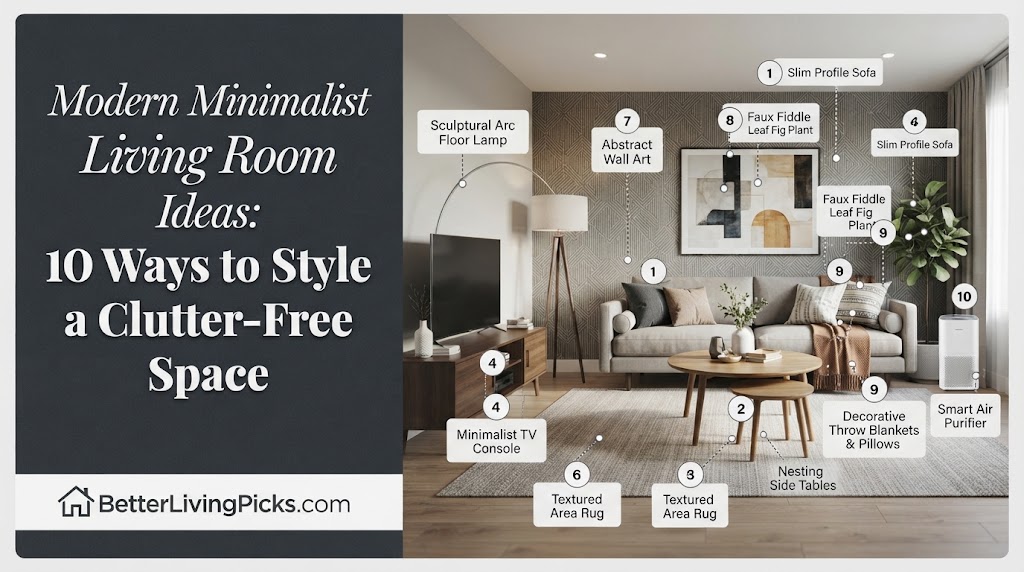
Introduce organic textures like raw wood, bouclé fabrics, and warm earth tones (taupe and clay) rather than relying exclusively on stark white paint and polished chrome.
2. What is the best way to handle inevitable everyday clutter?
Install wall-mounted floating media consoles and integrated closed cabinetry to ensure every item has a dedicated, hidden home out of sight.
3. How should furniture be arranged in a minimalist space?
Prioritize generous spatial flow by keeping pathways completely unobstructed, pulling furniture away from walls, and utilizing low-profile silhouettes.
4. What is the golden rule of accessorizing a minimalist room?
Adopt the one-in, one-out principle and choose one bold, sculptural art piece or ceramic vase instead of ten small knick-knacks.
Walking into a truly successful modern minimalist living room feels like taking a deep, restorative breath. Yet, achieving that effortless balance of serenity and sophistication is notoriously difficult. In my years of designing residential spaces, I frequently see homeowners fall into one of two traps: either the room ends up looking like a sterile corporate showroom devoid of personality, or it slowly devolves into a cluttered catch-all where minimalism is nothing more than an unfulfilled aspiration.
The secret to mastering this design style lies in intentional editing, material honesty, and functional restraint. Minimalism is not about stripping away everything you love; it is about refining your space so that every single object earns its place. Whether you are working with a compact urban apartment or an expansive open-concept great room, the ten strategies outlined below will help you craft a clutter-free, deeply inviting sanctuary.
For maximum visual sleekness, choose matte white or warm oak wall-mounted cabinets featuring push-to-open magnetic latches. Eliminating hardware pulls creates an uninterrupted plane that disappears into the wall surface.
Curate a Warm, Monochromatic or Earth-Tone Color Palette
Moving Beyond Stark White: Warm Greige, Taupe, and Clay
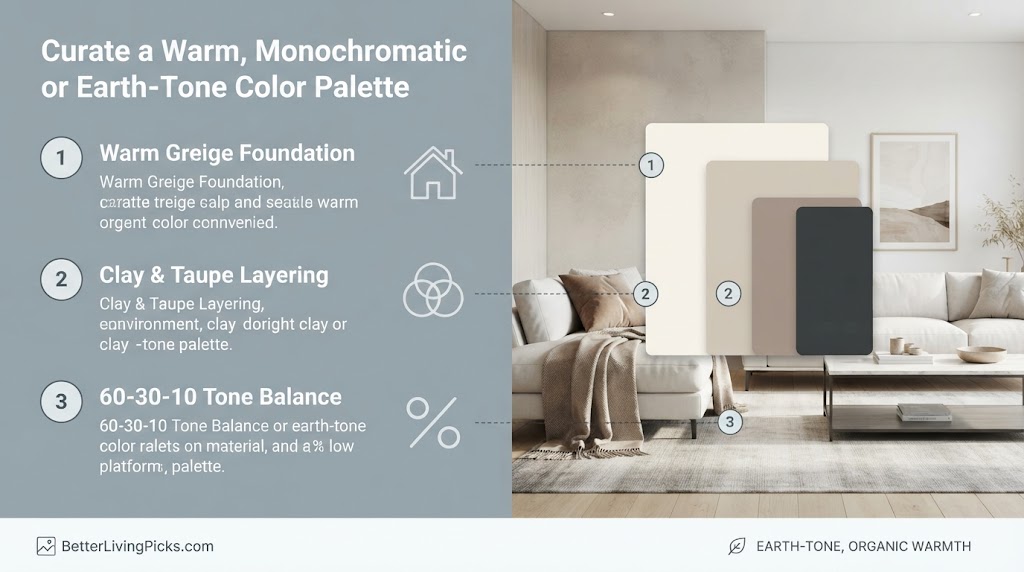
One of the most common pitfalls in minimalist design is leaning too heavily on clinical, stark white paint, which can easily make a living room feel cold, sterile, and unlived-in. In my practice, I always guide clients toward a warm minimalist palette. Instead of stark white, build your room around warm greige, soft taupe, muted clay, and creamy alabaster. These complex neutrals reflect natural light beautifully while wrapping the room in a sense of organic comfort and emotional warmth.
The 60-30-10 Color Rule in Minimalist Spaces
To maintain visual harmony without making the room chaotic, apply the timeless 60-30-10 color proportion rule. Dedicate 60% of the room typically walls and large area rugs to your dominant warm neutral. Use 30% for secondary foundational tones, such as your sofa, accent chairs, or major wood case pieces. Reserve the final 10% for subtle accent hues or organic contrasts, such as dark charcoal metal accents or rich terracotta ceramics.
Layer Natural Textures to Prevent a Cold, Sterile Aesthetic
Combining Jute, Stone, Linen, and Raw Wood
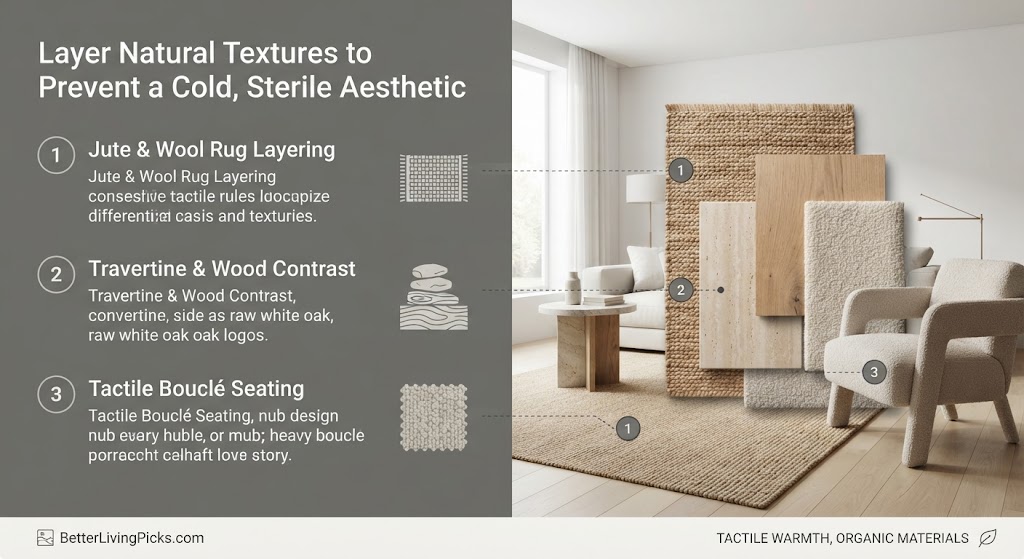
When pattern and color are strictly dialed back in a minimalist living room, texture becomes your primary vehicle for visual depth. To keep the space from falling flat, you must layer a variety of tactile, organic materials within the same color family. Pair a heavy hand-knotted jute or wool rug with a smooth travertine coffee table, linen-upholstered seating, and raw white oak shelving. This deliberate juxtaposition stimulates the senses without creating visual clutter.
The Art of Restrained Layering
Restrained layering means every texture has a distinct purpose and touchpoint. For instance, if your sofa features a smooth woven fabric, contrast it with a chunky knit throw blanket and a smooth matte ceramic vase on the nearby table. This balance of rough and smooth, matte and soft, creates a rich sensory environment that feels grounded, luxurious, and deeply inviting.
Design a Purposeful, Single Focal Point
Architectural Fireplaces vs. Oversized Statement Art
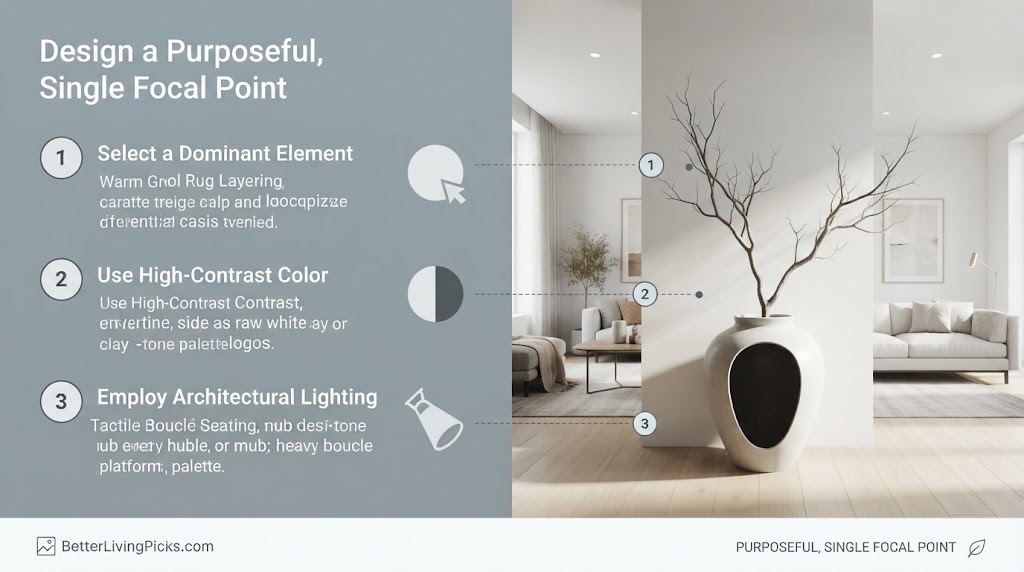
Every well-designed room requires a clear focal point to anchor the eye upon entry. In a traditional living room, this might be a television, a gallery wall, and a crowded mantelpiece all fighting for attention. In a modern minimalist space, you must ruthlessly eliminate visual competition by establishing one dominant focal point. Whether it is a clean-lined modern fireplace, a massive architectural window looking out to nature, or a single oversized canvas of abstract statement art, let that feature command the space.
Eliminating Visual Competition
If your television must live in the living room, avoid mounting it directly above a busy fireplace mantel where it competes for dominance. Instead, house it within a concealed media cabinet or frame it with a gallery-less matte black wall mount that allows it to recede quietly into the background when powered off.
Deploy Architectural, Layered Lighting Design
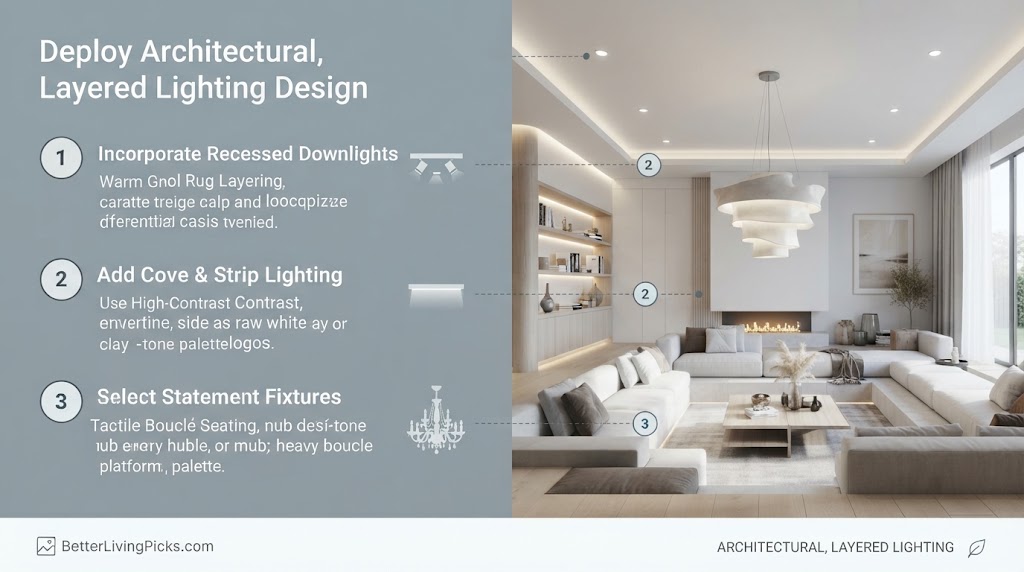
Eliminating Harsh Overhead Fixtures in Favor of Ambient Glow
Lighting can completely make or break a minimalist interior. Harsh, glaring center-room ceiling fixtures flatten a space and destroy the subtle shadows that give minimalist design its architectural drama. Instead of relying on a single overhead light source, deploy a three-tier layered lighting strategy: ambient, task, and accent lighting. Soft, indirect illumination creates an enveloping, warm glow that enhances the clean lines of your furniture.
Integrating Recessed Lighting, Sconces, and Sculptural Floor Lamps
Combine dimmable architectural recessed downlights with low-level lighting fixtures, such as minimalist floor-to-ceiling arc lamps, sleek wall sconces, and hidden LED channel strips tucked behind shelving. Keeping light sources at varying heights draws the eye naturally around the room, creating an atmosphere of calm sophistication while highlighting your chosen textures and focal points.
Edit Your Accessories: One Bold Statement Over Ten Small Knick-Knacks
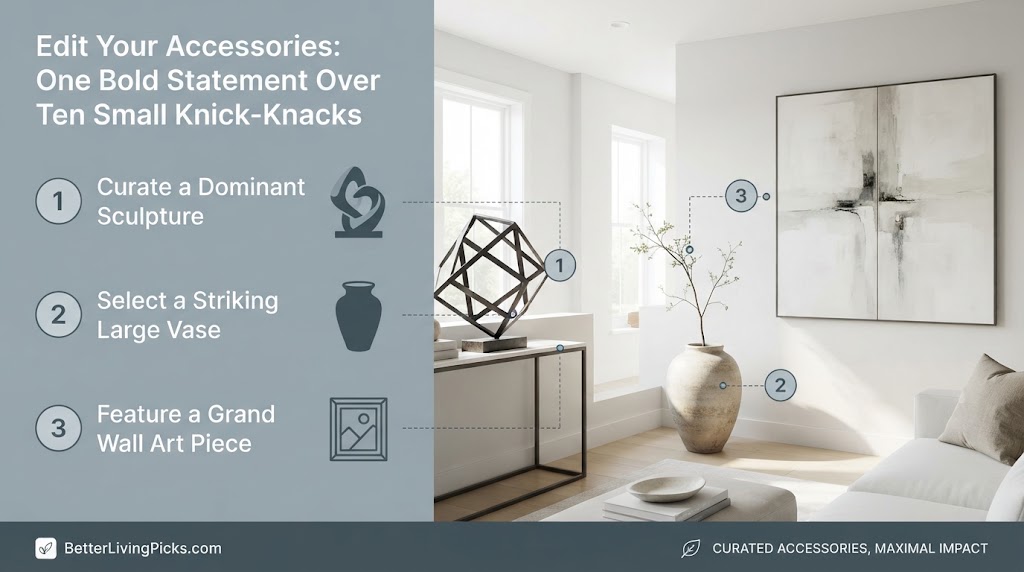
The “One In, One Out” Rule for Decor
Accessorizing a minimalist living room requires ruthless discipline. The moment you begin accumulating small decorative objects, salt bowls, trays, and trinkets, the room loses its serene edge. To keep your surfaces clean and intentional, adopt a strict one-in, one-out rule. If you purchase a new ceramic bowl or sculptural object, an existing decorative item must be retired or donated.
Selecting Sculptural Vases and Oversized Ceramics
When you do choose to display accessories, prioritize scale and craftsmanship over quantity. Rather than scattering ten small knick-knacks across a coffee table or credenza, select one oversized, sculptural ceramic vessel or branch-filled vase. A single, high-impact statement piece draws immediate admiration and honors the negative space around it.
Keep Windows Uncluttered to Maximize Natural Daylight
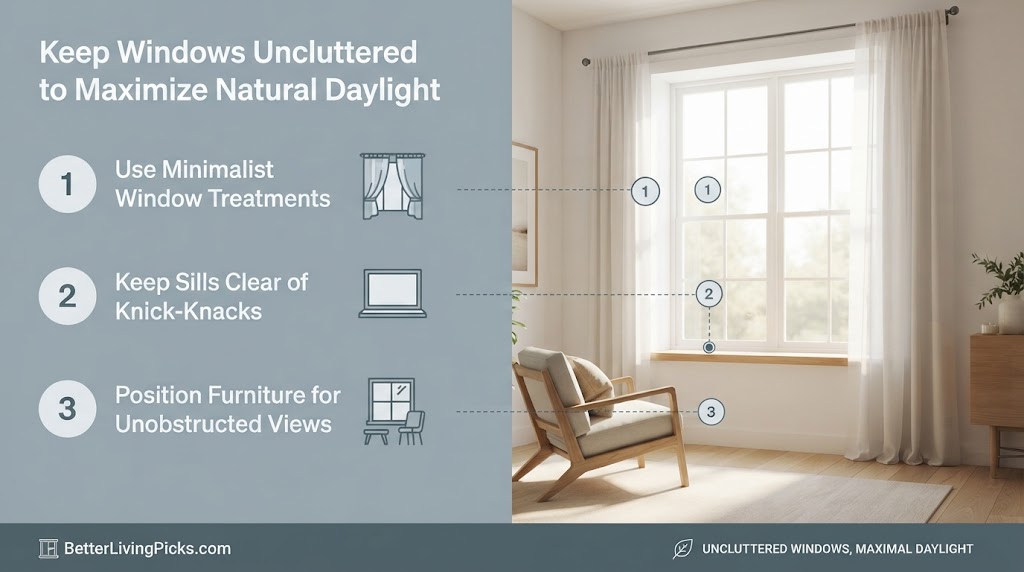
Ditching Heavy Drapes for Sheer Linen or Minimalist Roller Blinds
Natural daylight is one of the most powerful finishing touches in any modern minimalist living room. Heavy, ornate drapery with elaborate valances and dark blackout linings can instantly chop up natural light and make a room feel heavy. Swap them out for lightweight, unlined European linen drapes mounted high and wide near the ceiling line, or opt for ultra-clean motorized roller blinds that vanish completely when rolled up.
Reflective Surfaces and Mirror Placement
If your living room lacks expansive windows, strategically position a large, minimalist frameless mirror or a slim brushed-brass standing mirror opposite a primary light source. This simple design trick bounces natural daylight deeper into the room, amplifying spatial volume without adding physical clutter.
Establish a Daily 5-Minute Reset Routine
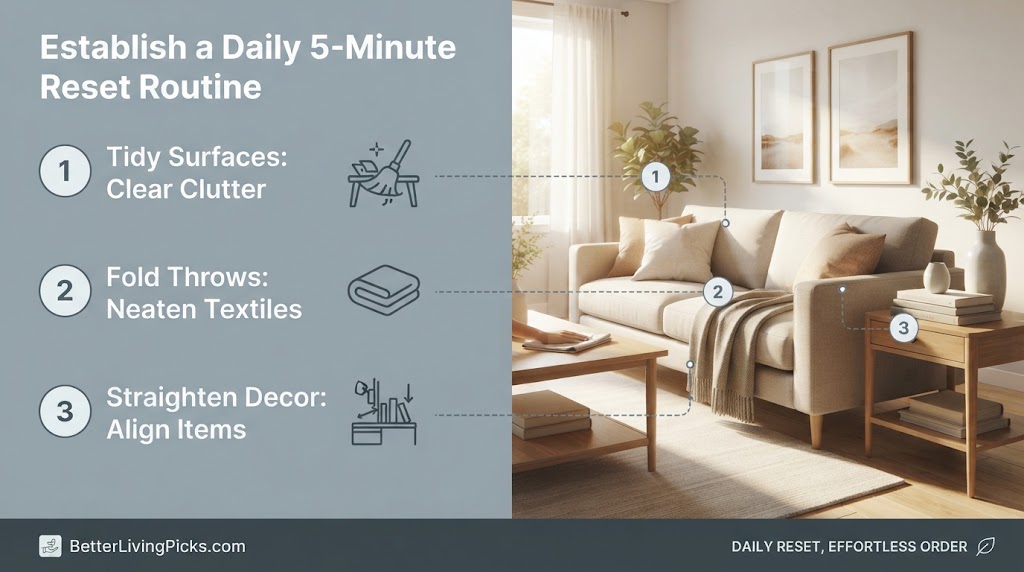
Building Habits to Maintain a Clutter-Free Ecosystem
Even the most perfectly designed minimalist living room will gradually accumulate clutter if you do not establish daily maintenance habits. Mail, coffee mugs, children’s toys, and shoes have a natural gravitational pull toward flat surfaces. The secret to a permanently clutter-free home is not perfection, but a consistent 5-minute evening reset routine.
Managing Daily Surface Accumulation
At the end of every evening, take five minutes to clear off coffee table tops, return throw blankets to their baskets, and deposit stray items into your integrated storage cabinets. Cultivating this simple routine ensures that your living room remains a pristine, restorative sanctuary ready to welcome you every single morning.
Incorporating Biophilic Design Elements Without Compromising Clean Lines
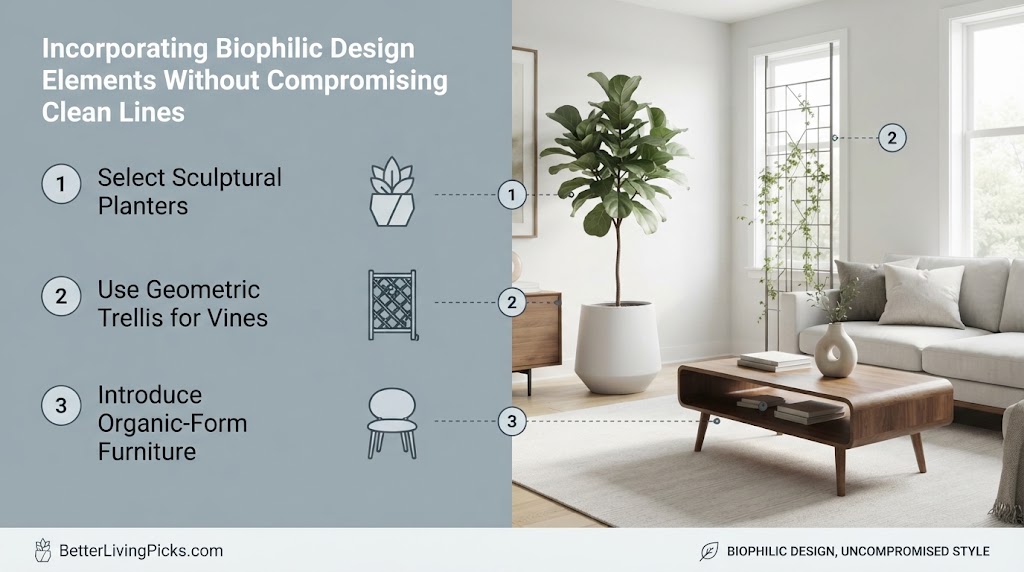
Selecting Sculptural Botanicals (Olive Trees, Snake Plants, and Bonsai)
One of the greatest misconceptions about modern minimalism is that it must be entirely devoid of living flora. In reality, introducing greenery is essential for breaking up rigid architectural angles and breathing literal life into the room. However, standard bushy house ferns or chaotic arrangements will quickly destroy a minimalist aesthetic. Instead, select sculptural botanical statements such as a single potted olive tree, a towering snake plant in a matte ceramic urn, or a carefully pruned bonsai. These plants act as living sculptures that honor clean sightlines while adding organic color.
Integrating Indoor Water Features and Natural Stone Planters
To deepen the connection with nature without introducing clutter, house your greenery in heavy, monolithic stone or cast-concrete planters that match your flooring or accent tones. For advanced biophilic integration, consider a flush-mounted wall water feature or a small basalt tabletop fountain. The gentle sound of running water introduces an auditory layer of tranquility that enhances the psychological calm of your minimalist living space.
Acoustic Management in Minimalist Living Spaces
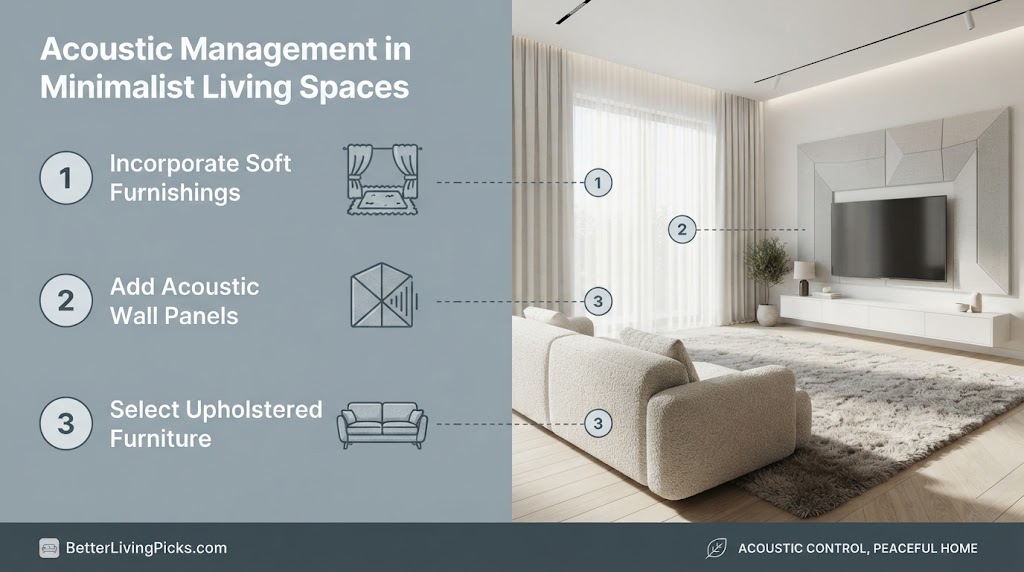
Solving Echo and Hard-Surface Rebound Using Concealed Acoustic Panels
Minimalist living rooms characterized by hardwood floors, smooth plaster walls, expansive glass windows, and minimal upholstered surfaces are notoriously prone to acoustic echo and reverberation. Conversations can bounce harshly, making the room feel cold and cavernous rather than peaceful. To solve this without cluttering walls with acoustic foam, install concealed acoustic underlayments beneath your flooring, hang heavy heavyweight linen drapes, and utilize perforated acoustic wood slat panels painted to match your wall color.
Textile Sound Dampening via Heavy Underlays and Upholstery
Soft furnishings play a dual role in minimalist design: they provide tactile warmth and absorb ambient sound waves. Ensure your area rugs feature dense, premium wool or felt underpads, and choose upholstered seating with high-density foam cores. These hidden textile layers trap sound waves, transforming a loud, echoing room into an acoustically balanced, quiet sanctuary.
Smart Home Integration: Hiding Technology in Plain Sight
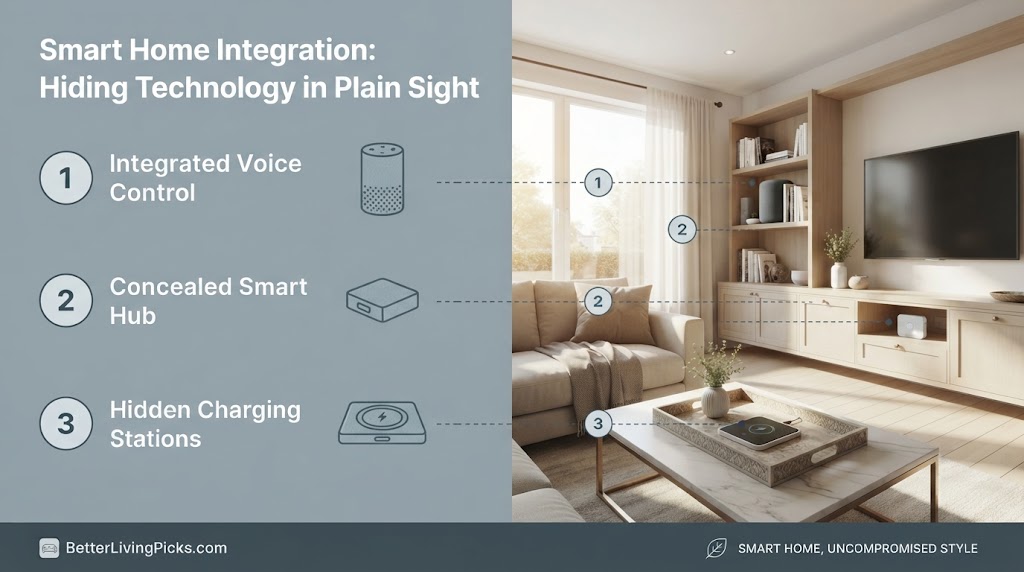
Motorized Architectural Shades and Hidden Smart Hubs
Modern minimalism and visible technology are often at war. Tangled charging cords, black remote controls, smart speakers, and flashing router lights can destroy weeks of careful styling in seconds. The solution is integrating smart home automation invisibly. Install motorized architectural roller shades wired directly into wall switches, and house all smart hubs, routers, and streaming boxes inside ventilated media enclosures with infrared repeaters.
Flush-Mounted Speaker Systems and Voice Control Integration
For home entertainment, abandon bulky floor-standing speakers in favor of flush-mounted in-wall or in-ceiling architectural speakers covered by paintable magnetic grilles. Pair these with discrete voice control nodes integrated directly into your lighting keypads, allowing you to control audio, temperature, and lighting without a single plastic device sitting on your coffee table.
Transitional Minimalism: Blending Mid-Century Modern with Japandi Principles
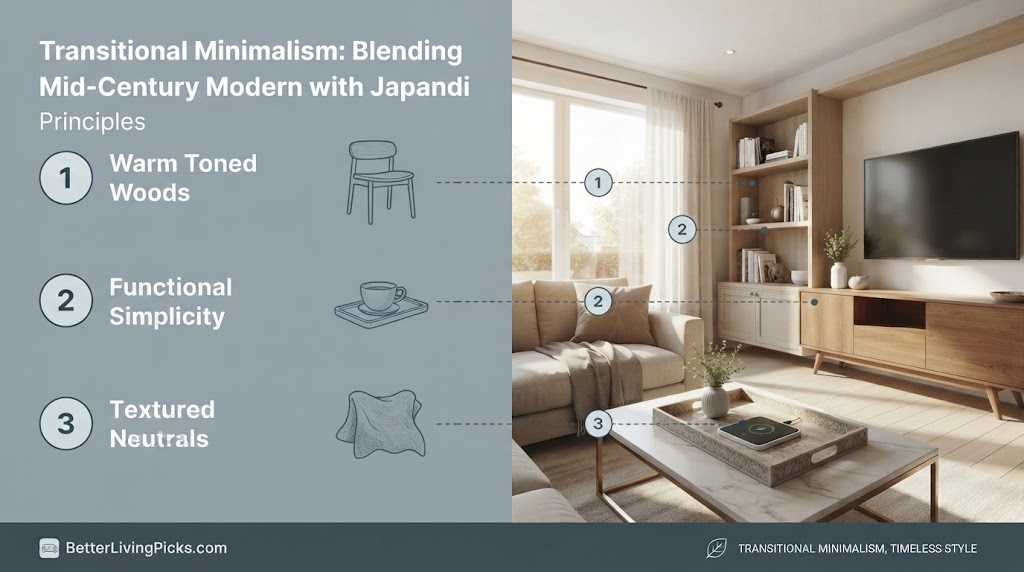
Balancing Danish Functionality with Wabi-Sabi Imperfections
As minimalist interior design has evolved, the most sophisticated spaces now blend clean Danish modern functionality with the rustic, organic warmth of Japanese Japandi aesthetics and Wabi-Sabi philosophy. Instead of demanding factory-perfect slickness, embrace subtle, honest imperfections: a hand-thrown ceramic vase with slight asymmetrical glazing, or a vintage reclaimed teak coffee table that showcases natural wood grain and age lines.
Choosing Timeless Investment Pieces That Age Gracefully
True minimalism is inherently sustainable. Rather than filling your living room with disposable fast-furniture that degrades within two years, invest in foundational pieces crafted from solid hardwoods, full-grain leathers, and structural steel. These investment pieces develop a rich, beautiful patina over time, ensuring your minimalist living room looks increasingly sophisticated and personal as the years pass.
Curating Minimalist Transitional Hallways and Entry Transitions
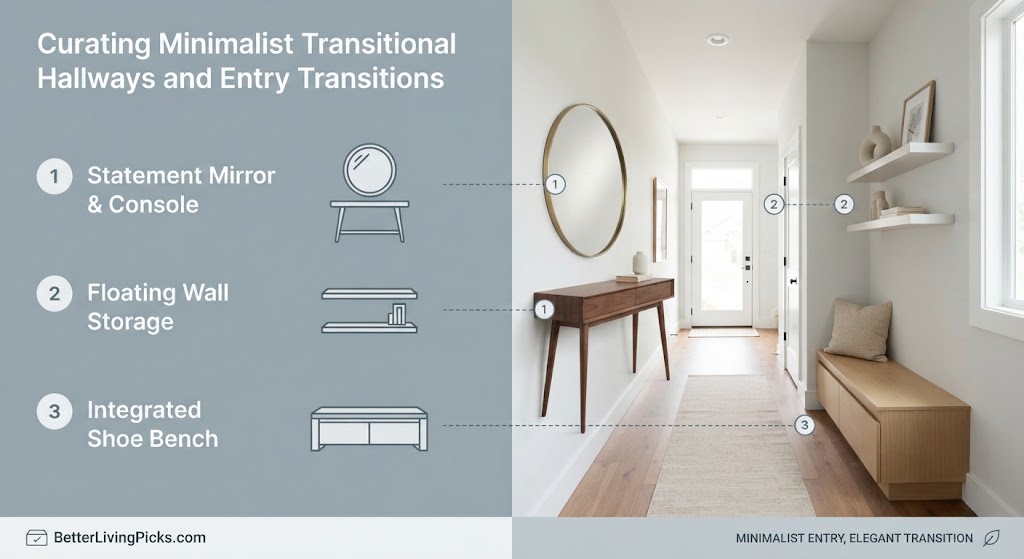
The Psychological Threshold Between Chaos and Calm
Your entryway or transition hallway sets the mental tone the moment you cross the threshold into your living space. If guests are greeted by heaps of shoes, scattered mail, and overstuffed coat racks, the minimalist living room that follows loses its psychological impact. To maintain a unified aesthetic, extend your clutter-free principles into the entryway by installing a wall-mounted drop zone with concealed slots for keys and mail, alongside a built-in recessed bench featuring hidden under-seat shoe compartments.
Continuous Flooring and Sightline Expansion
To make compact transitional hallways feel open and breathable, maintain uninterrupted continuous flooring from your entrance directly into the main living room. Avoid breaking up the sightline with abrupt threshold strips or contrasting tile transitions. A unified wide-plank white oak or micro-cement floor expands the perceived square footage of narrow entries instantly.
Sustainable and Non-Toxic Material Choices for Modern Minimalist Homes
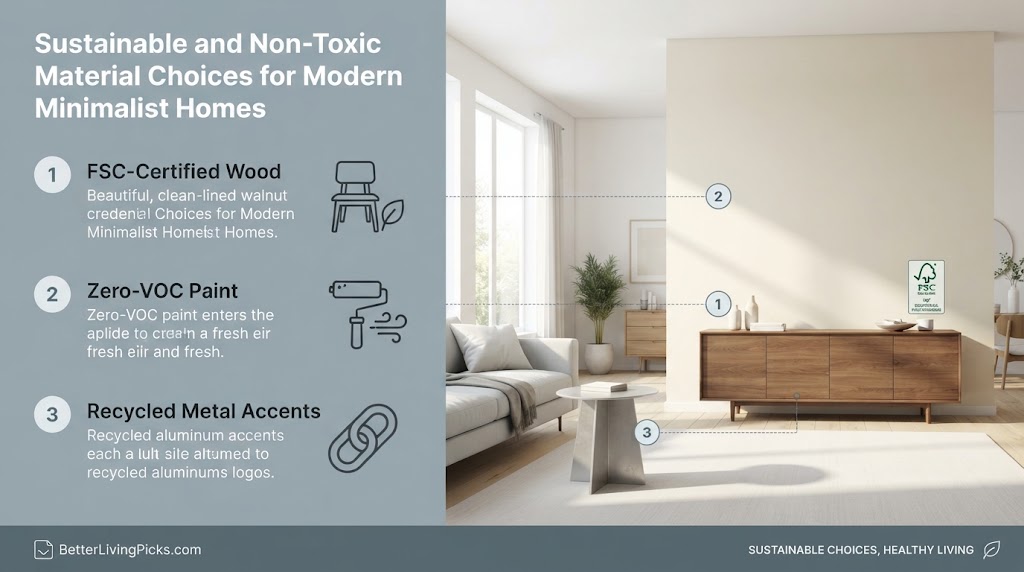
Prioritizing VOC-Free Finishes and Natural Mineral Paints
True modern minimalism is deeply intertwined with environmental wellness and clean indoor air quality. Traditional paints, synthetic adhesives, and compressed particleboard furniture often off-gas volatile organic compounds (VOCs) that degrade indoor air health. To protect your home ecosystem, specify zero-VOC mineral paints, lime washes, and natural clay plasters for your living room walls. These breathable wall finishes create a gorgeous matte chalky texture while naturally regulating indoor humidity.
Sourcing FSC-Certified Timbers and Non-Toxic Glues
When investing in custom cabinetry or coffee tables, demand verifiable documentation regarding material origins. Choose furniture crafted from Forest Stewardship Council (FSC)-certified solid hardwoods finished with natural beeswax or hardening linseed oils rather than toxic polyurethane varnishes. This ensures your home remains environmentally responsible, chemical-free, and safe for family members with sensitivities.
Psychological Well-Being and Cognitive Benefits of Clutter-Free Environments
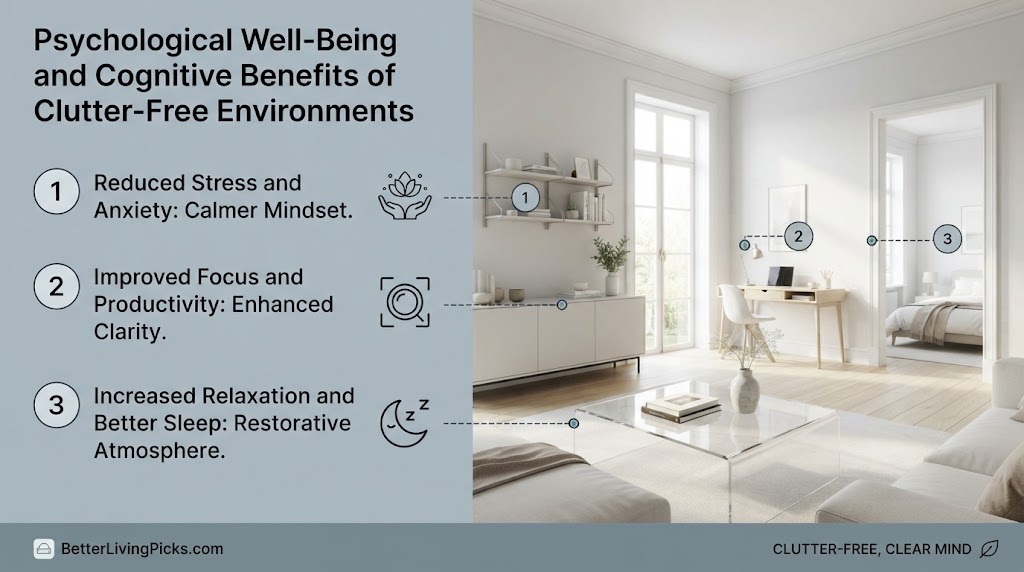
Lowering Cortisol Levels Through Visual Reduction
Environmental psychology demonstrates a direct link between visual clutter and elevated human stress hormones. When your field of vision is constantly bombarded by unorganized objects, competing colors, and physical mess, your brain’s visual cortex works overtime processing unnecessary stimuli, which elevates cortisol production and mental fatigue. By transitioning to a rigorously edited, modern minimalist living room, you create a low-stimulus sanctuary that allows your nervous system to fully decompress.
Enhancing Focus, Rest, and Emotional Regulation
A clean, harmonious living space acts as a cognitive palate cleanser at the end of a demanding workday. With every item assigned a dedicated hidden home, decision fatigue drops significantly. You can sit down, enjoy the pristine negative space, and focus entirely on relaxation, reading, or meaningful conversation without the subconscious distraction of messy surroundings.
Maintenance Protocols and Seasonal Styling Transitions
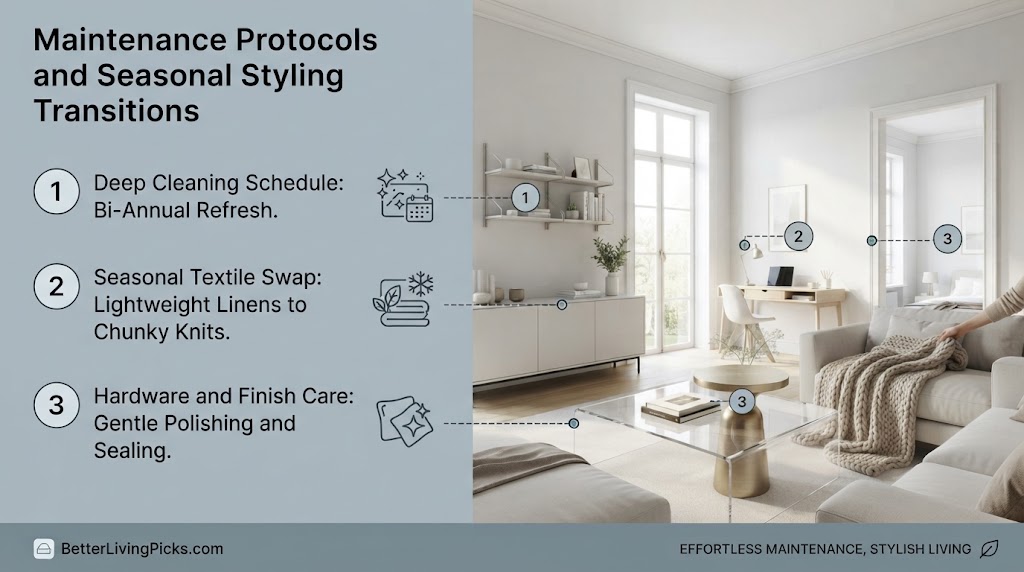
Rotating Seasonal Decor Without Accumulating Clutter
Minimalism does not mean your living room must look identical year-round. You can easily adapt your space for changing seasons by adopting a strict rotation model. Instead of adding new items to your inventory every season, swap existing pieces in and out. For example, replace a lightweight linen throw blanket and ceramic summer vase with a textured wool bouclé throw and a deep bronze taper candle holder for the winter months.
Deep Seasonal Cleaning and Surface Re-Editing
Schedule a comprehensive bi-annual surface re-editing session every spring and autumn. Empty every drawer, cabinet, and surface completely. Dust underlying architectural elements, inspect your storage hardware, and critically evaluate whether every stored item truly serves your lifestyle. This intentional reset prevents gradual clutter creep and preserves the pristine integrity of your minimalist design.
Frequently Asked Questions
How do I make a minimalist living room feel warm instead of cold?
To prevent a minimalist living room from feeling like a sterile corporate office, focus heavily on material texture and organic color undertones. Swap out stark, brilliant white paints for warm complex neutrals like greige, clay, and soft taupe. Incorporate tactile, touchable fabrics such as heavyweight linen, wool bouclé, and raw natural woods. These elements soften hard architectural lines and create an inviting atmosphere.
What are the best furniture pieces for a small minimalist living room?
In small spaces, your best options are low-profile, raised-leg furniture items that allow light to pass underneath. Choose a streamlined sofa with narrow arms, a glass or open-frame coffee table, and wall-mounted floating media consoles. Elevating furniture off the floor tricks the eye into perceiving a much larger expanse of square footage while preserving essential traffic flow.
How can I hide everyday clutter in an open-concept minimalist space?
The key to maintaining an open-concept minimalist home is investing in concealed, integrated storage solutions. Use custom built-in cabinetry, handleless push-to-open media units, and multifunctional coffee tables with deep internal storage compartments. Assign every household item a dedicated hidden home so that flat surfaces remain completely clear when not in use.
What color palette works best for modern minimalism?
Modern minimalism thrives on sophisticated, restrained color palettes inspired by nature. Warm whites, alabaster, stone gray, warm greige, muted terracotta, and deep charcoal form the ideal foundation. These colors create a calming visual backdrop that lets natural light and architectural forms take center stage without visual distraction.
How do I choose the right rug for a minimalist living room?
When selecting an area rug for a minimalist room, look for subtle tactile variation rather than loud, busy patterns. Hand-knotted jute, textured wool loop rugs, or low-pile neutral designs work best. Ensure the rug is large enough so that at least the front legs of all major seating furniture rest comfortably on its perimeter to anchor the room.
How many decorative items should I place on a coffee table?
As a general rule of thumb for minimalist spaces, limit your coffee table styling to a maximum of one or two curated items. A heavy ceramic tray holding a single art book or a sculptural vase with a single botanical branch is more than enough. Leaving the rest of the surface bare preserves visual breathing room.
Are there specific lighting techniques for minimalist interiors?
Yes, minimalist lighting relies heavily on indirect, layered illumination rather than harsh overhead fixtures. Combine dimmable architectural downlights with wall sconces, low-level floor lamps, and hidden LED channel strips behind shelving. This approach creates a warm, atmospheric glow that accentuates room textures without casting harsh shadows.
How do I handle window treatments in a minimalist living room?
Window treatments should be understated and functional. Avoid heavy, ornate drapes with complicated valances. Instead, choose unlined sheer European linen panels mounted close to the ceiling line to maximize vertical height, or install motorized roller blinds that disappear cleanly out of sight when open.
Can I mix wood tones in a modern minimalist living room?
Yes, you can successfully mix wood tones as long as you maintain consistent undertones—either all warm-based or all cool-based. For example, pairing a white oak media console with a walnut accent chair works if both share similar matte, organic finishes and don’t clash in grain intensity.
What is the “one-in, one-out” rule for home decor?
The one-in, one-out rule is a strict editing discipline designed to prevent clutter accumulation. Whenever you introduce a new decorative item, throw pillow, or ceramic piece into your living room, you must simultaneously remove, donate, or recycle an existing item. This keeps your inventory strictly balanced.
How do I incorporate a television into a minimalist living room without it being an eyesore?
To prevent a large black television screen from dominating your minimalist decor, house it within custom cabinetry with sliding louvered doors, or mount it on a matte accent wall using a flush frame. Many modern TVs also feature “Art Mode” functionality, allowing them to display classic paintings when idle.
What flooring materials complement a minimalist living room?
Wide-plank white oak hardwood floors with a matte, natural oil finish are the gold standard for modern minimalist living rooms. Polished micro-cement and large-format honed limestone or porcelain tiles also provide a seamless, continuous plane that enhances spatial flow and modern architectural appeal.
Final Thought
Mastering a modern minimalist living room is ultimately an exercise in mindful intentionality rather than rigid deprivation. By embracing negative space, investing in multi-functional concealed storage, and layering rich natural textures, you can create a space that feels both visually breathtaking and deeply comforting. Treat your home as an evolving ecosystem where every object has a purpose, and you will enjoy a serene, clutter-free sanctuary for years to come.

