
Trust your sense of smell; a musty, earthy odor is a primary indicator. Check for visible damp spots, peeling wallpaper, or dark patches behind furniture and under sinks where moisture accumulates.
2. Can I see dust and particulates?
Use the flashlight method. Shine a high-powered beam across a dark room to reveal airborne particulates, smoke, or excessive pet dander that usually remains invisible against a wall.
3. What are common sources of VOCs?
Volatile Organic Compounds often come from cleaning products, paints, and pressed-wood furniture. If you feel dizzy or notice eye irritation after using these items, you have identified a primary pollution source.
4. When is it time for a pro?
If you suspect radon or carbon monoxide leaks, or if you experience chronic, unexplained health issues like persistent headaches or fatigue that improve when you leave the house, contact a professional inspector immediately.
You wake up with a scratchy throat, or maybe you notice a lingering, musty smell that just won’t go away no matter how much you scrub. We often assume that if our home looks clean, the air must be fine, but poor indoor air quality is rarely visible to the naked eye. Instead of rushing to buy a fancy, high-tech air quality monitor that might end up in a junk drawer, you can get a surprisingly accurate picture of your home’s health with just a bit of observation and common sense.
Testing your indoor air doesn’t require a degree in environmental science or hundreds of dollars in equipment. Your home is already giving you clues; you just need to know what to look for and how to interpret the signals. From checking for hidden moisture to tracking how your body reacts to certain rooms, this guide will help you perform a thorough, no-cost audit of your living environment today.
The “Senses Test”: What Your Home Is Telling You
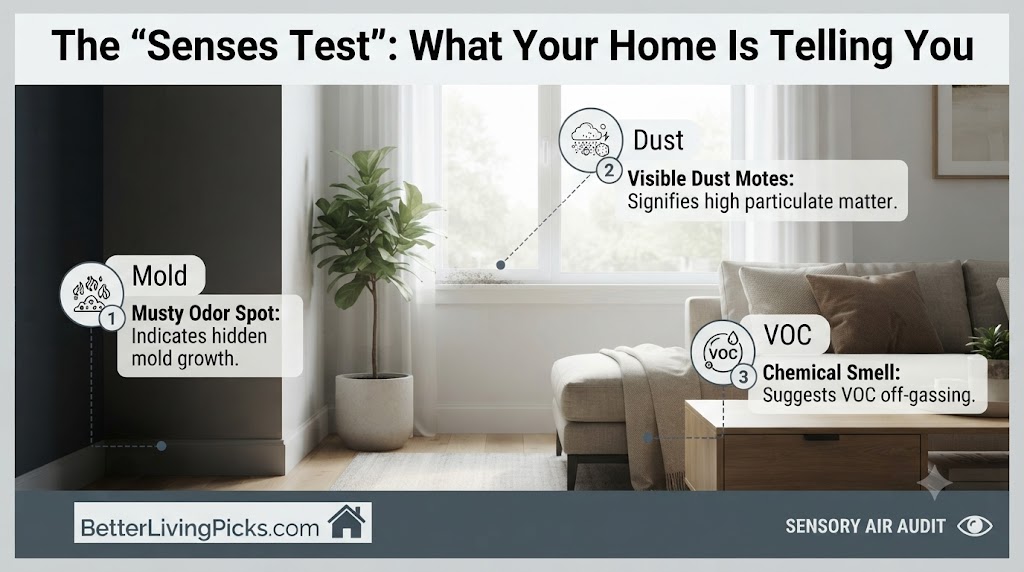
Your body and your senses are the most sensitive instruments you own. Before looking for gadgets, spend a day paying attention to how your home “feels.” If you walk into a room and immediately feel like you need to clear your throat, that is a data point.
Identifying Musty Odors and Damp Spots
Your nose is incredibly good at detecting mold long before your eyes see it. If you walk into a closet, a basement, or a guest room and get a whiff of something that smells like old socks or wet earth, you likely have a moisture issue.
Check these common hotspots for signs of dampness:
- Behind heavy furniture: Pull out dressers or desks that sit against exterior walls.
- Under the kitchen sink: Look for water stains or soft wood on the cabinet floor.
- Bathroom corners: Check the grout lines and the ceiling above the shower for tiny black or orange dots.
Tracking Physical Symptoms and Allergies
Keep a log for a few days of how you feel in different areas of your home. Do your eyes itch in the bedroom? Do you get a headache specifically when you are sitting in your home office?
This is called “sick building” awareness. If your symptoms improve when you step outside or go to a friend’s house, your indoor environment is almost certainly the trigger. Pay attention to fatigue, sneezing, and skin rashes, these are common red flags of indoor air pollutants like pet dander or chemical off-gassing.
The Visual Dust and Haze Check
Dust is more than just an annoyance; it is a carrier for allergens and chemicals. If your shelves are covered in a thick layer of grey fuzz just days after cleaning, your home is struggling to manage its particulate matter.
Look at your air return vents. If they are caked with grey, matted dust, your HVAC system is likely circulating those same particles back into your air. This visual evidence is a clear signal that your home’s air filtration needs attention, regardless of what an expensive monitor might say.
Using Everyday Household Items to Gauge Air Health
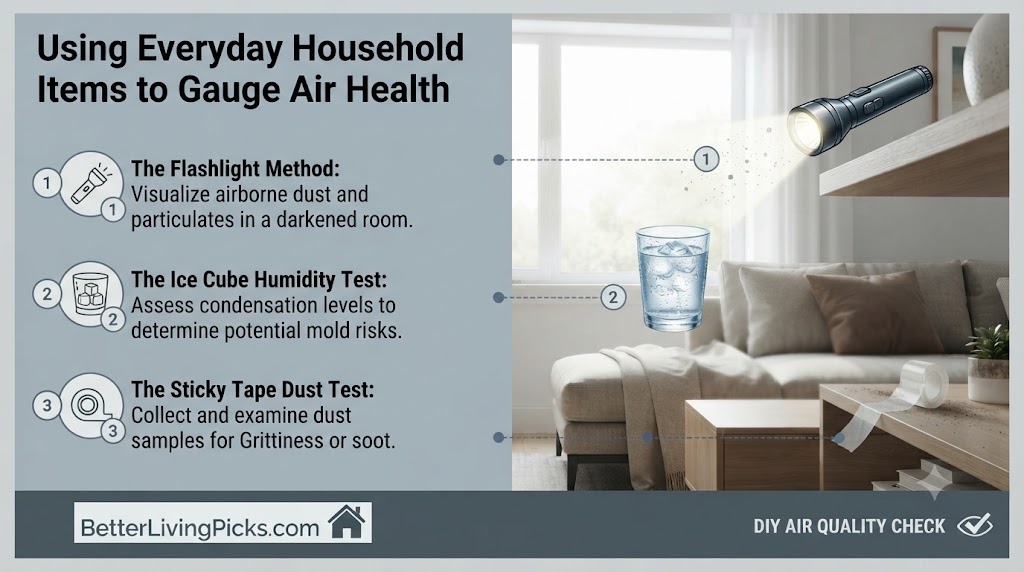
You don’t need a high-tech sensor to quantify the invisible. Simple, low-tech hacks can give you a surprisingly clear look at what is floating around in your living space.
The Flashlight Method for Particulates
This is one of the easiest ways to visualize airborne pollution. Wait until it is dark, turn off all the lights in a room, and hold a high-powered LED flashlight parallel to the floor.
When you shine the beam across the room, you will see a “pathway” of light. Every tiny speck of dust, smoke, or pet dander will show up in that beam. If the air looks like a thick, chaotic snowstorm, your air quality is poor. If the air looks relatively clear with only a few slow-moving specks, you are likely in a safe zone.
Managing Humidity Levels Without a Monitor
Humidity is the silent partner of air pollution. If your home is too humid (above 60%), mold thrives. If it is too dry (below 30%), dust and viruses circulate more easily. You can perform a simple ice cube test to gauge moisture levels.
- Fill a glass with water and three or four ice cubes.
- Let it sit on a table for about five minutes.
- If the outside of the glass develops water droplets (condensation), your humidity is likely high enough to support mold growth.
- If the glass stays perfectly dry, your air may be too dry, which can dry out your nasal passages and lead to respiratory irritation.
The Sticky Tape Dust Test
If you are worried about the type of dust in your home, use a piece of clear adhesive tape. Press the sticky side firmly onto a surface that hasn’t been dusted in a week, like the top of a door frame or a bookshelf.
Peel it off and look at it under a bright light. If the dust is light grey and fluffy, it is mostly standard household dust. If the dust appears dark, gritty, or oily, you might have issues with combustion byproducts, like soot from candles or a gas stove.
Identifying Common Pollutant Sources in Your Space
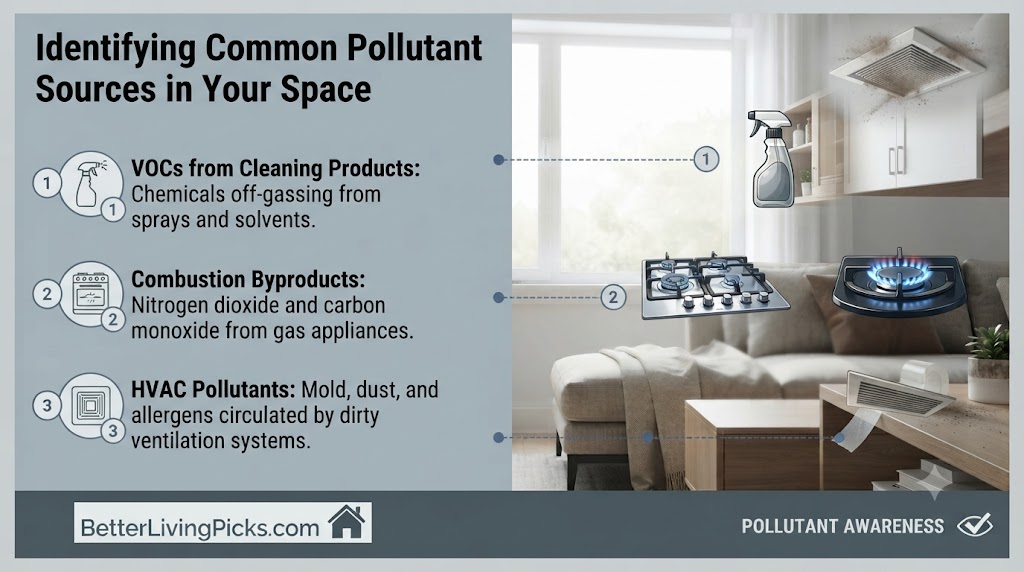
Pollution usually comes from specific “source points.” Instead of trying to clean the air, the best approach is to stop the pollution at the source.
VOCs: Cleaning Supplies and Pressed Wood
Volatile Organic Compounds (VOCs) are gases that get released from solids or liquids. The most common culprits are scented cleaning sprays, air fresheners, and new pressed-wood furniture.
If you feel lightheaded after cleaning your bathroom, you are breathing in VOCs. The “new car smell” or the “new furniture smell” is actually the off-gassing of chemicals. Minimize this by keeping windows open during and after cleaning, and opting for scent-free or natural cleaning alternatives whenever possible.
Combustion Byproducts: Kitchen Stoves and Candles
Do you cook on a gas stove without using the vent hood? If so, you are likely pumping nitrogen dioxide and carbon monoxide into your kitchen. These gases are invisible and odorless, but they significantly degrade air quality.
Similarly, scented candles, especially paraffin wax candles, release soot and chemicals into the air when burned. If you notice a faint black smudge on the ceiling near your favorite candle, that is soot you have been breathing in. Always burn candles in well-ventilated areas and try to use the exhaust fan every time you turn on the stove.
HVAC and Vent Health Inspections
Your HVAC system is the “lungs” of your home. If the filter is dirty, it won’t trap pollutants; it will just redistribute them. Pull your filter out once a month. If it looks like a grey, felt-like blanket, it is past its prime.
Also, check your supply vents. Use a damp paper towel to wipe the inside of the vent slats. If you pull off thick, black gunk, you have a buildup of mold and dust inside your ducts. This is a sign that your system is actively pushing pollutants into every room in the house.
Improving Your Indoor Air Without Expensive Gadgets
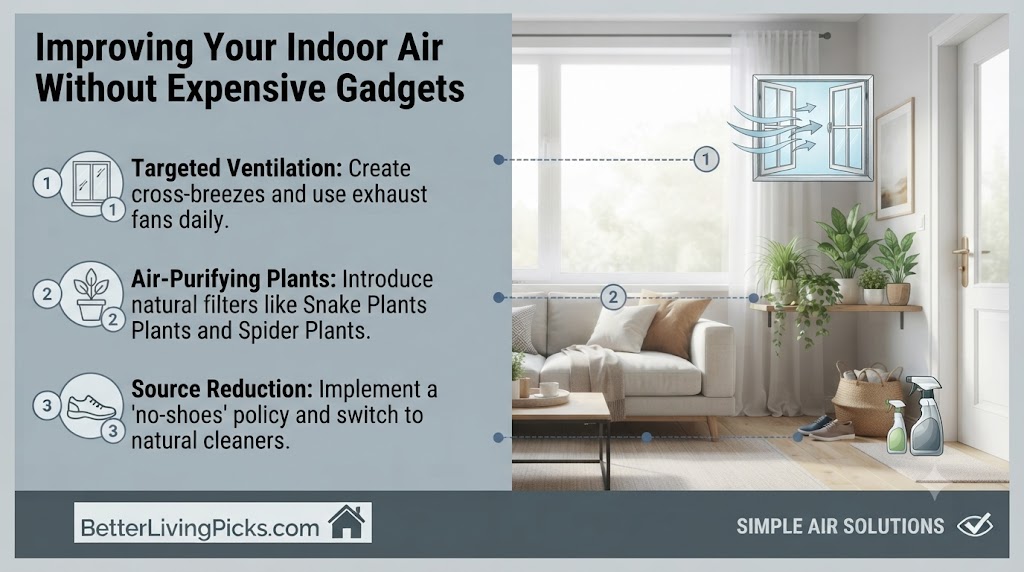
Once you have identified the weak points in your home’s air quality, you can fix them using low-cost, effective strategies. Improving your air is often about better habits rather than expensive hardware.
The Power of Targeted Ventilation
The most effective way to clean indoor air is to replace it with fresh outdoor air. We often keep our homes sealed tight to save on energy, but this traps pollutants inside.
- Create a cross-breeze: Open windows on opposite sides of the house for 15 minutes a day.
- Use exhaust fans: Always run the fan in the bathroom during a shower and for 20 minutes after. Run the kitchen hood every time you cook.
- Flush the air: If you have been cleaning or painting, keep the windows open for as long as possible to let the gases dissipate.
Reducing Source-Based Pollution
Think of your home as a collection of sources. If you remove the source, the air clears up automatically. Start by swapping out harsh chemical cleaners for vinegar, baking soda, or basic soap.
Take your shoes off at the door. You would be shocked at how much dirt, pesticide residue, and bacteria get tracked inside on the soles of your shoes. By implementing a “no-shoes-inside” policy, you drastically reduce the amount of grit that ends up becoming airborne dust.
Plant Care and Natural Filtration
While plants are not a substitute for a high-efficiency air filter, they do help create a healthier mental and physical environment. Some plants are excellent at absorbing moisture and chemicals from the air.
Focus on plants that are easy to maintain and effective, like the Snake Plant or Spider Plant. Place them in rooms where you spend the most time. They won’t replace a ventilation system, but they act as a natural humidity regulator and provide a subtle boost to your home’s oxygen levels.
When DIY Isn’t Enough: Knowing When to Call a Pro
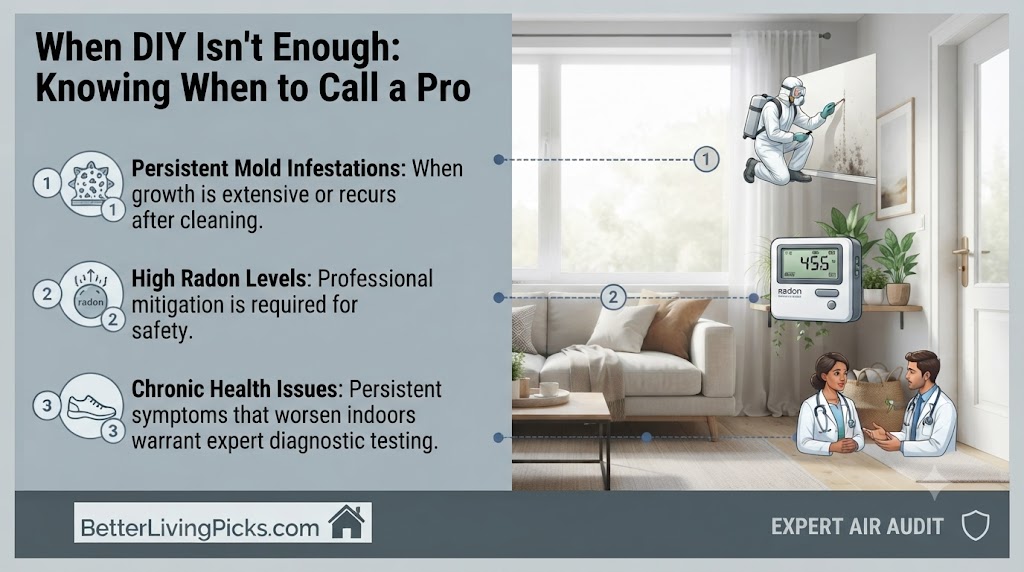
There are times when the problem is beyond a quick DIY fix. You need to be honest with yourself about when a situation has become a safety hazard rather than just a maintenance chore.
Persistent Mold Growth
If you find mold that covers an area larger than 10 square feet, or if it keeps coming back after you have cleaned it, you have a structural moisture issue. This might be a leak in your roof, a pipe behind the wall, or a foundation issue. In these cases, scrubbing the surface won’t help because the mold is growing from the inside out. A professional can identify the source of the water and remediate the mold safely.
Radon and Carbon Monoxide Safety
Radon is an odorless, radioactive gas that seeps into homes from the ground. It is the second leading cause of lung cancer. You cannot detect this with your senses. If you live in an area where radon is common, you must hire a professional or buy a dedicated, long-term testing kit. Similarly, if you have gas appliances, you should have a hard-wired carbon monoxide detector. These are not “optional” home upgrades; they are safety requirements.
Unexplained Chronic Health Issues
If you or your family members are suffering from chronic headaches, unexplained fatigue, or persistent respiratory issues that seem to worsen at home, do not play the guessing game. Professional indoor air quality testing can identify specific chemical pollutants, biological agents, or particulate levels that a simple flashlight test will never reveal. If your health is on the line, professional testing is a worthwhile investment.
Frequently Asked Questions
Can I really test air quality for free?
Yes, you can perform a thorough audit of your home’s air quality without spending money by using your senses, specifically your sense of smell, visual observation, and keeping a log of how your body reacts to different rooms. While these methods won’t give you a precise parts-per-million (PPM) measurement of pollutants, they are highly effective at identifying the specific sources of poor air quality so you can fix them.
Are air quality monitors worth the money?
For most people, a professional, lab-grade air monitor is overkill. While cheap home monitors can provide a general trend, like a spike in particles when you burn toast or use a spray, they are often not accurate enough to diagnose specific health hazards. If you are generally healthy and looking to improve your home environment, the DIY methods outlined here will provide more actionable results than an entry-level digital monitor.
What is the most common cause of poor air quality in a home?
The most common cause of poor indoor air quality is a lack of ventilation coupled with high humidity. When a home is sealed too tightly, pollutants from everyday activities like cooking, cleaning, and simply existing (breathing and perspiring) get trapped. If humidity is also trapped, it creates a breeding ground for mold and dust mites, which are the primary drivers of poor air quality in residential buildings.
Does burning candles really hurt the air?
Yes, burning candles can significantly impact indoor air quality. Many candles, particularly those made from paraffin wax, release soot, volatile organic compounds (VOCs), and tiny particulate matter when burned. Over time, these particles can coat your walls and furniture and irritate your respiratory system. To minimize the impact, opt for soy or beeswax candles, keep the wick trimmed, and always ensure the room is well-ventilated.
How do I know if my house has “Sick Building Syndrome”?
You may have what is referred to as “Sick Building Syndrome” if you experience symptoms like headaches, dizziness, fatigue, or eye and throat irritation that improve significantly or disappear when you leave your home. If you notice these symptoms only when you are in a specific room or after you have been inside for several hours, your home environment is likely the source.
Should I be worried about dust mites?
Dust mites are present in almost every home and are a common trigger for allergies and asthma. While you cannot get rid of them entirely, you can control their population by managing humidity and keeping surfaces clean. Keeping indoor humidity below 50% and washing bedding in hot water weekly are the most effective ways to minimize the presence and impact of dust mites without needing special equipment.
Final Thought
Improving the air in your home is less about buying the next gadget and more about being a detective in your own space. Most issues from stuffiness and odors to dust and dampness, have simple, tangible causes that you can address with a little elbow grease and a change in habit. Start small: open a window, check your vents, and keep an eye on your home’s moisture levels. By taking these proactive steps, you will quickly find that the secret to a healthy home isn’t found in a box from a store, but in the everyday care you put into the space where you live.