
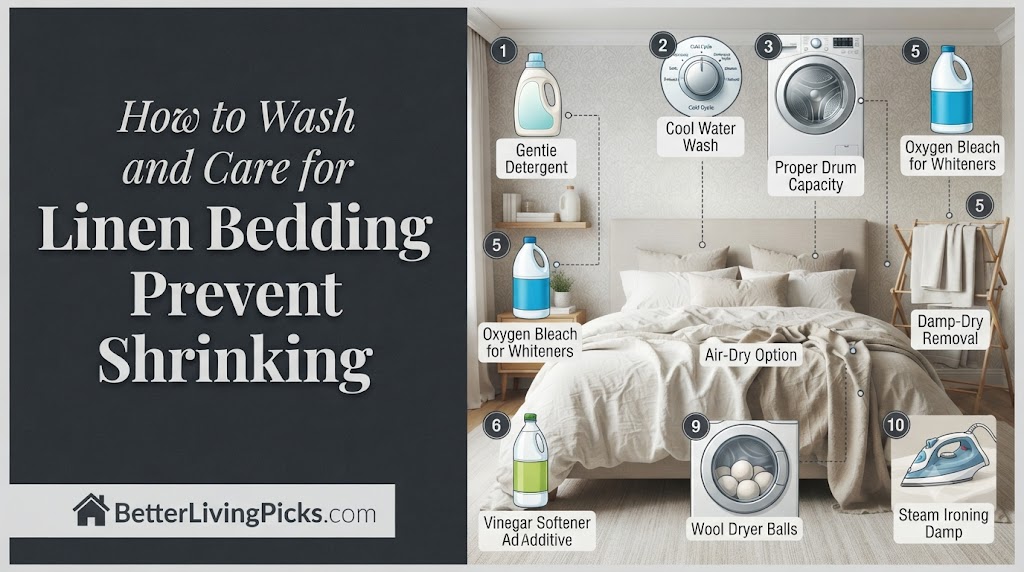
Yes, linen is a plant-based fiber that contracts when exposed to extreme heat. By utilizing cool-water cycles and avoiding high-heat drying, you can effectively prevent structural shrinkage and maintain dimensions.
2. What is the golden rule of washing linen?
Always wash on a gentle cycle with plenty of water. Never crowd the machine; linen needs room to move so the fibers aren’t subjected to intense mechanical stress and abrasion.
3. Can I use a dryer for linen sheets?
Yes, but only on low-heat or air-fluff settings. The goal is to remove 90% of the moisture, then finish the drying process by air-hanging to prevent the fibers from “baking” and shrinking.
4. How do I maintain that signature linen softness?
Skip commercial fabric softeners, which coat fibers in wax and reduce breathability. Instead, use distilled white vinegar in the rinse cycle to naturally strip mineral buildup and soften the weave.
You finally invested in that high-end linen bedding set, but now you’re paralyzed by the fear of ruining it in the wash. We’ve all seen the horror stories. a beautiful, perfectly fitted sheet coming out of the dryer looking like a doll-sized version of its former self. It’s enough to make you want to hand-wash everything in the bathtub, but that simply isn’t a sustainable way to live.
The truth is, linen is one of the most durable textiles in existence, provided you understand the physics of the fiber. Most shrinkage isn’t caused by the water itself, but by the aggressive combination of heat and friction. By shifting your habits from “laundry day” to “fabric maintenance,” you can keep your linen feeling buttery soft and fitting your mattress perfectly for years. Here is the deep-dive guide to mastering your linen care routine and ensuring your investment lasts as long as the flax fibers themselves.
The Physics of Linen: Why It Shrinks
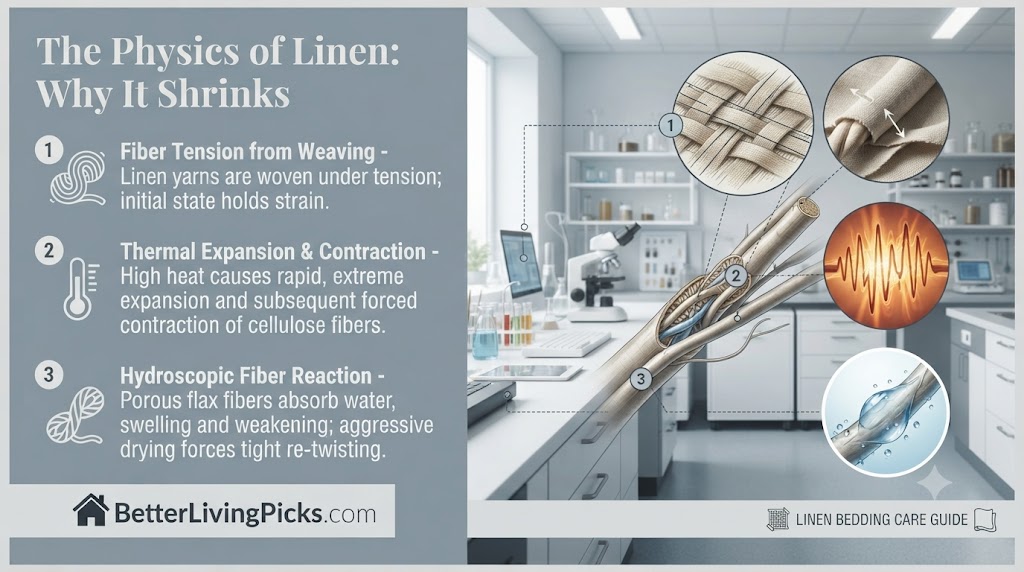
To prevent damage, you must first understand why it happens. Linen is harvested from the stalks of the flax plant. The fibers are long, hollow, and incredibly strong, but they are also highly responsive to thermal changes and moisture levels.
Understanding Fiber Tension
During the manufacturing process, linen yarns are woven under high tension. When you introduce these fibers to a high-heat environment, such as a hot wash or a scorching dryer, the fibers attempt to return to their original, relaxed state. This rapid, forced contraction is what we perceive as shrinkage. Unlike synthetic fibers, which are engineered to remain stable under high heat, natural linen fibers are porous and reactive.
The “Pre-Washed” Reality
You’ve likely seen labels claiming “pre-washed” or “stone-washed” linen. This process is beneficial, as it forces some of that initial contraction in a controlled factory environment using industrial machinery. However, it does not make the linen immune to future shrinkage. It merely gives you a head start. Treating pre-washed linen with the same care as raw linen is the only way to ensure the dimensions remain stable over the life of the bedding.
Mastering the Wash Cycle
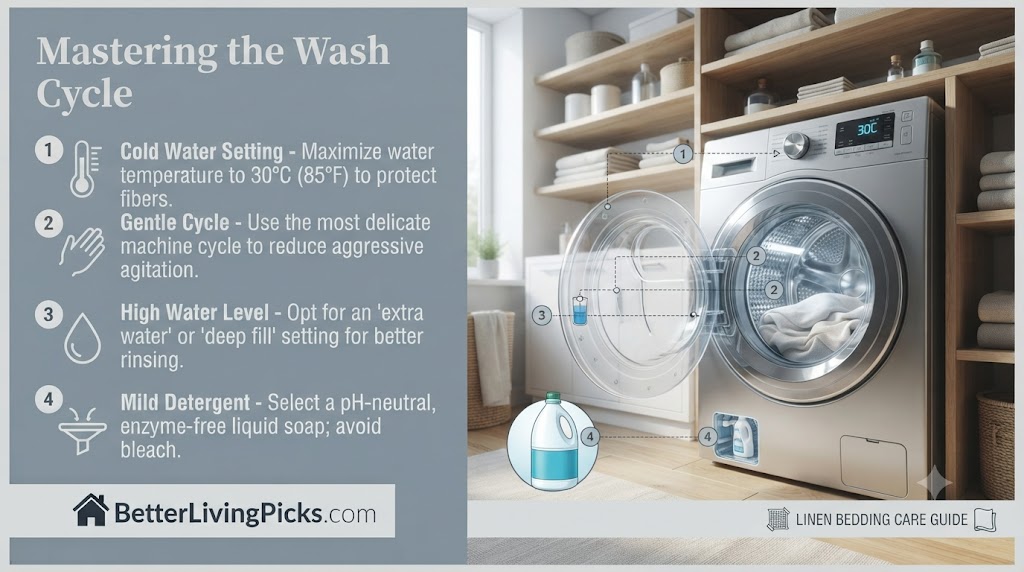
The washing machine is where the most significant damage occurs. If you handle this step correctly, you’ve already won half the battle. This section explores how to optimize your wash parameters to protect the integrity of the weave.
Why Temperature Matters
Think of linen like your skin. If you wash your face in scalding water, it dries out and becomes tight. The same applies to flax fibers. Keep your wash temperature cool or lukewarm (below 40°C/104°F). This temperature is perfectly sufficient to remove sweat, skin cells, and surface dust without stressing the fibers. Using hot water will cause the fibers to expand and contract too rapidly, accelerating the breakdown of the fabric’s structural integrity.
Choosing the Right Detergent
Stay away from heavy-duty detergents laden with optical brighteners, chlorine, and heavy synthetic fragrances. These chemicals are designed to aggressively strip stains from cotton, but they are too harsh for the delicate, porous structure of linen. Use a pH-neutral, plant-based liquid detergent. If you have sensitive skin, an even milder detergent is better, as linen’s porous nature tends to trap soap residue if you use too much.
The Importance of Loading Density
The most common mistake people make is overloading the washing machine. When the drum is packed tight, the linen has no room to expand or move through the water. This creates high friction as the heavy, wet fabric rubs against itself and the drum walls. Over time, this mechanical abrasion causes thinning, pilling, and eventual holes. Fill the drum only 60-70% full to allow for maximum water circulation and gentle movement.
Managing Cycles and Water Level
Always opt for a “Heavy Water” or “Extra Water” setting if your machine allows it. Linen requires a high water-to-fabric ratio to rinse effectively. If the water level is too low, the soap will not be fully washed out, leading to stiff, brittle sheets. A gentle, low-spin cycle is also preferred to prevent unnecessary stretching while the fabric is wet and heavy.
The Drying Protocol
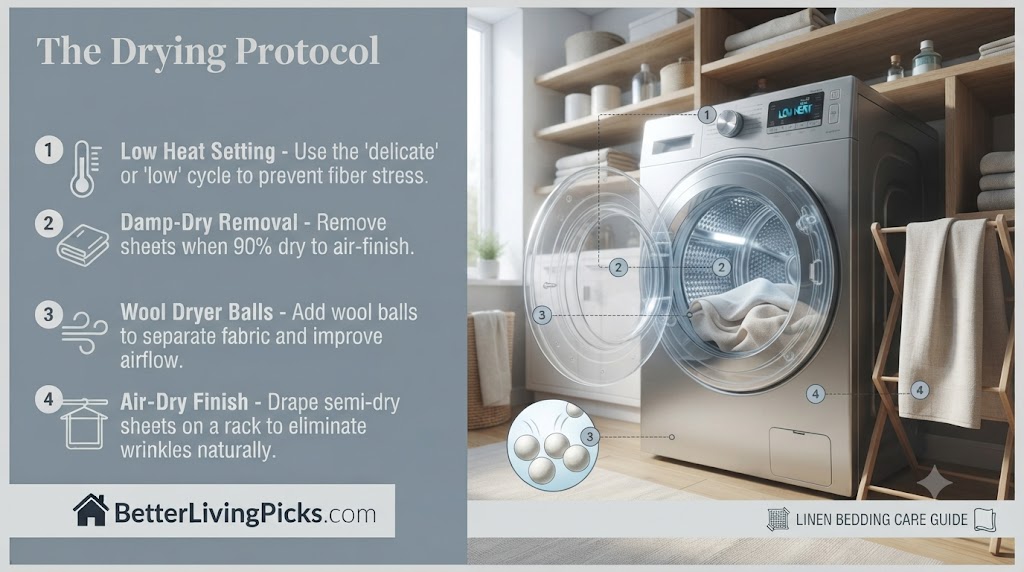
The dryer is the single biggest threat to your bedding. Because linen is highly absorbent, it holds onto moisture, and if you leave it in a high-heat cycle to “get it dry,” you are effectively cooking the flax fibers.
The Power of Air-Drying
If you have the space, air-drying is the gold standard. The gentle breeze and natural environment allow the fibers to relax as they dry. Linen dried on a line has a crisp, fresh texture that artificial heat just can’t replicate. If you are drying indoors, place the rack near an open window to encourage airflow. Avoid placing linen in direct, harsh sunlight for hours, as UV radiation can bleach the dye and cause the fibers to become brittle over time.
Managing the Tumble Dryer
If you lack the space for air-drying, your dryer can be a safe tool if used with precision.
- Use the Lowest Heat Setting: High heat is the enemy. Always select the “low” or “delicate” setting.
- The “Damp-Dry” Strategy: Never wait for the machine to beep to tell you the load is done. Pull your sheets out when they are roughly 85% to 90% dry. The remaining moisture will evaporate quickly once you put them on the bed or drape them over a door.
- Use Wool Dryer Balls: Swap out synthetic dryer sheets for wool balls. They help separate the sheets, improve airflow, and reduce the time the bedding needs to spend in the machine.
- Avoid Over-Drying: The most common cause of shrinkage is leaving linen in the dryer after it has already reached “dry” status. At this point, the heat begins to degrade the fibers directly.
Deep Cleaning: Stains, Maintenance, and Longevity
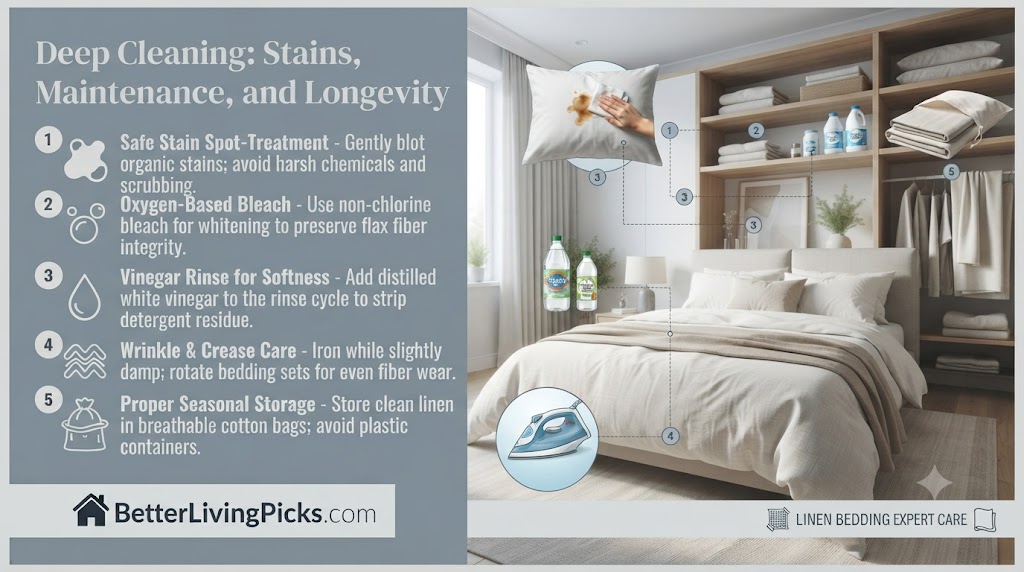
Accidents happen. Whether it’s a morning coffee spill or simple wear and tear, knowing how to handle issues without harsh chemicals is key to a long-lasting set.
Spot Treating Without Chemicals
If you see a stain, do not rub it vigorously. Blot, don’t scrub. Scrubbing pushes the pigment deeper into the porous flax fibers. Use a mixture of cold water and a small drop of your regular detergent. Apply it with a soft cloth and let it sit for five minutes before washing. For organic stains, a mixture of water and a dash of mild dish soap often works wonders without stripping the color.
Oxygen vs. Chlorine
If your white linen is starting to yellow, do not reach for chlorine bleach. Chlorine is a harsh chemical that will dissolve the cellulose in flax fibers, leading to instant weakness and eventual tears. Instead, use an oxygen-based bleach (percarbonate). It is much gentler, breaks down safely in the wash, and will brighten your fabric without compromising its structural integrity.
The Vinegar Rinse Trick
If your sheets start to feel stiff or “gritty,” it is usually due to soap buildup. Adding half a cup of white distilled vinegar to the rinse cycle is a game-changer. It neutralizes the alkalinity of the detergent and leaves the fibers feeling soft and breathable. Do not worry; the smell disappears completely as soon as the linen dries. This also helps to naturally condition the flax fibers.
Preventing Pilling
Pilling occurs when fibers break and tangle together. While some mild shedding is normal for new linen, excessive pilling is a sign of too much friction. Always wash your linen separately from items with zippers, hooks, or buttons. Even a small piece of hardware on a pair of jeans can snag a linen sheet, creating a cycle of damage that grows larger with every wash.
Advanced Care: Seasonal Storage and Rotation
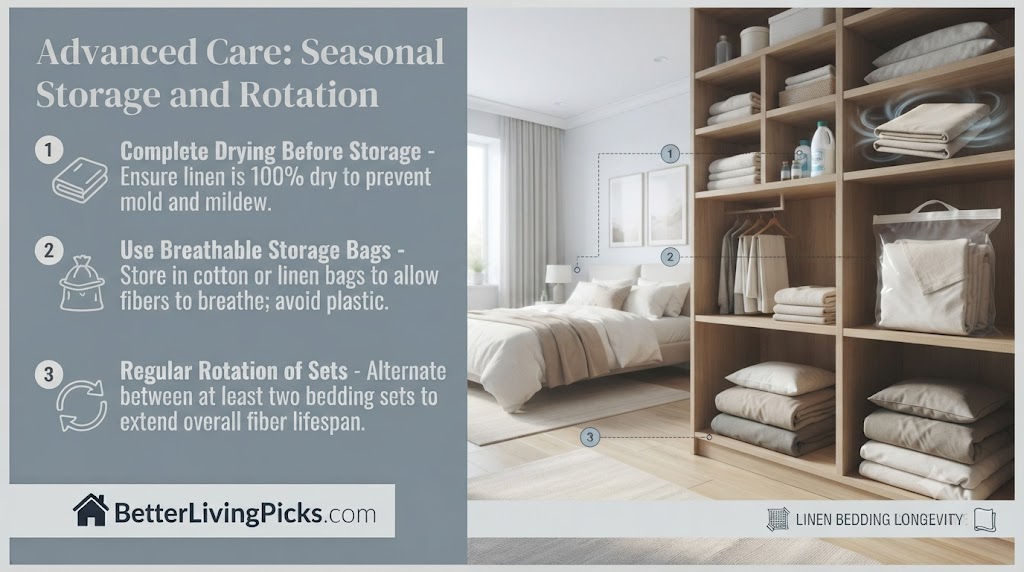
Preparing for Seasonal Storage
When the seasons change, you may need to store your linen bedding. Always ensure the sheets are completely dry before folding them. Even a small amount of residual moisture can lead to mold or mildew growth, which is impossible to remove from natural fibers. Store them in a cool, dry place, preferably in a breathable cotton or linen storage bag. Avoid plastic bins, which can trap humidity and yellow the fabric over time.
The Importance of Rotation
Just like rotating your mattress, rotating your bedding sets ensures even wear. If you have two sets of sheets, switch them every time you wash. This gives the fibers a “rest period,” which is actually vital for natural materials to maintain their shape, elasticity, and overall structural integrity over long periods. It allows the flax fibers to “breathe” and recover from the compression of use on the bed.
Understanding the “Break-In” Period
Many people are surprised that linen actually feels softer after a year of use than it does on day one. This is because the cellulose in the flax fiber breaks down slightly and softens through repeated friction and washing. Do not be discouraged if your new sheets feel slightly “starchy” at first; they are designed to soften and drape better with time.
Frequently Asked Questions
H3: Should I wash my new linen sheets before using them?
Yes. Washing your new linen sheets once or twice before the first use is essential. This not only cleans the fabric of any warehouse dust or shipping residues but also begins the softening process. You will notice the fabric feels noticeably more pliable and soft after that first wash.
H3: Will ironing help or hurt my linen sheets?
Ironing is perfectly safe for linen, provided you use the correct technique. Always iron your linen while it is still slightly damp. Using a high-heat iron on dry linen can cause the fibers to become scorched and brittle, which shortens the lifespan of your sheets. If you prefer a crisp look, use a steam setting to help the wrinkles relax without damaging the fibers.
H3: Why does my linen bedding have lint?
It is perfectly normal for high-quality linen to shed lint during the first few cycles. This is simply a natural part of the “breaking-in” period. These are loose fibers left over from the loom during the weaving process and will cease entirely after about 4 to 5 washes. Regular washing helps to remove these loose strands efficiently.
H3: Is it okay to mix linen with other fabrics in the wash?
It is highly recommended to wash your linen separately. Zippers, bra hooks, and buttons on other clothing items can snag the delicate weave of your linen, leading to small pulls or holes. Additionally, heavy items like towels can create too much friction, causing the linen to pill and thinning out the fabric over time.
H3: What should I do if my linen sheets become stiff?
Stiffness in linen is almost always caused by one of two things: detergent buildup or hard water mineral deposits. Adding a cup of white vinegar to the rinse cycle is the most effective way to strip this buildup. It works like a natural fabric softener and returns the linen to its original softness without the use of harsh chemicals.
H3: How often should I wash linen bedding?
You don’t need to wash linen as frequently as cotton. Linen is naturally moisture-wicking and antimicrobial, meaning it resists bacteria and odors much better than synthetic fabrics. Washing every 7 to 14 days is usually the sweet spot for maintaining hygiene without over-processing the fabric or risking premature wear.
Final Thought
Caring for linen bedding is less about following a rigid set of rules and more about understanding the nature of the material. Once you shift your perspective to value the durability of flax, you’ll stop fearing the laundry day and start appreciating the longevity of your investment. Linen is designed to get softer and more beautiful with every single wash, provided you treat it with a little bit of patience. By using cool water, avoiding heavy chemicals, and skipping the high-heat cycle, you are ensuring that your bedding remains a comfortable sanctuary for years. Embrace the wrinkles, respect the process, and enjoy the cooling comfort of your well-maintained linen for seasons to come.

