

Eco-friendly home decor involves using furnishings, paints, and accents made from renewable, non-toxic, recycled, or ethically sourced materials that minimize environmental degradation and protect indoor air quality.
2. How do I avoid greenwashing when buying decor?
Look past vague terms like natural or eco-chic and demand transparent supply chains, verified third-party certifications like OEKO-TEX or FSC, and clear disclosures of material origins.
3. What are the best non-toxic fabrics for sustainable styling?
Prioritize unblended organic cotton, European flax linen, and industrial hemp fibers. These textiles require fewer pesticides to grow and biodegrade safely at the end of their lifecycle.
4. Is vintage shopping really better for the planet?
Buying secondhand furniture completely eliminates the carbon footprint of manufacturing new items, keeps solid wood heirlooms out of landfills, and avoids modern toxic glues and off-gassing.
Walking into a freshly decorated home shouldn’t mean breathing in a cocktail of hidden volatile organic compounds and chemical resins. Many popular design trends rely on fast-furniture practices that quietly degrade indoor air quality and fill landfills within a few short years.
Shifting toward sustainable interior design is about cutting through misleading marketing labels to create a healthier, more conscious living space. This guide walks you through real-world solutions for sourcing safe materials, upcycling vintage pieces, and styling your home with purpose.
Prioritize solid reclaimed wood furniture and 100% European flax linen textiles for maximum long-term durability, zero toxic off-gassing, and an authentic timeless aesthetic that easily outlasts fast-furniture trends.
Understanding Eco-Friendly and Sustainable Home Decor

What Makes a Product Truly Sustainable?
A product achieves true sustainability when its entire creation process respects both ecological boundaries and human labor rights. This means looking at whether the raw materials regenerate naturally like bamboo or cork, or whether they are rescued from the waste stream like reclaimed barn wood. You want to see closed-loop manufacturing where waste products are repurposed rather than dumped. Avoid items shipped across oceans when regional alternatives exist to reduce transport emissions.
The Hidden Traps of Greenwashing in Decor
Marketers love slapping earthy green labels and rustic brown cardboard tags on plastic-heavy items to trick conscious consumers. Greenwashing relies on vague descriptors like eco-conscious or earth-friendly without providing any verifiable evidence or material percentages. Always check the fine print for actual certifications like Global Organic Textile Standard (GOTS) or Forest Stewardship Council (FSC). If a brand hides its manufacturing details behind corporate jargon, walk away.
Evaluating the Full Lifecycle of Decor Materials
True sustainability requires tracking an item from the extraction of its raw elements all the way to its eventual disposal. Ask yourself what happens when this item breaks or goes out of style. Can it be composted in a backyard bin, broken down safely for municipal recycling, or will it sit in a landfill for five hundred years? Designing a sustainable home means choosing items that feed back into a circular economy.
Balancing Aesthetics with Environmental Impact
Eco-friendly styling does not mean your living room has to look like an unfinished ascetic cave. Modern sustainable decor blends clean minimalism with warm textures to create spaces that feel both luxurious and grounded. Prioritize versatility over fleeting trends so your design choices remain visually appealing and functional for decades. The most sustainable object is the one you never feel compelled to replace.
Sourcing Ethical and Non-Toxic Materials

Reclaimed Wood and Bamboo Options
Solid wood furniture adds unmatched warmth to a room, but logging old-growth forests devastates delicate ecosystems. Reclaimed wood rescues timber from old barns, factories, and shipping pallets, giving history a second life in your coffee table or shelving. Bamboo serves as an exceptional alternative because it grows at astonishing speeds without needing chemical fertilizers or replanting. Always verify that bamboo adhesives are formaldehyde-free to keep your indoor air safe.
Organic Textiles: Linen, Hemp, and Organic Cotton
Traditional textile production dumps massive amounts of synthetic dyes and agricultural pesticides into local waterways. Organic cotton eliminates toxic pesticides, while flax linen requires minimal water and thrives in poor soil conditions. Hemp fiber represents another powerhouse choice, yielding strong, breathable fabrics that naturally resist mold and ultraviolet degradation. Insist on unblended single-fiber fabrics so the textiles remain fully biodegradable at the end of their use.
Natural Stone, Cork, and Earth-Based Finishes
Flooring and accent materials play a massive role in your home’s environmental footprint and chemical load. Cork flooring is harvested by stripping the bark off living cork oak trees, meaning no trees are cut down in the process. Natural stones like slate, soapstone, and terracotta provide durable, long-lasting surfaces that require minimal processing compared to synthetic tiles. These earth-based materials ground your rooms while keeping toxic resins completely out of your living space.
Avoiding Synthetic Plastics and Petrochemical Resins
Petrochemical plastics and synthetic foams sneak into modern decor through polyester pillow stuffing, faux-leather upholstery, and acrylic decor accents. These materials shed microplastics into your household dust and release persistent organic pollutants over time. Swap out synthetic stuffing for natural kapok fibers, organic wool, or shredded latex. Eliminating petrochemicals drastically cleans up the air you breathe every single day.
Low-Impact Wall Treatments and Paints
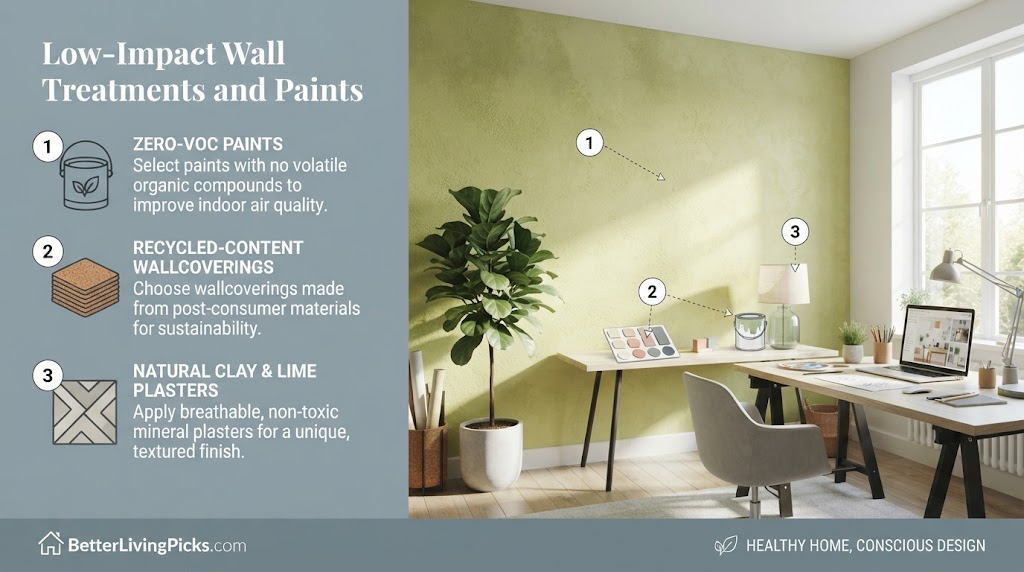
Choosing Zero-VOC and Mineral Paints
Standard interior paints release volatile organic compounds long after the walls dry, causing headaches and respiratory irritation. Zero-VOC and low-VOC paints drop these chemical emissions down to near-zero levels. Mineral paints, such as silicate or lime washes, take sustainability a step further by using earth minerals that cure through a chemical reaction with the wall rather than evaporating toxic solvents. These mineral finishes create a breathable, velvety texture that naturally resists mold growth.
Sustainable Wallpaper Alternatives and Natural Pastes
Traditional vinyl wallpapers are notoriously difficult to recycle and often release plasticizers into your home environment. Look for wallpapers printed on FSC-certified paper using water-based, non-toxic inks. When hanging wallpaper, skip synthetic chemical glues and mix your own natural wheat paste or use plant-based cellulose adhesives. Natural adhesives eliminate chemical odors during application and make future removal effortless and clean.
Limiting Off-Gassing in Living Spaces
Walls and ceilings cover the largest surface area in your home, making their treatment critical for overall air quality. If you are renovating an older room, seal existing mystery coatings with a safe primer before applying a clean topcoat. Keep interior spaces well-ventilated during any painting or wallpapering project, and use air scrubbers if necessary. Taking these steps prevents chemical buildup in airtight modern construction.
Repairing and Maintaining Natural Wall Finishes
Natural lime and clay plasters require a slightly different maintenance approach than standard acrylic latex paints. Minor scuffs and small cracks can often be spot-repaired using a damp sponge or a thin slurry of matching plaster material. Avoid harsh chemical cleaners on natural walls, opting instead for mild plant-based soaps if surface washing becomes necessary. Proper maintenance ensures your walls look rich and textured for decades without requiring a full chemical strip-down.
Upcycling and Thrift Store Styling Mastery

Finding Hidden Gems at Secondhand Markets
Thrifting furniture and home decor offers the ultimate zero-waste styling method by bypassing factory production lines entirely. Scan local estate sales, community flea markets, and online peer-to-peer marketplaces for solid wood construction pieces. Do not let outdated hardware or ugly upholstery scare you away from a structurally sound frame. A little vision turns discarded objects into custom statement pieces.
Simple DIY Refinishing Techniques and Safe Strippers
Stripping old paint or varnish used to require harsh methylene chloride solvents that burned skin and ruined indoor air. Modern eco-friendly gel strippers use citrus or soy bases to lift old finishes safely without toxic fumes. Sand down surfaces by hand or with a dust-extracting sander, then finish the wood with food-grade walnut oil or natural beeswax. These simple hand-rubbed finishes highlight natural grain patterns far better than shiny plastic lacquers.
Repurposing Everyday Objects into Unique Decor
Sustainable styling encourages creative thinking about items normally destined for the recycling bin or trash can. Turn old glass jars into kitchen storage canisters, glass bottles into minimalist flower vases, or weathered wooden crates into floating wall shelves. Look past an object’s original function and focus entirely on its shape, color, and texture. This approach saves money while giving your home a deeply personalized, collected-over-time character.
Overcoming Structural Flaws in Vintage Items
Vintage furniture occasionally suffers from loose joints, sticky drawers, or minor cosmetic chips. Fix wobbly chair legs by clearing out old dried glue, clamping the joints, and injecting fresh non-toxic wood glue. Sand down sticky wooden drawer runners and rub them with plain beeswax for a smooth, silent glide. Tackling these minor repairs yourself builds practical skills and extends the lifespan of quality craftsmanship.
Lighting and Energy Efficiency in Styling
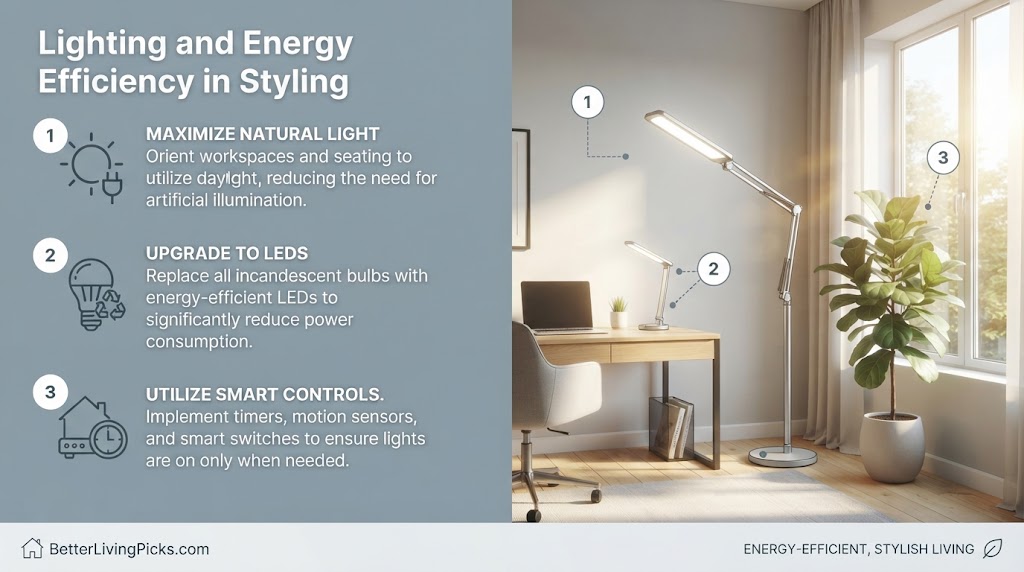
Choosing LED and Solar Accent Lights
Lighting dramatically shifts the mood of a room, but outdated incandescent bulbs waste massive amounts of energy as heat. Swap all accent and overhead fixtures to high-efficiency LED bulbs that draw a fraction of the electricity and last for years. For outdoor patios, entryways, or sunny indoor windowsills, integrate small solar-powered accent lamps that run completely off-grid. These upgrades lower your monthly utility bills while reducing regional power demand.
Opt for naturally harvested cork flooring. It offers unmatched thermal insulation, natural shock absorption, and antimicrobial benefits without requiring the clear-cutting of mature forests.
Maximizing Natural Daylight with Smart Furniture Placement
The most sustainable source of light is the free sunshine coming through your windows. Position heavy furniture away from window frames to let maximum daylight flood deep into your living spaces. Hang mirrors strategically opposite windows to bounce natural light around dark corners of the room. This layout reduces your daytime reliance on artificial lighting and naturally boosts your daily mood.
Selecting Energy-Efficient Fixtures and Smart Timers
When purchasing new light fixtures, look for designs made from sustainably sourced metals, ceramics, or recycled glass. Pair these fixtures with smart wall switches or outlet timers that automatically cut power to ambient lights when rooms sit empty. Automation prevents wasted electricity caused by leaving accent lamps burning overnight or during long workdays. Simple technological controls optimize energy usage without requiring daily micro-management.
Choosing Non-Toxic Candle and Ambient Lighting Alternatives
Conventional paraffin wax candles are petroleum byproducts that release soot and toxic benzene into indoor air when burned. Swap them out for 100 percent pure beeswax or soy wax candles with unbleached cotton wicks. Beeswax candles actually release negative ions as they burn, helping to purify ambient dust particles rather than adding to indoor pollution. You can also craft warm ambient lighting using LED string lights woven through natural driftwood or glass vessels.
Creating Biophilic Spaces with Houseplants
Air-Purifying Indoor Plants for Every Room
Houseplants do more than just look pretty; they reconnect your indoor environment with the natural world outside. Varieties like snake plants, spider plants, and peace lilies actively filter common indoor toxins like formaldehyde and xylene from the air. Group plants with varying leaf heights and textures together in living areas to create vibrant, living focal points. Caring for greenery brings a meditative rhythm into your daily routine.
Sustainable Planters and Pots Made from Recycled Material
Standard plastic nursery pots and heavy glazed ceramics carry a surprising environmental manufacturing footprint. Look for planters crafted from recycled ocean plastics, compressed rice hulls, or biodegradable terra cotta sourced from local artisans. Ensure your pots feature proper drainage holes to protect plant roots from root rot and extend the health of your indoor garden. Buying from regional potters also supports your local creative economy.
Ethical Soil and Organic Plant Food Sourcing
Commercial potting soils often rely on harvested peat moss from ancient peat bogs, which destroys vital carbon-sink ecosystems when mined. Choose peat-free potting mixes made from renewable coconut coir, composted bark, and perlite. Feed your indoor plants using organic plant foods derived from worm castings or liquid kelp rather than synthetic chemical fertilizers. These natural amendments nourish the soil microbiome without polluting local waterways.
Arranging Greens for Optimal Indoor Microclimates
Grouping houseplants together creates a mini humid microclimate that helps individual leaves thrive during dry winter heating months. Place moisture-loving ferns near bathroom windows, while drought-tolerant succulents sit happily on bright kitchen windowsills. Proper placement reduces the need for artificial plant care supplements and keeps your indoor jungle healthy with minimal effort.
Mindful Decluttering and Minimalism in Sustainable Spaces
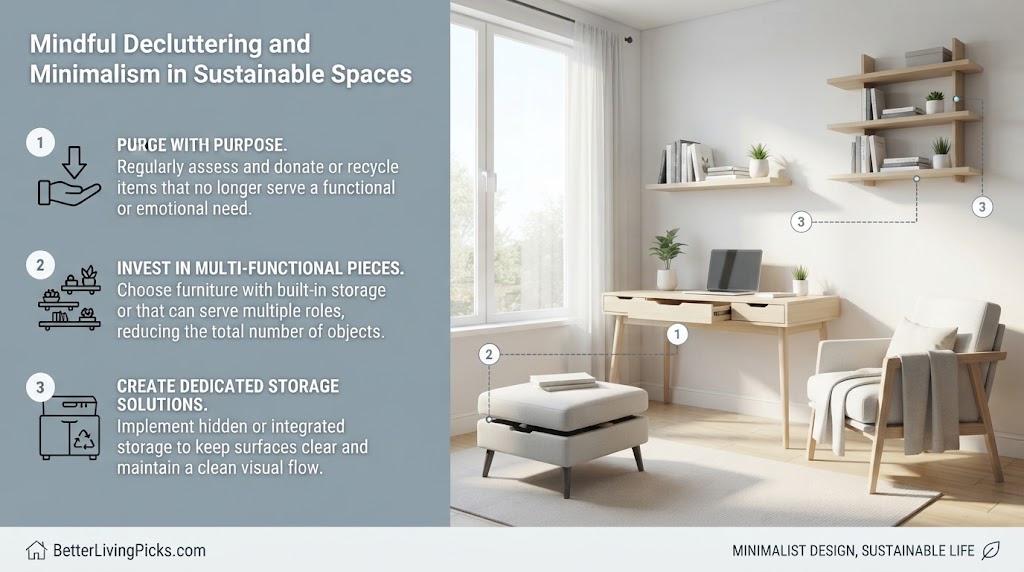
The Psychology of Less: Quality Over Quantity
Sustainable decor starts with a mindset shift away from impulse shopping and towards intentional curation. Buying fewer, higher-quality items reduces clutter and lets individual design pieces truly shine in your space. Evaluate every new purchase by asking if it serves a distinct functional purpose or brings genuine emotional joy. Letting go of clutter clears physical space and mental bandwidth simultaneously.
Sustainable Storage and Organization Systems
Organizing your home sustainably means avoiding cheap plastic bins that crack and end up in landfills within a season. Invest in woven seagrass baskets, durable wooden storage chests, or stackable glass jars for pantry and shelf organization. These natural containers keep items tidy while aging gracefully through years of daily use. Good storage systems make maintaining a minimalist environment effortless.
Donating, Reselling, and Diverting Waste from Landfills
When it is time to refresh your decor, resist the urge to throw unwanted items straight into the trash bin. Sell gently used furniture on local marketplaces, donate textiles to community shelters, or organize a neighborhood swap meet with friends. Diverting usable items from landfills keeps the circular economy moving and helps neighbors furnish their homes affordably. Every item kept out of the waste stream is a win for the planet.
Cultivating Long-Term Attachment to Timeless Pieces
The secret to sustainable home decor is falling in love with pieces built to last a lifetime. Choose classic silhouettes, neutral earth tones, and solid craftsmanship that adapt easily as your personal style evolves. When you value what you own, you take better care of it and stop the endless cycle of replacement. Building a conscious home is a rewarding journey toward simpler, healthier living.
- Prioritize circular sourcing: Buying vintage and second-hand furniture completely eliminates new manufacturing footprints.
- Protect indoor air quality: Always select zero-VOC paints, natural mineral finishes, and formaldehyde-free materials.
- Embrace biophilic design: Use air-purifying houseplants and natural fibers to ground your living spaces naturally.
- Focus on intentional curation: Buy fewer, higher-quality items that last for decades rather than following fast-decor trends.
Frequently Asked Questions
What are the easiest ways to start making my home decor more sustainable?
Begin by auditing your current space for plastic-heavy items and toxic air fresheners. Swap out old light bulbs for LEDs, add a few air-purifying houseplants, and commit to sourcing your next furniture piece from a local thrift market or vintage dealer.
Are eco-friendly furniture pieces more expensive than regular furniture?
Initial price tags for solid wood or organic fabric items can sometimes run higher than mass-produced particle board alternatives. However, sustainable pieces last exponentially longer, saving you money over time by eliminating replacement costs.
How do I know if a paint brand is truly zero-VOC?
Check the product technical data sheet for explicit VOC gram-per-liter measurements rather than relying solely on front-label marketing claims. True zero-VOC paints contain less than five grams of volatile organic compounds per liter.
What is the best material for eco-friendly window curtains?
European flax linen and unbleached organic cotton make exceptional curtain choices because they filter sunlight softly while remaining fully biodegradable and free of chemical fabric treatments.
How can I make my rental apartment more sustainable without major renovations?
Focus on movable elements like organic cotton throw blankets, natural fiber jute rugs, non-toxic soy wax candles, and potted houseplants. These accents require no permanent structural changes while instantly greening your space.
Why is particle board furniture bad for the environment?
Particle board uses cheap wood scraps held together by synthetic petrochemical glues that off-gas formaldehyde into your indoor air. These items warp easily, resist repair, and break down quickly into permanent landfill waste.
How do I properly care for reclaimed wood furniture?
Clean reclaimed wood surfaces using a slightly damp microfiber cloth followed by natural beeswax or food-grade walnut oil to nourish the grain. Avoid soaking the wood with water or harsh commercial chemical sprays.
What houseplants are safest for homes with pets?
Spider plants, Boston ferns, parlor palms, and calatheas provide excellent air purification while remaining completely non-toxic if accidentally nibbled by curious cats or dogs.
Is cork flooring durable enough for high-traffic areas like kitchens?
High-density cork flooring handles everyday foot traffic remarkably well because its natural cellular structure provides flexible shock absorption. Re-seal cork surfaces every few years with natural sealants to protect against moisture spills.
How do I dispose of old synthetic home decor responsibly?
Check if local community art centers, theater groups, or charitable organizations can repurpose your items. If the items are completely worn out, check local municipal guidelines for textile recycling or bulky waste drop-off programs.
Creating Your Conscious Living Space
Transforming your home into an eco-friendly sanctuary does not require an all-or-nothing renovation overnight. By making intentional swaps one room at a time, you build a healthier living environment while protecting our planet’s shared resources for the future.

