

Start by completely clearing out non-essential items and identifying a single focal point, such as a window view or a fireplace, before bringing any furniture back into the space.
2. What color palette works best for minimalism?
Stick to warm neutrals, soft creams, and monochromatic tones. Layering different textures like linen, wood, and wool prevents the room from feeling cold or sterile.
3. How do you choose furniture for a minimalist space?
Prioritize multi-functional furniture pieces like storage ottomans or nesting coffee tables that serve a distinct purpose while maintaining clean, low-profile lines.
4. How do you prevent a minimalist room from looking empty?
Introduce organic elements and varied textures, such as large indoor plants, woven baskets, and statement lighting fixtures, to add warmth and visual depth without clutter.
Walking into a living room that feels peaceful, calm, and uncluttered is a wonderful experience, but keeping it that way while actually living in your home is a daily challenge. Mail piles up on the coffee table, backpacks and shoes find their way onto the floor, throw blankets end up in a messy heap on the couch, and suddenly your serene sanctuary feels more like a crowded storage unit. The reality of modern family life or even single living means that physical spaces naturally attract items over time, creating a creeping sense of disorder that weighs on your daily state of mind.
True minimalist living room design is not about stripping your home of comfort, forcing yourself to sit on hard wooden benches, or living in an empty, sterile white box that feels unlivable. Instead, it is a deliberate practice of strategic editing, choosing multi-functional pieces, and creating a layout that supports your actual lifestyle without adding unnecessary visual noise. When you design a living room with both form and practical function in mind, you stop fighting your physical space and start enjoying a room that actively lowers your stress levels at the end of a long, demanding workday.
The Core Philosophy of Functional Minimalism

Why Aesthetic Alone Fails in Real Homes Many design magazines and social media feeds showcase minimalist rooms that look breathtaking in professionally styled photographs, but they fall apart the moment a real family tries to watch a movie, play a game, or read a book. Purely aesthetic minimalism relies on hiding every single trace of human habitation behind closed cabinet doors, which becomes exhausting to maintain after just a few days of normal living. If a room does not comfortably accommodate remote controls, charging cables, extra reading glasses, and genuinely comfortable seating, it completely fails the real-world test. True design success means creating a space that looks curated and intentional yet invites actual daily use without fear of ruining the visual composition.
Defining the Core Rule: Every Item Must Earn Its Place The foundational rule of functional minimalism is that every single object must serve a clear purpose or bring genuine, lasting joy. Decorative knick-knacks bought on impulse during a weekend shopping trip quickly turn into visual clutter that drains your mental energy. When evaluating items for your living room, you must ask yourself whether the piece actively improves your daily routine, physical comfort, or emotional well-being. If an object only takes up physical space and collects dust, it is time to remove it from the room entirely rather than finding a place to hide it.
Understanding Psychological Impact of Visual Noise Human brains process visual information constantly, and every stray item, chaotic color clash, or crowded surface demands a tiny fraction of our cognitive bandwidth. By intentionally reducing visual noise through clean surfaces and orderly arrangements, you create an environment that promotes deep relaxation and mental clarity. This is why a well-designed minimalist living room feels instantly calming the moment you step across the threshold after a stressful day at work.
Clearing the Canvas: Decluttering and Layout Basics
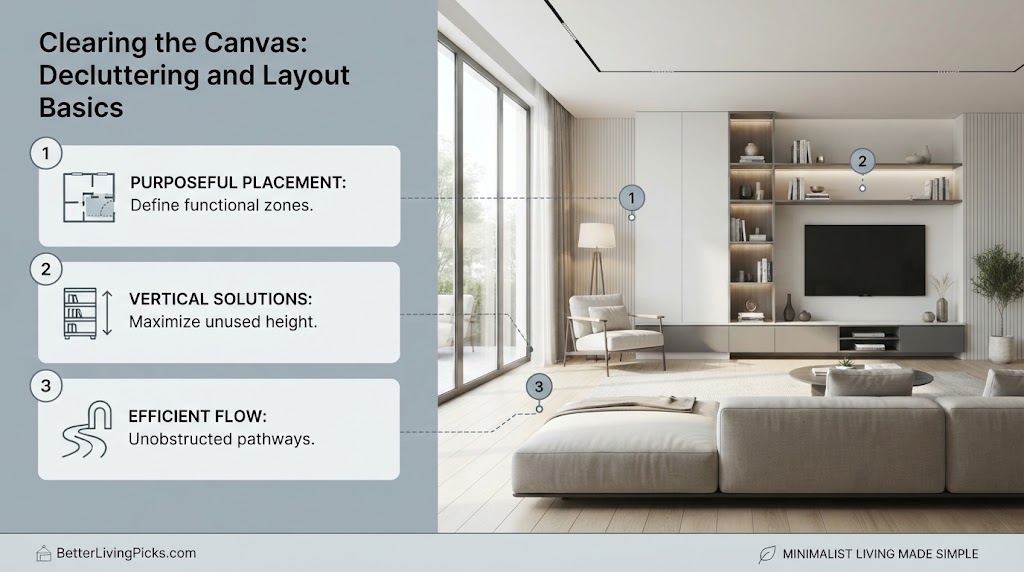
Assessing Traffic Flow and Focal Points Before buying any new items or rearranging what you already own, map out how people naturally move through your living room on a typical day. Blocked pathways, awkward turns, and cramped walking routes instantly make a room feel stressful and small, no matter how few items are inside. Anchor the room around a single natural focal point, such as an architectural fireplace, a large picture window with a garden view, or a dedicated media center, rather than blindly cramming furniture against every available wall perimeter.
Ruthless Editing: What Stays and What Goes The most effective way to reset a living room is to empty the space entirely so you can understand its true dimensions, lighting behavior, and architectural quirks. Sort your belongings into strict keep, donate, and discard piles based on how often you actually interact with them over a typical month. Keep only the core seating arrangements, essential lighting fixtures, and functional flat surfaces necessary for daily living. Everything else should be stored away or rehomed to prevent the return of passive clutter.
Designing Around Open Space and Negative Space In minimalist design, empty space often called negative space is not a void to be filled; it is an active design element. Allowing blank walls and clear floor areas to breathe gives the eye a place to rest and emphasizes the specific furniture pieces you have carefully chosen to keep. Resisting the urge to fill every corner is often the hardest part of the decluttering process, but it yields the most rewarding visual results and spatial freedom.
Choosing Functional Furniture Without Cluttering the Room

Prioritizing Multi-Use Pieces In a minimalist living room, furniture needs to work much harder to earn its physical footprint. Choose storage ottomans that can comfortably hide extra throw blankets, board games, or media accessories completely out of sight. Nesting coffee tables offer generous surface space when you need it for hosting guests and tuck away easily to open up floor area during family gatherings or children’s playtime.
Scale and Proportion Mistakes to Avoid A very common design mistake is filling a large living room with tiny, delicate furniture that makes the space look unfinished, awkward, and unanchored. Conversely, oversized sectional sofas can easily swallow small rooms and destroy open sightlines. Match your furniture scale carefully to the physical dimensions of the room to maintain a balanced, breathable atmosphere that feels harmonious from every single viewing angle.
Selecting Materials with Integrity and Longevity When keeping your furniture count low, the quality and material integrity of each remaining piece matter immensely. Invest in solid wood frames, durable natural leather, and high-density foam cushions that withstand daily wear and tear without sagging or looking worn out. Choosing timeless materials ensures your minimalist living room ages gracefully over the years instead of looking like a passing trend.
Color Palettes, Lighting, and Texture Balance

Working with Warm Neutrals and Monochromatic Tones Monochromatic color schemes create a seamless, uninterrupted visual flow that tricks the eye into thinking a room is larger and airier than it actually is. Opt for warm whites, soft greys, and earthy taupes rather than stark, icy clinical whites that feel cold and unwelcoming. These warm, inviting tones bounce natural light gracefully around the room while keeping the environment cozy during darker evening hours.
Layering Textures Instead of Adding Objects When you remove patterns, loud colors, and excessive decorative items, texture becomes your primary and most powerful design tool. Combine smooth wood surfaces, woven jute rugs, coarse linen upholstery, and brushed metal fixtures. This tactile variety adds immense depth and personal character to the room without relying on physical clutter or visual chaos.
Maximizing Natural Light and Ditching Heavy Drapes Heavy, dark velvet curtains trap natural light and block outdoor views, instantly shrinking the perceived size of any living room. Swap them out for sheer roller shades or lightweight linen panels mounted high near the ceiling line to draw the eye upward. Maximizing daylight instantly amplifies the clean lines of minimalist architecture and boosts your daily mood.
Integrating Layered Artificial Lighting Schemes Natural light is wonderful during the day, but a functional minimalist living room also requires a well-thought-out artificial lighting plan for the evening. Avoid relying on a single, harsh overhead ceiling light fixture. Instead, layer ambient floor lamps, targeted reading lights, and warm accent sconces to create pools of light that make the space feel intimate and welcoming.
Maintaining the Minimalist Living Room Over Time

The One-In, One-Out Maintenance Rule Clutter creeps back into a living room very slowly through casual daily habits, seasonal changes, and impulse shopping sprees. Combat this gradual drift by strictly enforcing the one-in, one-out rule for decor, throw pillows, and decorative objects. If you buy a brand new ceramic vase for the shelf, an older decorative piece must leave the house through donation or sale.
Handling Everyday Clutter Creep Designate a specific, hidden drop zone near the entryway or inside a dedicated media console for everyday items like mail, keys, wallets, and phone chargers. Clearing flat surfaces for just five minutes every evening keeps your minimalist space functional, serene, and ready for relaxation the next morning. Building this quick habit prevents clutter from compounding over the course of a busy workweek.
Resetting Your Space Seasonally Life changes with the seasons, and your living room should adapt gently without losing its minimalist core. Dedicate a weekend every few months to review what items are serving you. Swap out lightweight summer linens for cozy winter wool blankets, and remove any items that accumulated during busy holiday periods to keep your space fresh and intentional year-round.
Frequently Asked Questions
How do you keep a minimalist living room cozy and warm?
Counteract the coolness of clean lines by introducing tactile organic elements like raw wood furniture, soft wool throw blankets, and warm-toned LED lighting bulbs.
What is the best rug size for a minimalist living room?
Choose an area rug large enough that the front legs of all major seating pieces rest comfortably on top, which anchors the furniture grouping and defines the conversation zone.
How do you handle electronics and cords in a minimalist design?
Hide cords using in-wall raceways, cord management sleeves, or closed-back media consoles that keep unsightly wires completely out of sight.
Are white walls mandatory for minimalist interior design?
White walls are popular because they maximize light reflection, but any soft, desaturated neutral tone like muted sage or warm beige works effectively.
How do I arrange furniture in a small minimalist living room?
Float major furniture pieces slightly away from the walls rather than pushing them flat against the perimeter to create a more spacious, breathable layout.
How often should I declutter my living room to maintain minimalism?
Perform a quick five-minute surface reset every single evening, and conduct a thorough deep review of your space and items once every change of season.
Embracing a minimalist living room design is ultimately an investment in your personal peace of mind and everyday quality of life. By shifting your focus away from accumulating things and toward selecting items that provide genuine utility and aesthetic harmony, you transform your home into a restorative haven. Take the process at your own pace, enjoy the intentional editing of your surroundings, and relish the calm environment you create.

