
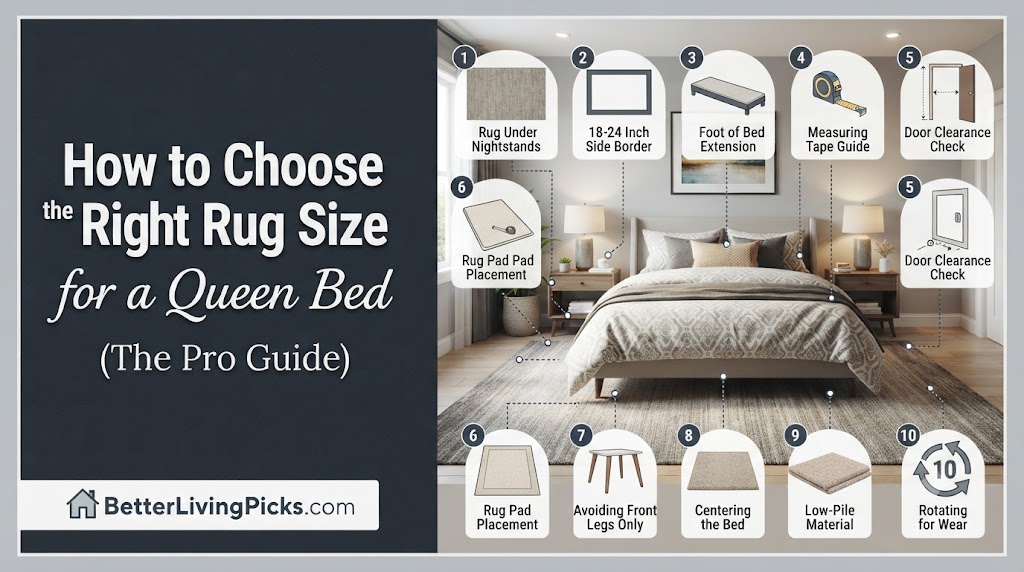
An 8×10 foot rug is the industry standard. It provides ample coverage on the sides and bottom to frame the bed perfectly while grounding the nightstands in most bedroom layouts.
2. Where should the rug start in relation to the bed?
Place the rug perpendicular to the bed. It should start roughly 12–18 inches in front of your nightstands, ensuring your feet land on soft fibers rather than hard flooring when stepping out.
3. Does the rug need to go under the nightstands?
It is optional, but for a cohesive, high-end look, pull the rug under the front legs of the nightstands. If space is tight, stopping just before the nightstands is also acceptable.
4. What is the biggest mistake people make?
The most common error is buying a rug that is too small. A small rug makes the bed look like an isolated island and shrinks the room, whereas a larger rug pulls the entire space together.
We have all been there, you buy a beautiful area rug, slide it under your queen bed, and realize it makes the room feel smaller, not cozy. It is the most frustrating part of bedroom styling. You want that soft, luxurious feel under your feet in the morning, but getting the proportions wrong usually leads to a cluttered look or a tripping hazard.
The secret isn’t just about the rug size; it is about how that rug interacts with your nightstands and the remaining floor space. Once you nail the placement, the whole room feels anchored and professionally designed. Let’s look at the actual numbers and layouts that work every time so you can stop guessing and start styling.
The Golden Rule: How Big Should the Rug Actually Be?
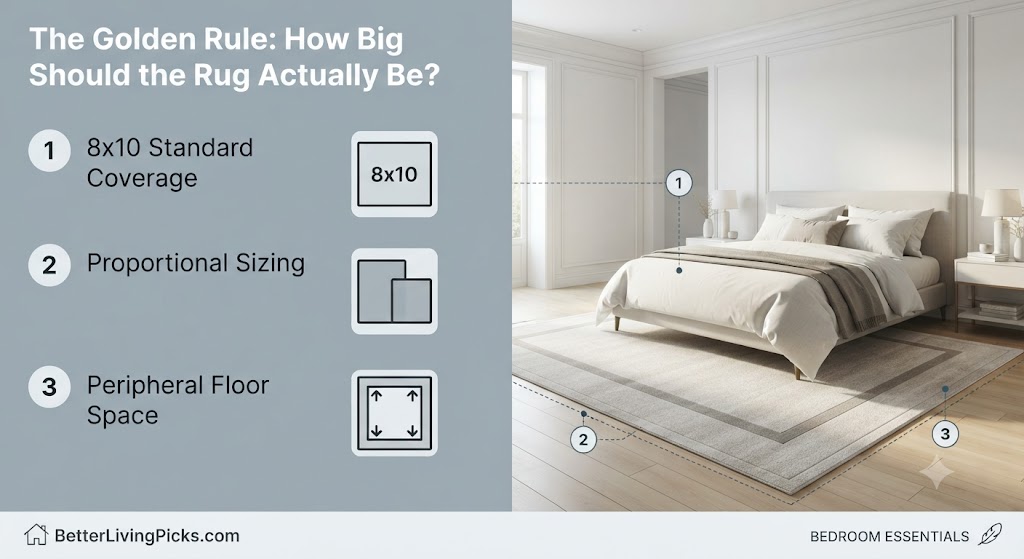
Choosing a rug size feels like a guessing game until you look at the floor plan. The goal is to create a “landing zone” for your feet so you don’t wake up to a cold hardwood or tile floor. If the rug is too small, your feet hit the bare floor, and the room feels fragmented. If it’s too large, it might bunch up against your bedroom walls or furniture you weren’t planning to cover.
The 8×10 Standard: Why It’s the Go-To
For the vast majority of queen beds, an 8×10 foot rug is the industry standard. It is large enough to cover the width of the bed plus two standard nightstands. By placing it horizontally, you get roughly 18 to 24 inches of rug extending out from the sides of the bed. This creates a cohesive look that grounds the furniture and makes the bed feel like a permanent, intentional piece of the room’s architecture.
Going Larger: When a 9×12 Makes Sense
If you have a large master bedroom, an 8×10 might actually look tiny. A 9×12 rug is your best friend in a spacious room. It allows you to pull the rug further out toward the wall or even under a bench at the foot of the bed. If you have extra space, do not be afraid to size up. A larger rug makes the entire room feel more intentional and luxurious. It prevents the “floating island” effect where your bed looks like it’s drifting in the middle of a sea of empty flooring.
Why Measurements Matter (The Tape Measure Truth)
Before you buy, grab a tape measure. Don’t just eyeball it. Measure the distance between your nightstands and the bedroom walls. If you have a small room, an 8×10 might swallow up the entire floor. You need to ensure there is at least 6–8 inches of exposed floor around the edges of the rug to avoid a “wall-to-wall carpet” look, which can make a bedroom feel dated and tight.
Proper Rug Placement Under a Queen Bed
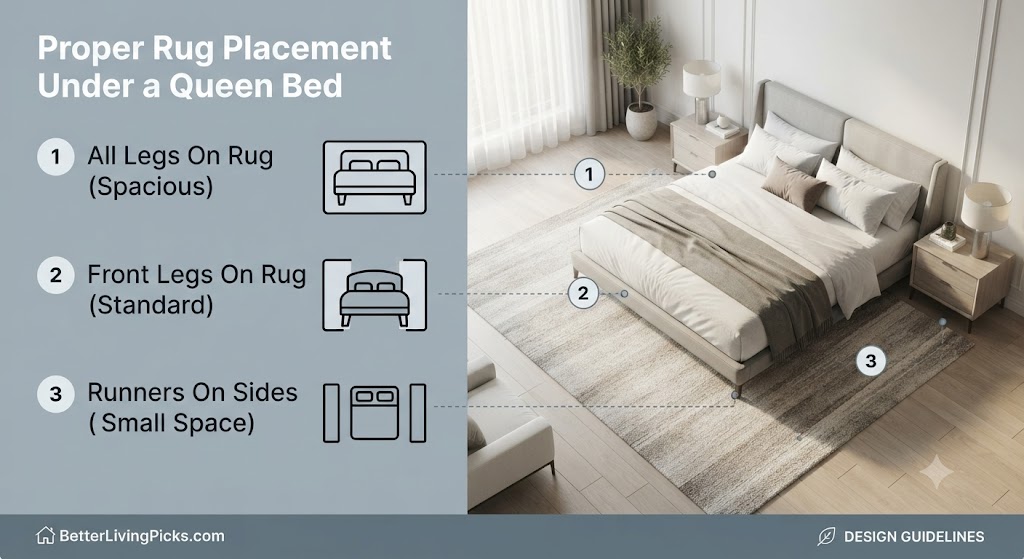
Placement is just as important as size. Even an expensive, high-quality rug will look “off” if it is shoved too far forward or tucked too far back under the frame.
The “All-On” Approach
This is the most popular layout for a polished, finished look. You pull the rug far enough forward so that the front legs of the nightstands and the front legs of the bed sit on the rug. This anchors the bed and the side tables together as one solid furniture unit. It creates a seamless transition and keeps the rug from looking like a floating afterthought. This style works best in medium to large rooms where the rug can breathe.
The “Two-Thirds” Approach
If your room layout doesn’t allow the nightstands to sit on the rug, don’t sweat it. You can place the rug so it starts just behind the front legs of the bed. This covers the bottom two-thirds of the bed frame and leaves the nightstands on the bare floor. This is a common and perfectly acceptable look if you have beautiful, vintage hardwood floors that you want to showcase. It keeps the room feeling airy while still giving you that soft spot to land your feet in the morning.
The Symmetry Check
Once you have the rug placed, stand at the foot of the bed. Check the distance from the rug edge to the wall on both the left and right sides. If the rug is skewed, the whole room will feel slightly “wrong” even if you can’t quite put your finger on why. Use the room’s focal points like a window or the bed frame itself to ensure the rug is centered.
Common Mistakes That Ruin Your Bedroom Layout
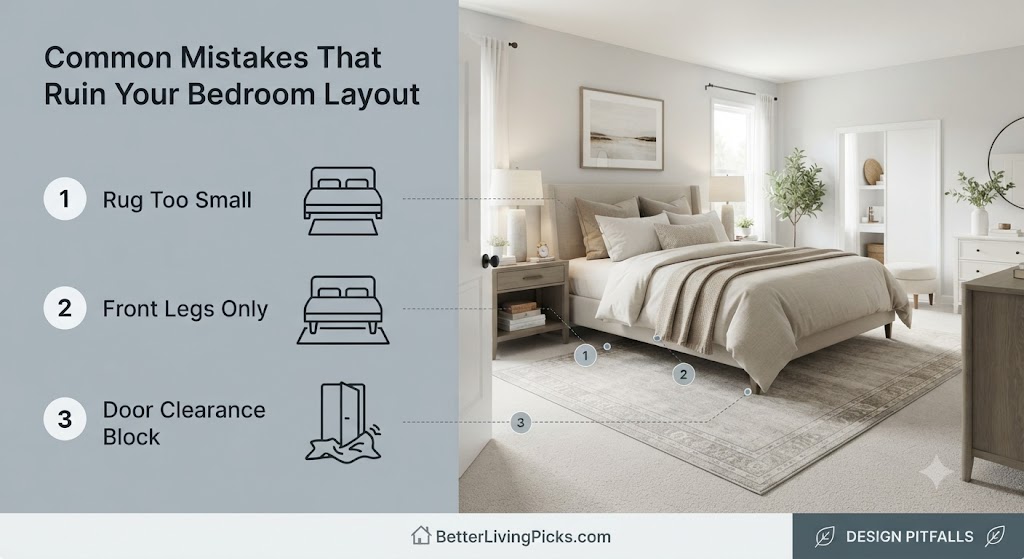
Avoid these common pitfalls to save yourself the frustration of returning heavy rugs that don’t fit.
Rugs That Are Too Small
The biggest mistake is buying a 5×7 or smaller. A rug that doesn’t reach past the edge of the bed frame makes the room look choppy. It draws the eye to the floor instead of the bed. Always opt for the larger size if you are debating between two options. Remember, more coverage generally equals a more expensive-looking design.
Ignoring Door Clearance
Before you buy, check your closet and bedroom door swings. A thick wool rug or a high-pile shag can easily bunch up against a door. If your door swings inward over the rug area, measure the gap between the door and the floor. You might need a low-profile flatweave rug to avoid a jam. There is nothing worse than having to shove a heavy bed to adjust a rug that keeps getting caught under the door.
Forgetting About Furniture Legs
Ensure your rug is either completely under the furniture or completely out from under it. Having just two legs of a bed on the rug makes the bed sit at an uneven angle. This is a quick way to create an annoying wobble that you will notice every time you sit down. If the legs are uneven, the rug will also wear down prematurely at the pressure points, creating permanent indentations.
The “Cluttered” Look
Some people try to put a rug under the bed and other rugs in the room. If your room is small, having multiple rugs of different patterns or textures can make the space feel busy and claustrophobic. Stick to one large rug under the bed and let the floors do the work elsewhere, or choose a very neutral, low-texture rug if you plan to add other decor.
Balancing Rug Shape and Room Dimensions
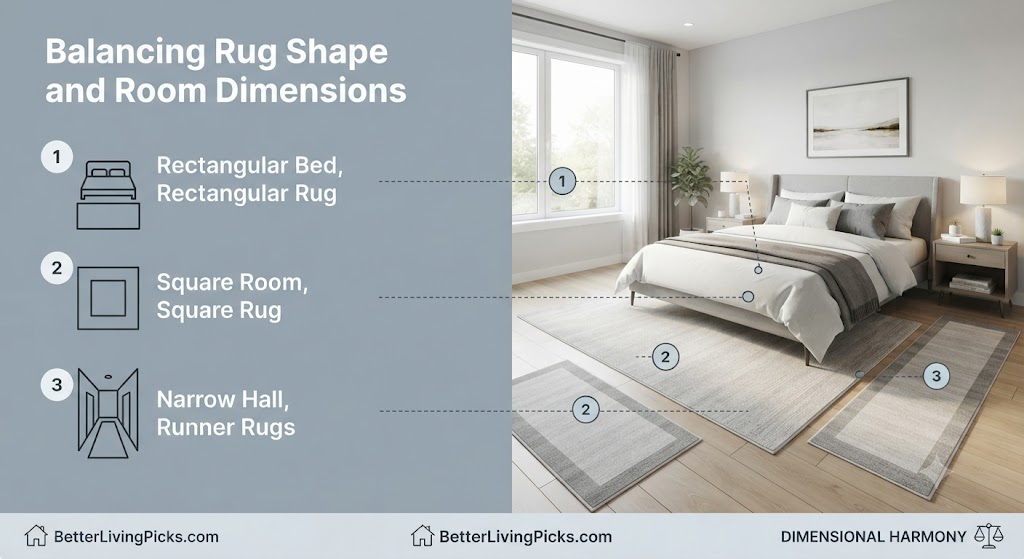
Sometimes the room just won’t cooperate with a standard rectangular rug.
Working with Narrow Bedrooms
If your room is long and narrow, a rectangular rug is still your best bet. Place it horizontally to emphasize the width of the bed. If the room is so narrow that an 8×10 doesn’t fit, it is better to skip the rug under the bed entirely and use two runners on either side. This keeps the walking path clear and provides that comfort where you actually need it.
Dealing with Off-Center Bed Placements
If your bed is pushed against a wall or in a corner, don’t force an 8×10 rug. It will look lopsided. In this case, use a smaller rug or an asymmetrical layout. Focus on the area where your feet actually touch the floor in the morning. Sometimes a simple 3×5 sheepskin or a small accent rug placed near the side of the bed is a more stylish solution than a massive, ill-fitting rectangle.
Managing High-Traffic Zones
If you have a walk-in closet or an ensuite bathroom connected to the bedroom, the area near the bed becomes a high-traffic lane. Choose a rug material that is durable, like wool or a high-quality synthetic blend. A delicate, high-maintenance rug will show wear and tear in months if it’s sitting in your primary path to the closet.
Tips for Rugs in Small or Tight Bedrooms
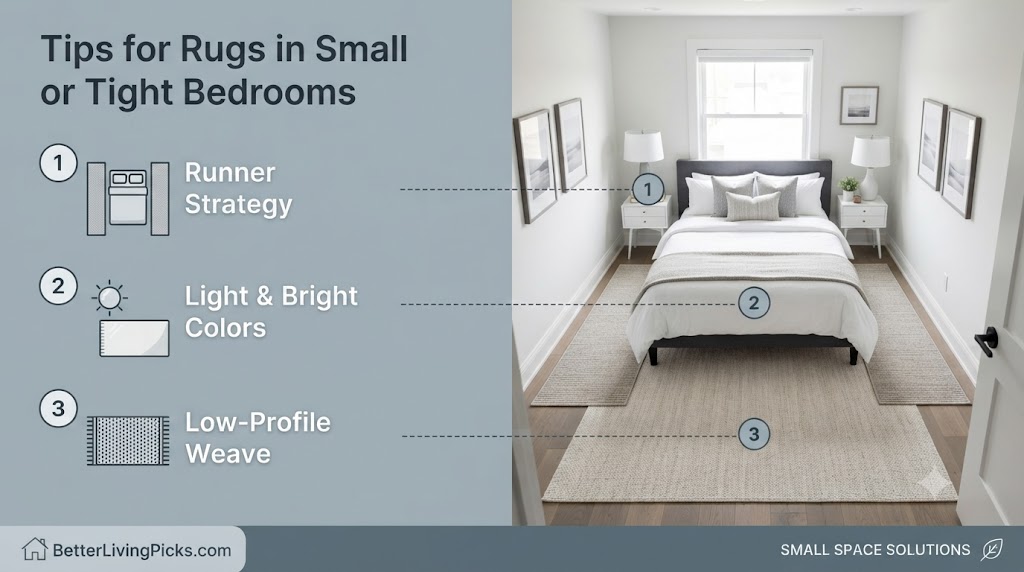
Small bedrooms need careful planning so they don’t feel like a storage closet.
Using Runners Instead of Large Rugs
If you cannot fit an 8×10, placing a runner on both sides of the bed is a pro move. It provides that soft landing spot without the bulk of a massive area rug. It also saves you money and keeps the middle of the floor clear, which makes a small room feel much bigger.
Stick to Light Colors
In a tight space, a dark, busy-patterned rug can make the room feel closed in. Opt for lighter, neutral tones like cream, light grey, or soft beige. Light colors reflect more light and trick the eye into thinking the floor space is larger than it actually is.
Consider the Texture
In a small room, texture is more important than pattern. If you want to keep the space simple, choose a rug with a subtle weave or a low-pile sisal look. This adds interest without visual clutter. A thick, shaggy rug in a tiny room can feel overwhelming and trap dust, which is the last thing you want in a small sleeping area.
Frequently Asked Questions
Should a queen bed rug go under the nightstands?
It is not mandatory, but it looks much more polished if it does. Placing the front legs of your nightstands on the rug creates a solid visual foundation that makes the room look like it was designed by a pro. It prevents the nightstands from feeling like they are floating in space.
Can I use a round rug under a queen bed?
Usually, no. Round rugs are better suited for circular tables or entryways. A round rug under a rectangular bed creates awkward, empty corners that look unintentional and distract from the bed itself. If you are desperate for a different shape, an oval rug can occasionally work, but stick to rectangles for the best results.
What if my rug is too small?
If you already bought a rug that is slightly too small, try layering it. Place a larger, neutral, inexpensive jute rug underneath it. This adds texture and solves your size issue without having to buy a brand-new rug. It also adds a layer of depth that makes the room look more curated and designed.
Do I need a rug pad for a bedroom rug?
Yes, always. Even if your rug has a heavy backing, a rug pad prevents slipping and adds a layer of cushion. It makes the rug feel much higher quality under your feet and prevents the edges from curling up over time. It also protects your hardwood floors from the abrasive backing of the rug.
How do I clean a rug under a bed?
Vacuuming is easy, but rotating is key. Every six months, rotate your rug 180 degrees. This ensures that the high-traffic areas where you get out of bed don’t wear down faster than the parts hidden under the frame. For deeper cleans, spot-treat spills immediately and consider a professional cleaning once a year if it’s a high-quality wool piece.
Is it okay to skip the rug entirely?
Absolutely. If you have beautiful hardwood floors or the room is already crowded, you don’t need a rug. A bedroom should be functional; if a rug makes the space feel cramped, it is perfectly fine to leave the floor bare. Sometimes, minimalist simplicity is more stylish than adding decor that doesn’t fit well.
Final Thoughts
The right rug can completely transform your bedroom from a basic sleeping space into a cozy, personal retreat. Don’t stress too much about getting the perfect “magazine” look. Focus on what feels good when your feet hit the floor in the morning. Use these measurements as a guide, but remember that your room’s layout is unique. Take the tape measure out, mark your floor, and choose the size that makes your room feel balanced and inviting. A little bit of planning goes a long way in ensuring your bedroom is the most comfortable room in the house.

