
No, plants require light for photosynthesis. If your room has no natural light, you must provide a full-spectrum LED grow light to keep the plant alive, or rotate it into a brighter spot occasionally.
2. How often should I water low-light plants?
Water them significantly less than sun-loving plants. Because they grow slowly in low light, they consume water slowly. Always check the soil moisture with your finger before adding more water to avoid rot.
3. Why is my “low-light” plant losing leaves?
This is usually a sign of overwatering or poor drainage. When a plant gets very little light, it cannot process excess water, which causes the roots to drown and drop leaves as a stress response.
4. What is the most durable low-light plant?
The Snake Plant (Sansevieria) is widely considered the toughest. It tolerates deep shade, thrives on extreme neglect, and only requires water once the soil is completely bone-dry throughout the entire pot.
It is incredibly frustrating to invest in a beautiful plant for a dim corner of your home, only to watch it slowly lose its luster and wither away a few weeks later. Most of us have been there. We buy a “low-light” plant, follow the basic tag instructions, and end up with nothing but a pot of brown stems. Many people walk away from this experience convinced they have a “black thumb” or that they simply cannot keep anything green alive in their apartment.
The reality is rarely about your personal ability as a plant parent. Instead, it is usually a mismatch between the plant’s actual needs and the environment you’ve provided. The term “low light” is often misinterpreted as “no light,” leading many to stick plants in windowless bathrooms or dark hallways where they are destined to fail. By understanding the specific needs of hard-to-kill varieties, plants that have adapted to the forest floor or shaded understory, you can easily green up your darkest rooms. This guide covers the five most resilient low-light houseplants and provides the exact, no-fluff care strategies you need to keep them thriving for years to come.
Why Low-Light Plants Still Need Some Light
Debunking the “Grow in a Closet” Myth
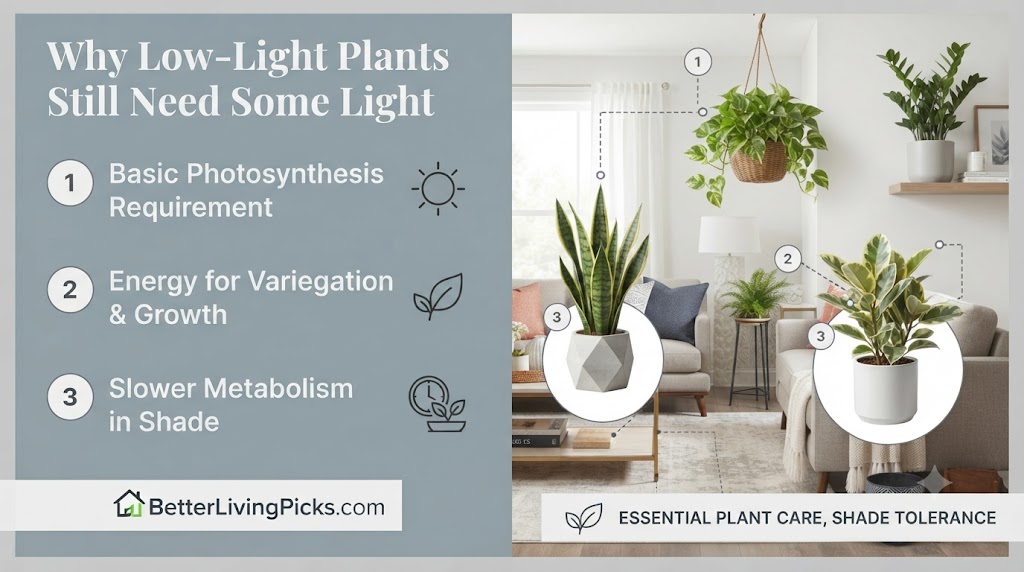
Marketing often labels plants as “low light” to make them sound magical. Unfortunately, this creates the dangerous myth that you can tuck a plant away in a dark, windowless room or a deep, sunless basement. That is a guaranteed way to kill any houseplant. Even the most shade-tolerant varieties require some ambient light to create energy through photosynthesis. Without it, the plant will essentially starve to death. When plants don’t get enough light, they stop growing, lose their variegation, and eventually shed their leaves as a conservation effort.
Understanding “Bright Indirect” vs. “Low Light”
Think of “low light” as a spot where you can read a book comfortably without turning on a lamp, but where you wouldn’t want to try reading for hours at a time. It is effectively a north-facing window or a spot several feet away from a bright window. If you find your plants struggling, start by moving them just two or three feet closer to a light source. You will be surprised at how much difference a small change in location makes for the plant’s health.
The Biology of Shade Tolerance
Plants that survive in low light have evolved to be highly efficient. They don’t need to produce as much energy because they aren’t growing at rapid speeds. This makes them perfect for indoor decor, but it also means they have a lower tolerance for “mistakes.” You cannot treat a shade-loving plant like a sun-loving tropical that demands constant water and high-energy nutrients. Learning to respect this slow growth cycle is the biggest secret to keeping these plants alive.
Snake Plant (Sansevieria): The Unkillable Champion
Why it thrives on neglect
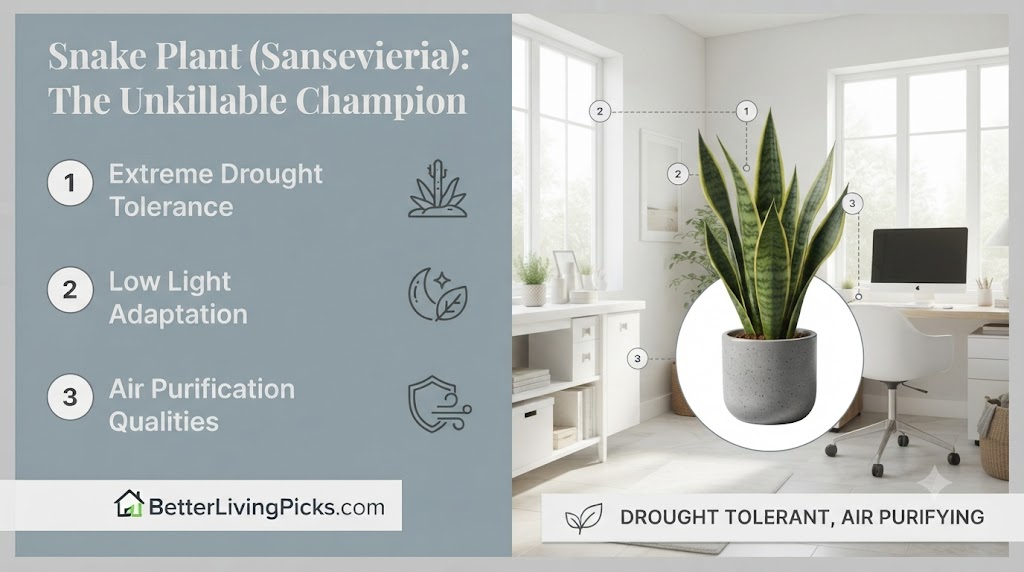
The Snake Plant is arguably the closest thing to a “set it and forget it” plant you can find. Its architectural, sword-like leaves are built to store water, which is why it can go weeks, or even months, without a drink. It is an incredibly slow grower, which actually helps it survive in dark corners where other plants would try to push out new growth and become thin or “leggy.”
Common mistakes: The Overwatering Trap
The absolute fastest way to kill a Snake Plant is to baby it with water. Because the soil stays wet for a long time in low-light spots, the roots will quickly rot if you water on a rigid schedule. Do not water because it is Monday or because the sun is out. Instead, ignore the calendar entirely.
Expert watering technique
Use the “finger test.” Insert your finger two inches into the soil. If you feel even a hint of moisture, do not water. Wait until the soil is completely, bone-dry throughout the entire pot. If the leaves start to look slightly wrinkled or shriveled, that is your plant telling you it is finally thirsty. Otherwise, leave it alone.
ZZ Plant (Zamioculcas zamiifolia): The Sculptural Survivor
Handling low-light environments
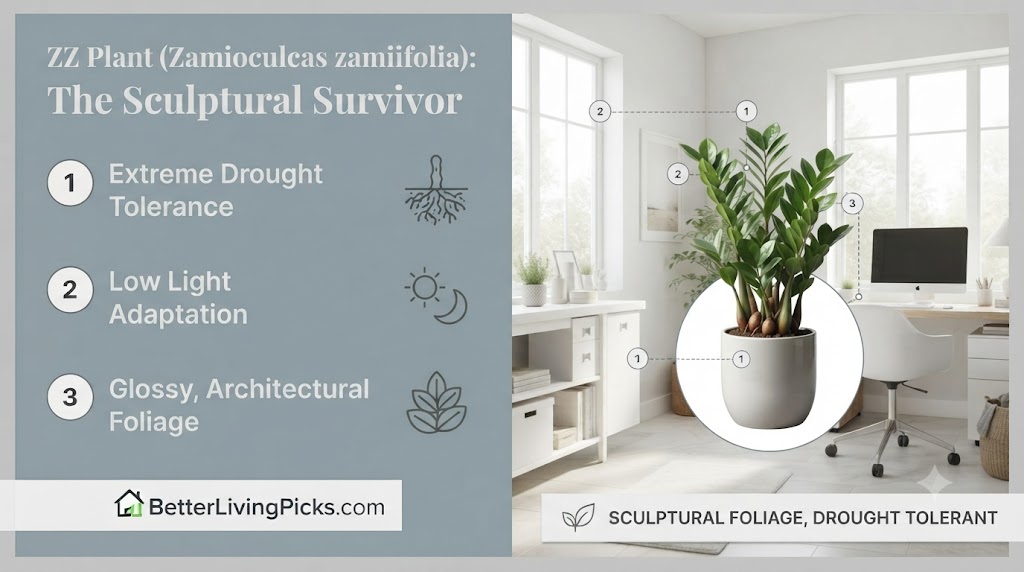
The ZZ plant is the king of office cubicles and dim apartments for a reason. It features waxy, deep green leaves that seem to reflect whatever light is available. It is incredibly tolerant of the low, inconsistent light found in many modern homes and will simply sit there looking vibrant without requiring a drop of attention.
The benefit of its rhizomes
One reason the ZZ plant is so resilient is what happens underneath the soil. It has potato-like tubers called rhizomes. These function like a built-in water storage system. This makes the plant extraordinarily drought-tolerant. You could go on a month-long trip, and this plant would likely be perfectly happy when you return.
Maintenance essentials
Because it grows so slowly, the ZZ plant rarely needs repotting. In fact, it often prefers to be a bit root-bound. Focus your maintenance on wiping the waxy leaves occasionally. Dust can accumulate on those flat, wide leaves, which interferes with the plant’s ability to photosynthesize in low-light conditions.
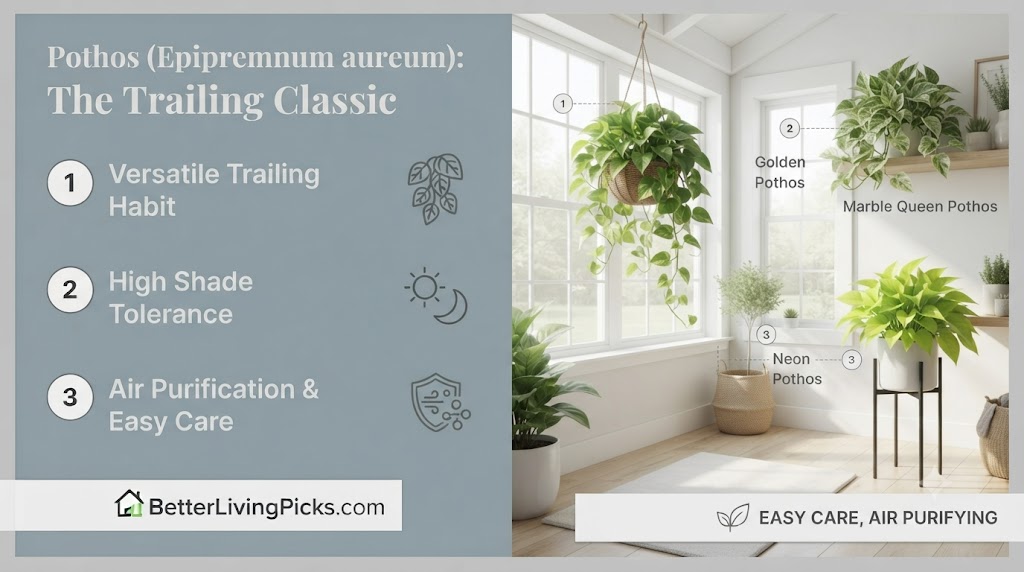
Pothos (Epipremnum aureum): The Trailing Classic
Growth habits in dim corners
Pothos is famous for its long, trailing vines. While it is a relatively fast grower in sunny spots, it naturally throttles its growth in low light. You might notice it doesn’t trail as quickly as one sitting in a bright sunroom, but it will maintain its health and color beautifully. It is an excellent choice for bookshelves or hanging planters where you want a bit of a “cascading” effect.
How to spot signs of stress
Pothos is arguably the most honest houseplant you will ever own. If it needs water, the leaves will visually sag and look limp. This is your cue to water it. If it is sitting in light that is truly too dark, you will see the variegation (the yellow or white splashes on the leaves) start to fade into solid, dark green. That is the plant telling you it needs more energy to support its patterns.
Propagation for beginners
If your Pothos does get a bit “leggy” or thin in a dark room, do not worry. You can easily cut a stem, place it in a glass of water, and watch it grow new roots. This allows you to fill out your pot or even start a new plant for another room, ensuring your collection grows even in low light.
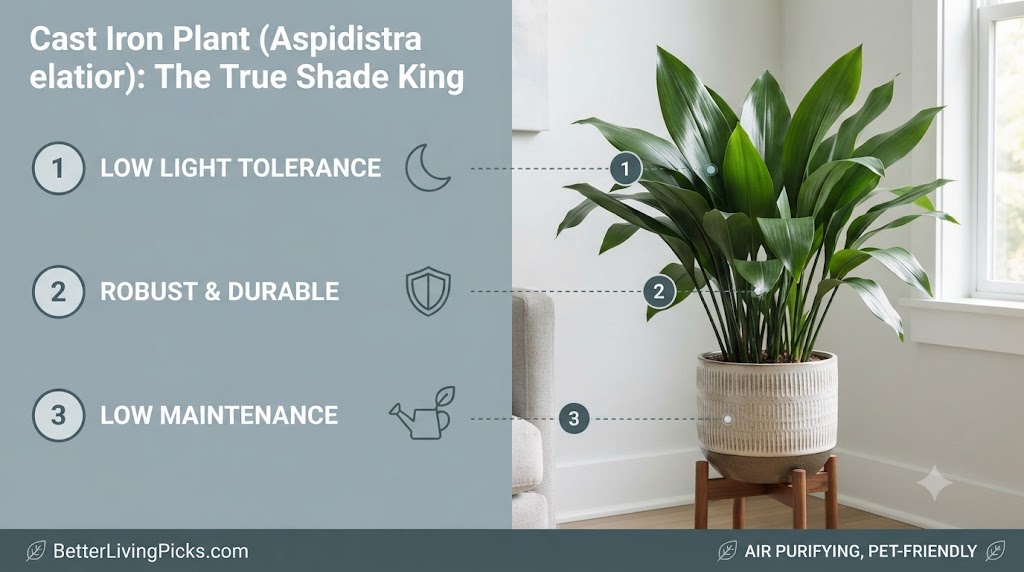
Cast Iron Plant (Aspidistra elatior): The True Shade King
Historical toughness
The Cast Iron Plant earned its reputation during the Victorian era. It was one of the few plants that could actually survive the poor indoor air quality, gas lighting, and lack of sunlight common in city townhomes of that period. It is remarkably hardy, tolerating temperature fluctuations, drafts, and general neglect better than almost any other indoor plant.
Why it is the ultimate “low-light” choice
Unlike plants that merely “tolerate” shade, the Cast Iron plant is evolved to live in it. It thrives in conditions that would kill off other houseplants. If you have a corner that gets almost no light, this should be your first choice.
Slow growth expectations
This is not a plant you get if you want instant, rapid-growth decor. It grows at a very leisurely pace. However, the trade-off is that it is virtually impossible to kill. Ensure it is in a pot with a drainage hole, keep the soil from becoming a muddy swamp, and it will likely stay with you for a decade or more.
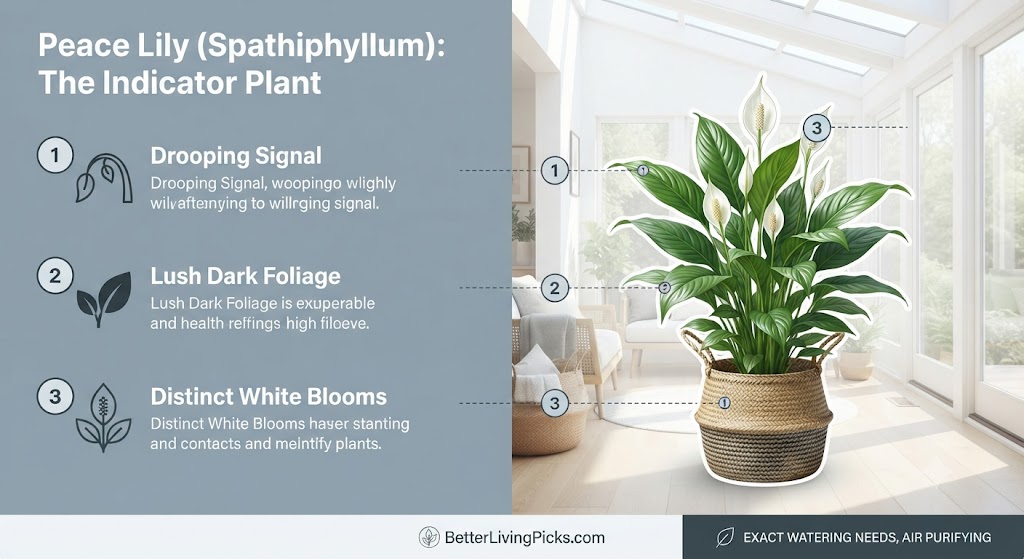
Peace Lily (Spathiphyllum): The Indicator Plant
Balancing low light and moisture
Peace Lilies are famous for being dramatic. They love a bit more humidity than the other plants on this list, making them perfect candidates for bathrooms or kitchens where steam is common. While they are highly tolerant of low light, they are more sensitive to dry soil than the Snake or ZZ plants.
Why it droops (and how to fix it)
When a Peace Lily is thirsty, it will dramatically collapse, looking like it has completely died. Do not panic! This is just its way of signaling that it is out of water. Give it a thorough drink, and you will often see it perk back up within just a few hours. It is arguably the best “beginner” plant because it takes the guesswork out of the watering schedule.
Blooming in the shade
While Peace Lilies are primarily grown for their foliage, they can produce elegant white flowers even in low light. If yours isn’t blooming, it might just need a tiny bit more light., try moving it a few inches toward a window. Remember to remove the faded, old flowers to encourage the plant to put its energy into new growth.
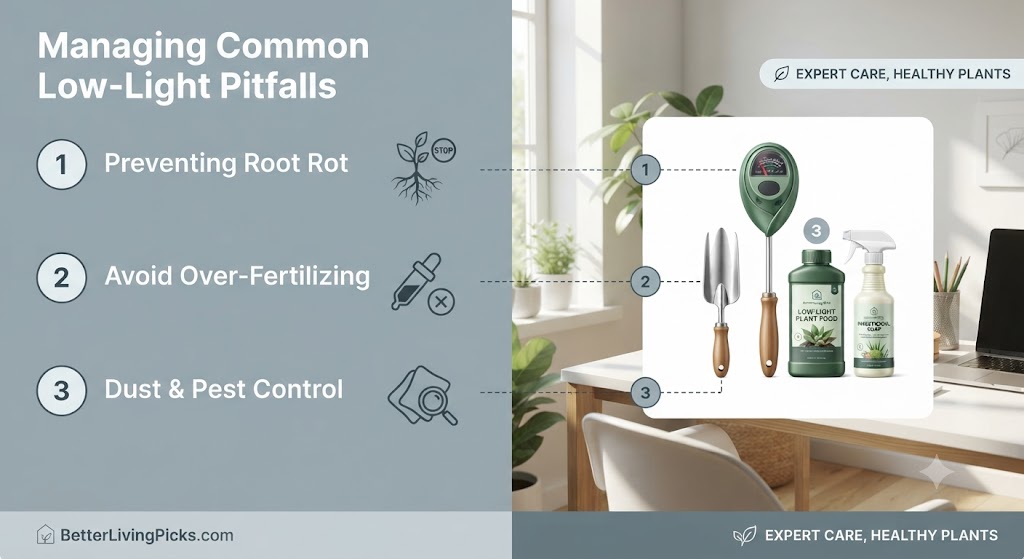
Managing Common Low-Light Pitfalls
The biggest killer: Watering too often
Most plant parents kill their plants with kindness. In low-light conditions, evaporation happens very slowly. If you water your plant every week just because the calendar says so, the roots are essentially sitting in a cold, dark, wet swamp. Check the soil with your finger before every watering. If it feels damp, wait another few days. It is significantly safer to underwater than to overwater.
Managing dust buildup on leaves
When a plant is in low light, its leaves need to be as clean as possible to absorb every tiny bit of available energy. Dust acts like a filter that blocks light. Once a month, take a damp cloth and gently wipe the tops and bottoms of the leaves. This simple task keeps them healthy and helps them look glossy and fresh, rather than dull and stunted.
Air circulation tips for dark spaces
Dark corners often lack good airflow, which can lead to issues with mold or small pests. If you have a plant in a dark, stagnant corner, try to keep it slightly away from the wall to let air move around the base of the pot. If you have a ceiling fan or a small oscillating fan nearby, turning it on for a few hours a day can do wonders for the overall health of your indoor collection.
Proper drainage is non-negotiable
Never let your plants sit in standing water. If your favorite decorative pot does not have a hole in the bottom, you are creating a recipe for root rot. Keep the plant in its original plastic nursery pot and set that inside the decorative container. When you water, pull the nursery pot out, let it drain in the sink until it stops dripping, and then place it back.
Frequently Asked Questions
Will my low-light plants grow if I keep them in a basement?
They will survive for a short time, but they will eventually struggle without any natural light. Basements often lack the necessary light levels for basic photosynthesis. You should supplement their environment with a basic, affordable LED grow light for at least 8-10 hours a day to keep them truly healthy and growing.
Does low light cause my plants to lose their color?
Yes, it often does. Many plants that have variegated leaves (like Pothos) will lose their white or yellow spots and turn completely green if they don’t get enough light. The plant is trying to maximize its green chlorophyll to capture more energy from the dim surroundings. It isn’t necessarily “sick,” but it is essentially telling you it is starving for more light.
How do I know if a pot has proper drainage?
A pot must have holes in the bottom. If your favorite decorative pot doesn’t have holes, keep the plant in its original plastic nursery pot and set that inside the decorative one. When you water, pull the nursery pot out, let it drain in the sink completely, and then place it back. Never let a plant sit in standing water, as this suffocates the roots.
Can I fertilize plants that aren’t growing much?
Go very easy on the fertilizer. Because low-light plants grow slowly, they don’t need much “food.” If you fertilize too much, you can cause a buildup of mineral salts in the soil that can actually burn the roots. A light, diluted application of balanced liquid fertilizer once or twice during the peak spring and summer growing season is more than enough.
My cat eats my plants are these safe?
Unfortunately, Snake plants, ZZ plants, and Peace Lilies are toxic if ingested by pets. If you have curious cats or dogs, keep these plants on high shelves or in rooms your pets cannot access. Pothos is also toxic to pets. If you have a pet that likes to nibble on greenery, consider placing these out of reach or choosing pet-safe alternatives like Parlor Palms.
Why are the tips of my plant leaves turning brown?
Brown tips are often a sign of inconsistent watering or dry air. If you let the plant get bone-dry and then soak it, the roots get stressed and the tips of the leaves often react. Try to keep the moisture levels more stable. In some cases, it can also be a reaction to the chlorine or chemicals in tap water; if this happens, try using filtered or distilled water instead.
Final Thought
Bringing life into a dim room does not have to be a source of constant stress or plant-related failure. The five plants listed above are your best allies because they are hard-wired to value consistency and neglect over constant, well-meaning fussing. Do not feel pressured to have the perfect, sun-drenched home to be a successful plant parent. Start with one of these hardy varieties, get to know how it reacts to your home’s unique light, and you will find that cultivating a lush, green space is much easier and more rewarding than you ever imagined.

