
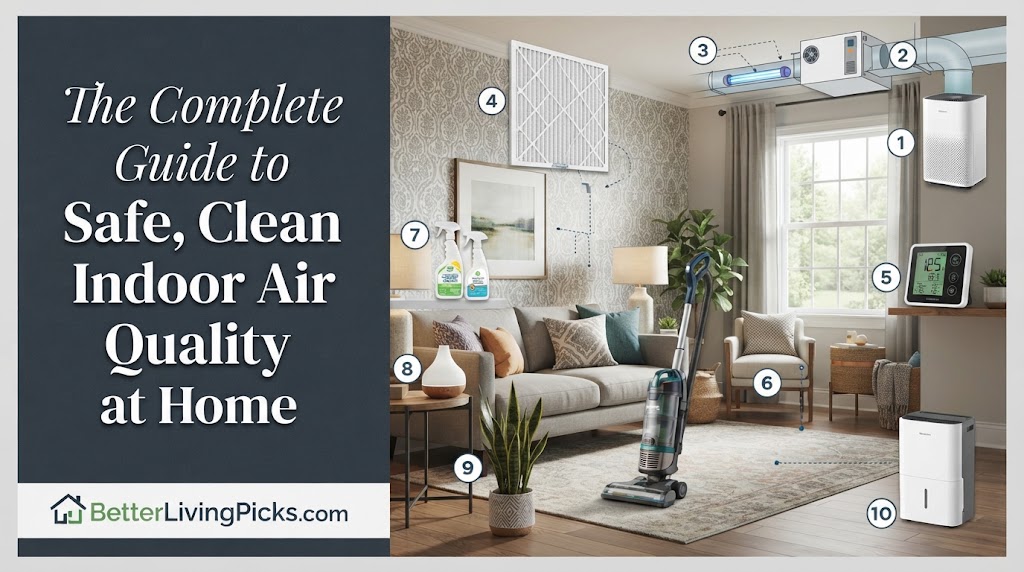
Sustaining proper indoor air quality at home requires managing pollution sources at the root, securing adequate fresh air ventilation, and executing routine HVAC filter replacement intervals.
2. What is the fastest way to improve indoor air quality?
You can rapidly improve indoor air quality by running True HEPA air purifiers, turning on kitchen exhaust fans during cooking, and eliminating synthetic chemical aerosols.
3. How often is an HVAC filter replacement necessary?
Standard pleated filters require an HVAC filter replacement every 60 to 90 days, though homes housing pets or allergy sufferers should swap them every 30 to 45 days.
4. Which devices help reduce indoor allergens effectively?
Deploying portable air purifiers with medical-grade True HEPA filtration and activated carbon stages is proven to reduce indoor allergens efficiently.
Maintaining optimal indoor air quality at home is one of the single most impactful yet overlooked things you can do for your long-term health and daily well-being. Most people spend up to ninety percent of their lives inside enclosed buildings, completely unaware that invisible pollutants can turn their living spaces into traps for dust, chemicals, and microscopic allergens.
Achieving a truly fresh home environment requires looking past simple surface cleaning and digging deep into the root causes of indoor air pollution sources. This first installment covers foundational principles, pollutant sources, and effective ways to control emissions at the root.
Understanding Indoor Air Quality at Home
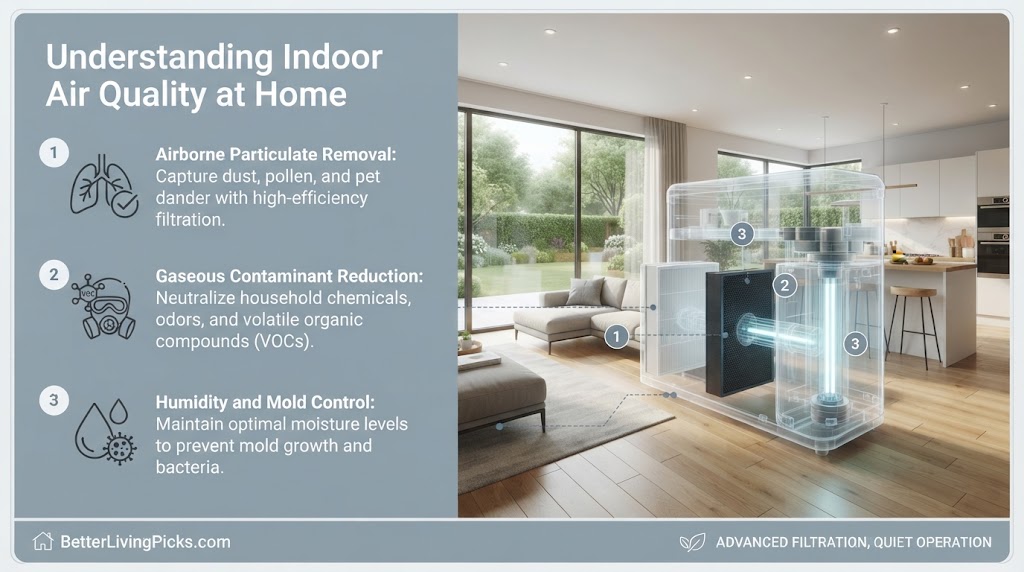
Pair a whole-house MERV 13 media filter with a dedicated bedroom True HEPA air purifier to optimize your indoor air quality at home. Running this dual-layer setup delivers maximum particulate capture and continuous allergen reduction.
Common Household Pollutants and Where They Hide
The air inside modern houses is often significantly more polluted than the air outside, largely because tightly sealed energy-efficient structures trap contaminants inside. Understanding your indoor air quality at home starts with recognizing where microscopic particles and chemical gases lurk out of sight. Household dust is not just dead skin cells; it is a complex chemical soup containing heavy metals, flame retardants, and microscopic fragments of degrading plastics from electronics and furniture.
Carpet padding, underlayment glues, engineered wood products, and vinyl flooring constantly release hidden chemical gases into the room air day after day. Bathrooms and basements conceal invisible mold spores behind drywall and under floorboards whenever relative humidity creeps upward.
The Hidden Health Impacts of Bad Air
Living with compromised indoor air takes a subtle toll on your body over months and years of continuous exposure. Chronic low-level irritation from particulate matter can manifest as persistent morning congestion, unexplained headaches, itchy eyes, and nagging respiratory fatigue. Children and older adults are especially vulnerable because their respiratory systems process airborne irritants less efficiently than healthy adults.
Long-term exposure to common indoor contaminants has been linked by health agencies to chronic asthma development and cardiovascular stress. Addressing these invisible triggers early dramatically reduces seasonal allergy flare-ups and transforms how refreshed you feel every morning when you wake up.
Controlling Sources at the Root
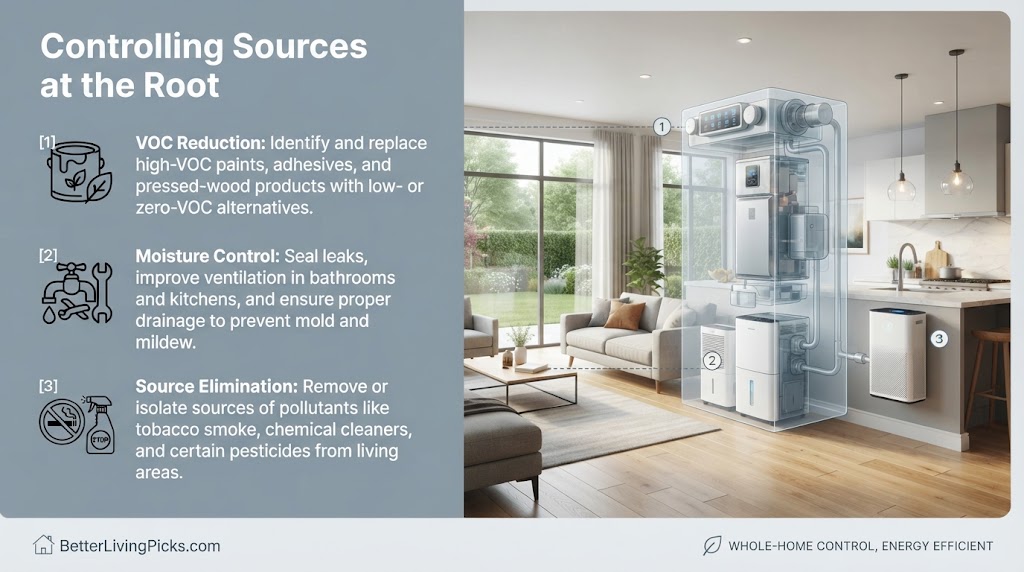
Eliminating Volatile Organic Compounds (VOCs)
Volatile organic compounds are carbon-based chemicals that vaporize at room temperature, filling your living areas with invisible, odorless gaseous pollutants. Common culprits include aerosol spray cleaners, conventional air fresheners, synthetic scented candles, and newly manufactured furniture coatings.
To systematically improve indoor air quality, you must phase out harsh chemical cleaners and switch to unscented, plant-based, or vinegar-based alternatives. When painting walls or sealing trim work, always opt for zero-VOC formulas and keep windows wide open with cross-ventilation running for at least 72 hours.
Managing Household Dust and Pet Dander
Dust mites and pet dander are potent biological allergens that settle deep into upholstered furniture, mattresses, and thick carpeting fibers. Every time someone walks across a carpeted bedroom or sits on a fabric sofa, millions of microscopic skin flakes and protein fragments launch back into the air.
Mitigating this cycle requires stripping away heavy textiles where possible and replacing them with washable cotton throws or easily wiped-down hard surfaces. Washing your bedding weekly in hot water above 130°F is an essential step to kill dust mites and break down accumulated allergen proteins.
Ventilation and Airflow Strategies
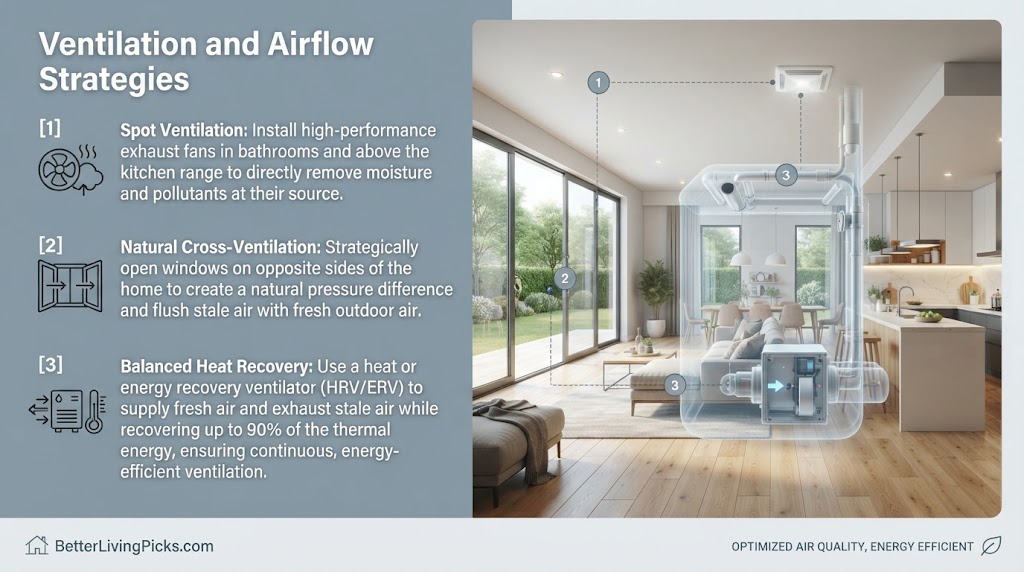
The Importance of Fresh Air Exchanges
Modern homes are built like airtight vacuum flasks to conserve heating and cooling energy, which inadvertently traps stale air indoors indefinitely. A proper ventilation strategy ensures that fresh oxygen continuously enters your rooms while stale air, carbon dioxide, and trapped pollutants escape outside.
Opening windows on opposite sides of the house for just ten minutes twice a day creates a powerful cross-breeze that flushes out accumulated indoor pollutants. If outdoor pollen counts or extreme weather make open windows impractical, mechanical ventilation options like energy recovery ventilators (ERVs) provide a steady stream of filtered outdoor air.
Utilizing Exhaust Fans Effectively
Kitchens and bathrooms are primary high-emission zones where moisture, grease droplets, and combustion gases originate during daily cooking and washing routines. Running your range hood every single time you cook even if you are just boiling water prevents cooking particulate matter from spreading throughout the house.
Make sure your bathroom exhaust fan stays running for at least twenty minutes after you finish a hot shower to clear out lingering humidity. Neglecting these exhaust fans allows moisture to settle into porous drywall, breeding hidden mold colonies that ruin your indoor air quality at home.
Air Filtration and Purification Systems
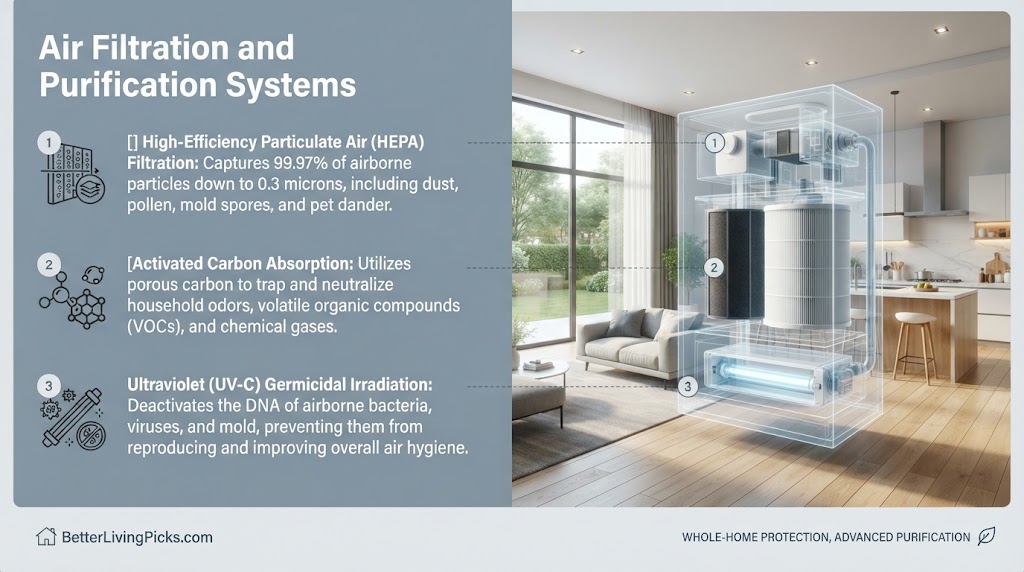
Choosing the Right HVAC Filters
Your central heating and cooling system acts as the primary lung of your house, cycling all interior air through a central duct network multiple times a day. Upgrading your standard fiberglass filter to a high-performance pleated filter with a MERV rating between 11 and 13 makes a massive difference.
Never install a MERV 16 filter unless your specific HVAC blower motor is explicitly rated to handle the heavy static pressure drop, or you risk burning out your system. Regular HVAC filter replacement is non-negotiable; letting a filter clog completely starves your blower motor of air and forces unfiltered air to bypass the barrier entirely.
Selecting Portable Air Purifiers
While central HVAC systems filter air only when running, portable units provide targeted cleanup inside high-occupancy spaces like bedrooms and home offices. Look exclusively for units featuring certified True HEPA filtration coupled with a robust activated carbon stage to capture both particles and gaseous odors.
Natural Solutions and Houseplants
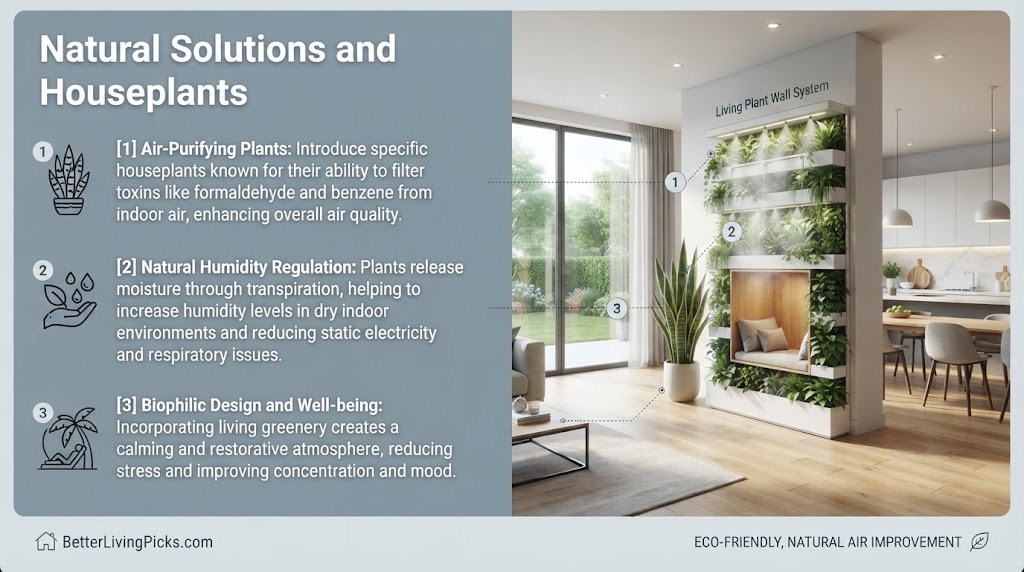
Do Houseplants Actually Clean Air?
Popular culture frequently credits houseplants with magical air-purifying properties, largely based on vintage NASA studies conducted inside sealed laboratory chambers. While potted plants do absorb small amounts of carbon dioxide and volatile gases through their leaves and root systems, their real-world impact in an open home is modest.
Think of houseplants as a wonderful aesthetic and psychological addition to your home rather than a substitute for mechanical filtration systems. Over-watering indoor pots can actually backfire by dampening topsoil and encouraging fungus gnat populations or surface mold growth.
Minimizing Humidity and Preventing Mold
Mold spores thrive in damp, dark environments and act as powerful respiratory triggers that can cause chronic coughing and allergic reactions. Keeping your indoor relative humidity safely between 30% and 50% stops mold spores from germinating across your walls and ceilings.
Deploying portable dehumidifiers in damp basement zones and using air conditioning units during sticky summer months keeps moisture levels firmly under control. Always inspect window sills and plumbing access points monthly for early signs of condensation pooling or slow leaks.
Maintaining a Clean Routine
Invest in a continuous particulate and gas monitor that displays PM2.5, VOCs, and CO2 concentrations in real time. Having instant data allows you to trigger automated air purifiers before indoor pollutants escalate.
Vacuuming with True HEPA Filters
Standard vacuum cleaners with cheap exhaust filters are notorious for sucking up dust and blowing fine particulate matter right back out into the room air. If your vacuum lacks a sealed system with a True HEPA filter, you are simply turning a localized floor mess into an airborne cloud.
Invest in a certified vacuum cleaner that traps 99.97% of fine debris inside the machine rather than venting fine dust back into your breathing zone. Vacuum high-traffic walking zones slowly and deliberately twice a week to allow the motorized brush head time to dislodge embedded pet hair.
Regular Maintenance Schedules
Maintaining clean air is an ongoing maintenance project rather than a one-time setup task you can complete and forget forever. Create a physical or digital checklist that maps out recurring chores like filter changes, dehumidifier tank cleaning, and duct inspection intervals.
Consistency is the ultimate secret weapon; staying ahead of dust accumulation and moisture spikes keeps your indoor environment pristine year-round.
Tackling Combustion Byproducts Indoors
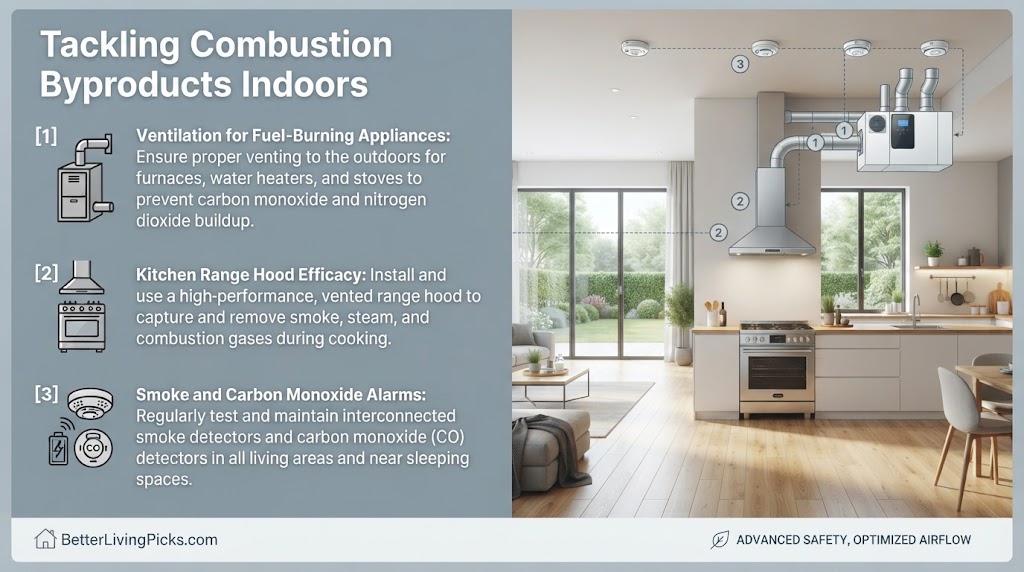
Gas Stoves and Ventless Heaters
Cooking with a gas stove releases invisible combustion byproducts directly into your kitchen air, including nitrogen dioxide, carbon monoxide, and formaldehyde. These gases irritate delicate lung tissues and can exacerbate childhood asthma symptoms if cooking areas remain unventilated.
Always turn on your overhead exhaust range hood before igniting burners, and consider switching to electric or induction cooktops for a cleaner kitchen environment. Never use unvented gas or kerosene space heaters inside enclosed living quarters, as they rapidly deplete oxygen levels while pumping toxic exhaust gases directly into your breathing zone.
Fireplaces and Wood-Burning Stoves
Traditional open wood-burning fireplaces are notorious for pulling indoor air up the chimney while letting fine smoke particulate leak back into the living room. Every time you open the fireplace door to add logs, microscopic ash and soot particles escape into the surrounding air.
Upgrading to an EPA-certified wood-burning insert with a sealed glass door dramatically cuts down on indoor smoke spillage and improves heating efficiency. Always burn fully seasoned hardwood with a moisture content below 20% to minimize creosote buildup and toxic smoke emissions.
Controlling Indoor Moisture and Humidity
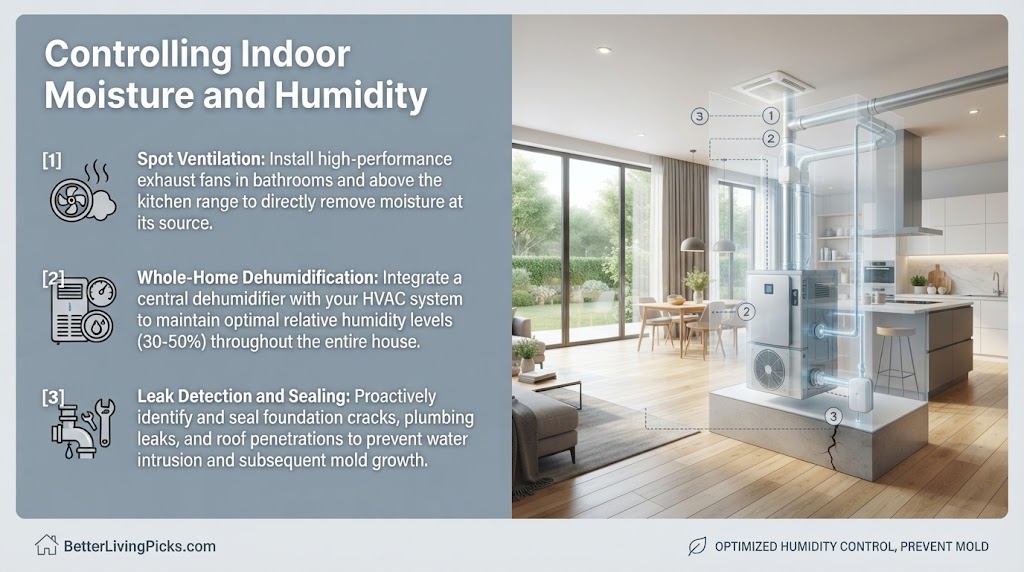
The Dangers of Excess Relative Humidity
When relative humidity levels rise above 60 percent, your home transforms into an ideal breeding ground for dust mites, bacteria, and aggressive mold colonies. Excess moisture causes condensation on cold window panes, dampens drywall interiors, and creates a heavy, muggy indoor climate.
Controlling humidity requires a multi-pronged approach involving strategic ventilation, proper grading around your home foundation, and active moisture extraction. Protecting your indoor air quality at home means keeping moisture locked out before biological pollutants can take root.
Using Dehumidifiers and Hygrometers
Placing inexpensive digital hygrometers in damp rooms like basements, crawlspaces, and laundry areas gives you real-time visibility into your moisture levels. If humidity creeps past the ideal 30 to 50 percent threshold, deploying a high-capacity portable dehumidifier brings moisture down quickly.
Building Materials and Furnishings Impact
Off-Gassing from Carpets and Furniture
New carpets, synthetic area rugs, particleboard cabinets, and pressed-wood furniture often emit high concentrations of volatile chemicals for months after purchase. This chemical off-gassing process releases benzene, formaldehyde, and other industrial solvents directly into your indoor atmosphere.
When buying new furniture, look for solid wood pieces finished with natural oils or water-based stains rather than cheap engineered wood held together with formaldehyde glues. Let new synthetic rugs air out in a garage or covered porch for a week before bringing them into your primary living spaces.
Selecting Low-Emission Paints and Finishes
Traditional oil-based paints and synthetic varnishes release pungent solvent fumes that linger for weeks and trigger severe headaches and respiratory distress. Modern low-VOC and zero-VOC paint formulations eliminate these harsh chemical emissions while offering excellent durability and color coverage.
Always ventilate newly painted rooms continuously with window box fans blowing air outward to exhaust chemical vapors safely away from your living areas.
Outdoor Air Pollution Infiltration
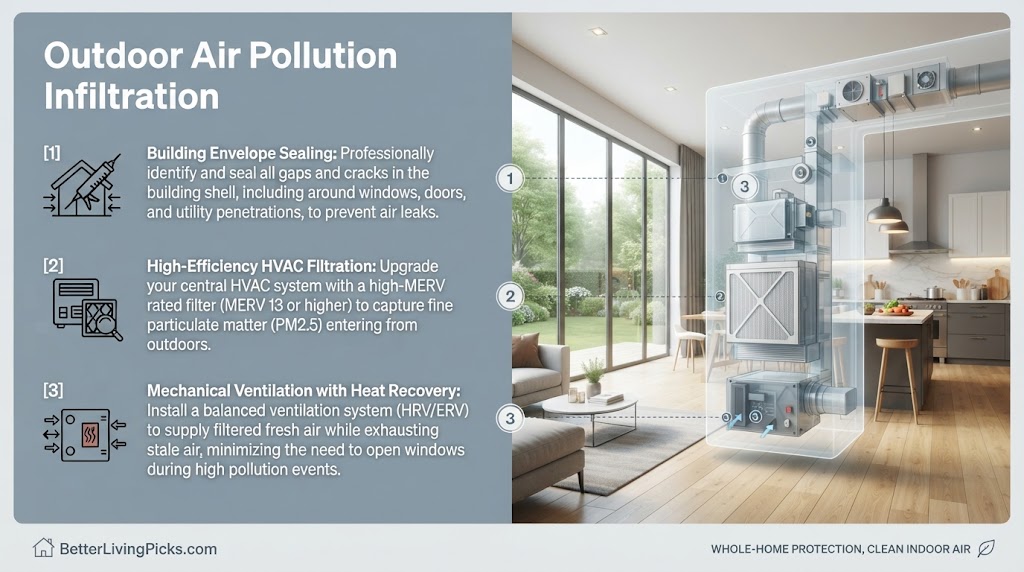
- Cross-Breeze Flushing: Opening opposite windows for ten minutes daily flushes out stagnant air to improve indoor air quality instantly.
- Exhaust Fan Discipline: Always run kitchen and bathroom exhaust fans during high-emission tasks to block trapped moisture and pollutants.
- Outdoor AQI Checks: Review local air quality indices before opening windows during smog or seasonal wildfire smoke events.
How Smog and Smoke Enter Your Living Space
Even if your home is tucked away in a quiet suburban neighborhood, outdoor air pollution easily finds its way indoors through tiny cracks, open doors, and drafty windows. Urban smog, vehicle exhaust fumes, and seasonal wildfire smoke infiltrate tight spaces and accumulate inside your rooms.
Sealing gaps around doors and windows with fresh weatherstripping blocks outdoor pollutants from bypassing your primary filtration barriers.
Monitoring Outdoor Air Quality Indices (AQI)
Before flinging your windows open for a fresh morning breeze, check local air quality index readings on your smartphone weather application. If outdoor particle pollution or pollen counts are spiking into unhealthy ranges, keep your windows shut and let your indoor air purifiers handle circulation.
The Role of Smart Home Air Monitors
Always select a portable air purifier with a Clean Air Delivery Rate (CADR) matching or exceeding your room’s square footage. This ensures maximum efficiency to successfully reduce indoor allergens like dust mites and pet dander.
Tracking Particulate Matter and CO2 Levels
Smart air quality monitors provide continuous, real-time data on invisible threats like PM2.5 particles, volatile organic compounds, and elevated carbon dioxide levels. Watching your monitor spike during cooking or dusting helps you understand exactly which household activities degrade your indoor atmosphere.
Automating Air Filtration Systems
Advanced smart home setups can link your indoor air monitors directly to smart plugs and automated air purifiers to run units on high whenever pollution spikes occur. This hands-off automation ensures your living space cleans itself instantly the moment cooking smoke or dust enters the air.
Office and Hobby Emissions at Home
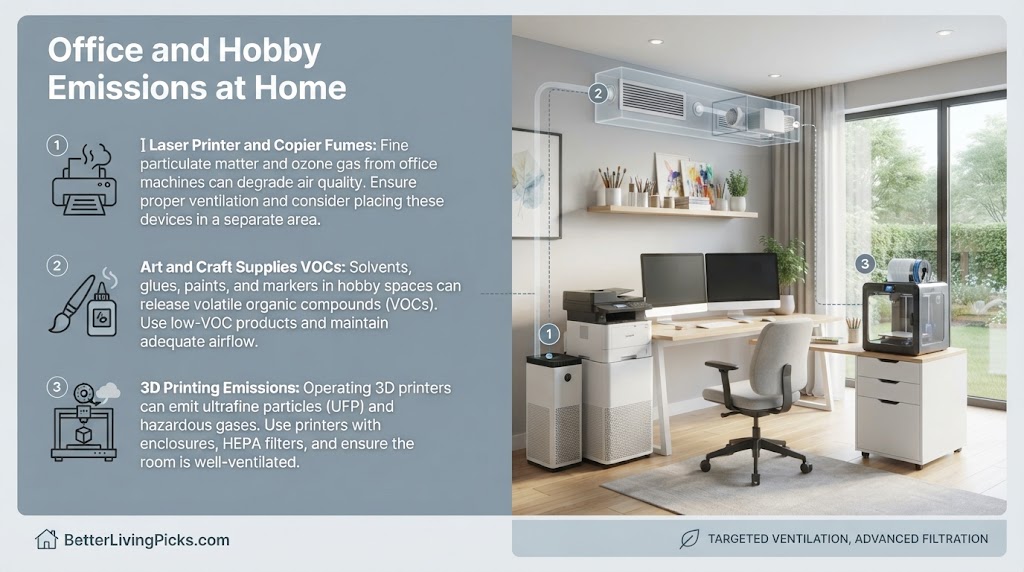
Printers, 3D Printers, and Craft Chemicals
Home offices and hobby workshops are unexpected epicenters for indoor air pollution due to laser printers, 3D printing filaments, soldering irons, and craft glues. Laser printers emit ultrafine toner particles and ozone gas, while 3D printers release plastic micro-particles and chemical fumes into the room.
Position office printers and hobby equipment in well-ventilated rooms away from heavy traffic zones and sleeping quarters.
Creating Dedicated Ventilated Zones
If you enjoy woodworking, painting, or resin crafting at home, set up your workspace in a garage or utility room equipped with a dedicated exhaust fan. Wearing an appropriate respirator mask during dusty or chemical-heavy projects protects your lungs from acute irritation.
Managing Seasonal Allergens Indoors
Pollen Tracking and Clothing Management
Spring and autumn winds carry massive loads of tree and grass pollen that stick to your clothing, shoes, and hair every time you step outside. Walking through your front door tracks these potent allergens straight onto your living room carpets and furniture.
Establish a mudroom routine where you strip off outdoor jackets and shoes immediately upon entering the house to keep outdoor allergens contained.
Pet Grooming and Dander Control Routines
Household pets shed millions of microscopic dander flakes that attach to dust particles and float effortlessly through the air for hours. Brushing your dogs and cats outdoors weekly dramatically cuts down on the loose hair and dander floating around your indoor living rooms.
Long-Term Air Quality Maintenance Plans
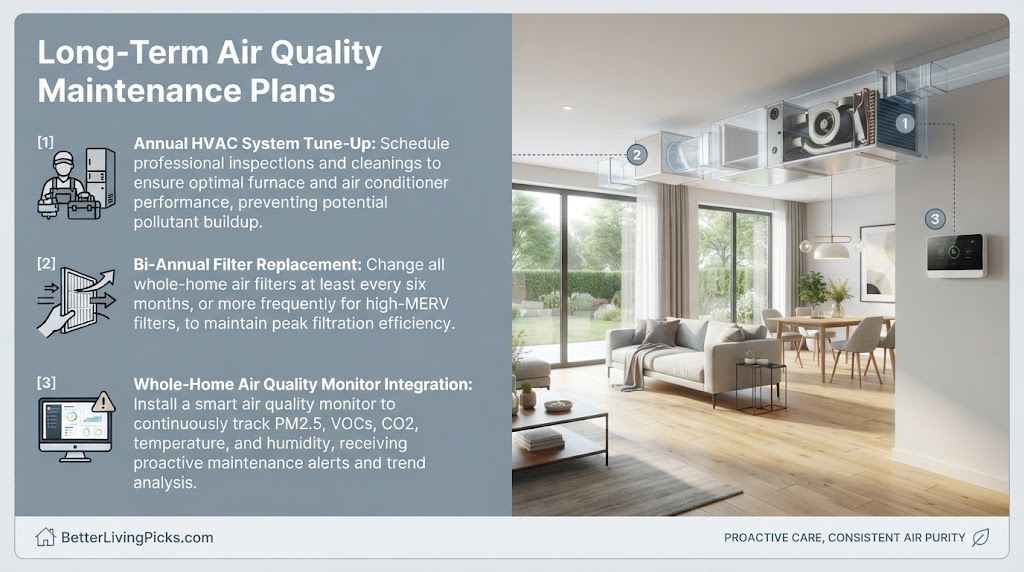
Creating an Annual Home Air Audit Schedule
Maintaining pristine indoor air requires stepping back once a year to conduct a comprehensive home air audit, checking ductwork, seals, and filtration devices. Mark your calendar every twelve months to inspect your attic ventilation, crawlspace vapor barriers, and HVAC blower compartments.
Investing in Sustainable Indoor Ecosystems
Building a clean indoor environment is a rewarding investment in your family’s daily health, energy levels, and long-term vitality. By combining source control, smart mechanical ventilation, and diligent cleaning habits, you master how to improve indoor air quality permanently.
- Source Elimination: Eradicating VOCs and chemical off-gassing at the root protects your indoor air quality at home.
- Filtration Discipline: Sticking to a strict HVAC filter replacement schedule prevents particulate buildup in your central ducts.
- Moisture Regulation: Keeping indoor relative humidity between 30% and 50% successfully blocks mold colony proliferation.
- Smart Monitoring: Utilizing digital air monitors ensures you instantly catch spikes in particulate matter and carbon dioxide.
Frequently Asked Questions
What is the ideal indoor humidity level for a healthy home?
The ideal indoor relative humidity level should be maintained strictly between 30% and 50%. This balanced range prevents mold and fungus growth while stopping dust mites from thriving, protecting your respiratory health.
How often should air ducts be professionally cleaned?
Most residential air ducts only need professional cleaning every 3 to 5 years, unless you have experienced major water damage, heavy rodent infestations, or severe household mold problems.
Do indoor plants actually remove formaldehyde from the air?
While studies show plants absorb some gases in sealed laboratory environments, their real-world impact in an open home is minimal. They are wonderful for aesthetics but cannot replace mechanical air purifiers.
Can bad indoor air quality cause chronic fatigue?
Yes, elevated carbon dioxide levels, high VOC concentrations, and constant low-level allergen exposure often manifest as unexplained daytime fatigue, brain fog, and chronic morning headaches.
What MERV rating is best for standard residential HVAC systems?
A MERV 11 to MERV 13 filter provides the optimal balance of high particle capture efficiency and safe airflow resistance for standard residential HVAC blower motors.
Are ozone generators safe to use inside living spaces?
No, ozone generators actively produce ozone gas, which is a powerful lung irritant that can worsen asthma and cause severe respiratory damage. They should never be run in occupied rooms.
How can I tell if my home has hidden mold issues?
Musty, earthy odors, peeling wallpaper, warped drywall, and unexplained allergy symptoms that worsen indoors are primary warning signs of hidden mold reservoirs.
Do robot vacuums help reduce indoor dust accumulation?
Robot vacuums equipped with HEPA-style filters are fantastic for daily maintenance cleaning, though they should be paired with deep manual vacuuming sessions for thick carpets.
What are the main signs of poor ventilation in a house?
Excessive window condensation in the morning, lingering cooking odors hours after meals, stale air, and stuffy rooms indicate that your home lacks adequate fresh air exchanges.
How do gas stoves impact indoor air purity?
Gas stoves release nitrogen dioxide and carbon monoxide directly into kitchen air during combustion, making the use of an overhead range hood essential every time you cook.
Is it safe to burn scented candles indoors?
Conventional paraffin wax candles release soot and volatile organic compounds like benzene and toluene, which degrade indoor air purity. Switch to unscented soy or beeswax candles instead.
How does outdoor air pollution enter a sealed house?
Outdoor pollutants infiltrate living spaces through tiny structural cracks, open doors, drafty window frames, and unsealed gaps around plumbing and electrical penetrations.
Breathe Easier Today
Transforming your living space into a sanctuary of fresh, clean air does not require an overnight overhaul or expensive medical-grade equipment. By tackling emission sources at the root, upgrading your filtration routines, and monitoring humidity levels consistently, you take back control of your home environment. Start with one small change today whether changing your HVAC filter or clearing out chemical air fresheners and enjoy the profound, long-term health benefits of truly clean breathing air.

