
Only if your landlord provides written permission. Use removable latex paint or a specialty primer that can be easily cleaned off later with an appropriate solvent to avoid deposit penalties.
2. What is the fastest way to hide a vertical pipe?
Place a tall floor plant or a slim, floor-standing lamp directly in front of it. These items provide instant visual obstruction without requiring any tools or damage to the walls.
3. How do I cover pipes using fabric?
Use tension rods to hang floor-to-ceiling curtains or tapestries in front of an entire wall section. This creates a soft, textural background that completely conceals utility lines while adding warmth to the room.
4. Are there risks to wrapping pipes in rope or decor?
Yes, avoid wrapping radiator pipes or any lines that get hot to the touch. Trapping heat with fabric or rope is a major fire hazard and can damage the pipe’s finish.
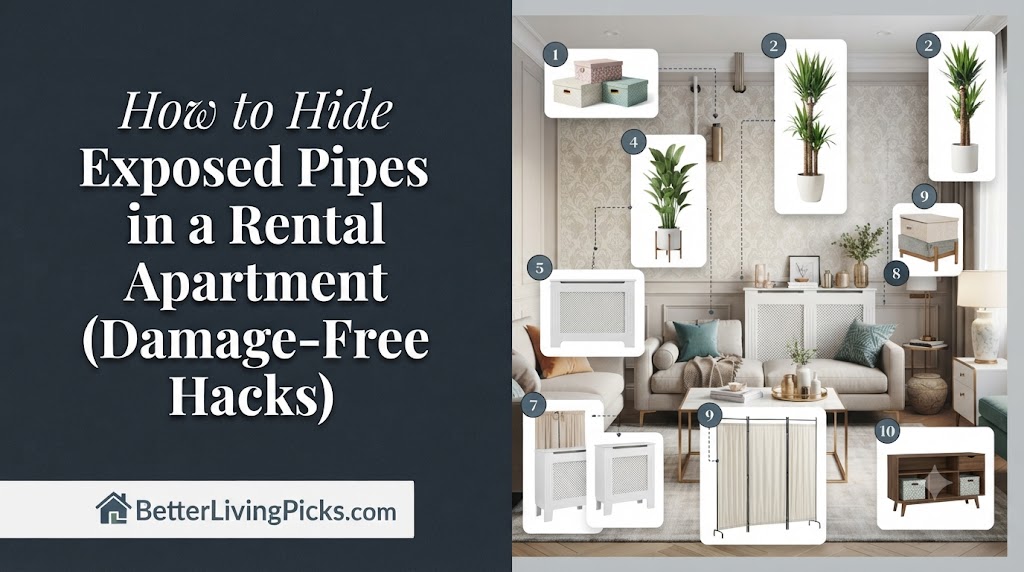
Nothing kills the vibe of a carefully decorated rental apartment faster than a cluster of clunky, industrial pipes snaking across your living room wall. Most landlords won’t let you box them in or move them, leaving you stuck with an eyesore that stares back at you every single day. It can feel like your decor efforts are being sabotaged by outdated plumbing, but you don’t have to settle for the “exposed industrial” look if it isn’t your style.
You don’t have to break your lease or spend a fortune to reclaim your space. With a bit of creative thinking and zero permanent modifications, you can make these utilities disappear or blend them into your design scheme seamlessly. Whether you are dealing with radiator pipes in the bedroom or vertical water lines in the kitchen, these renter-friendly methods will help you fix the problem without losing your security deposit.
Assessing Your Pipes: What Can You Actually Change?
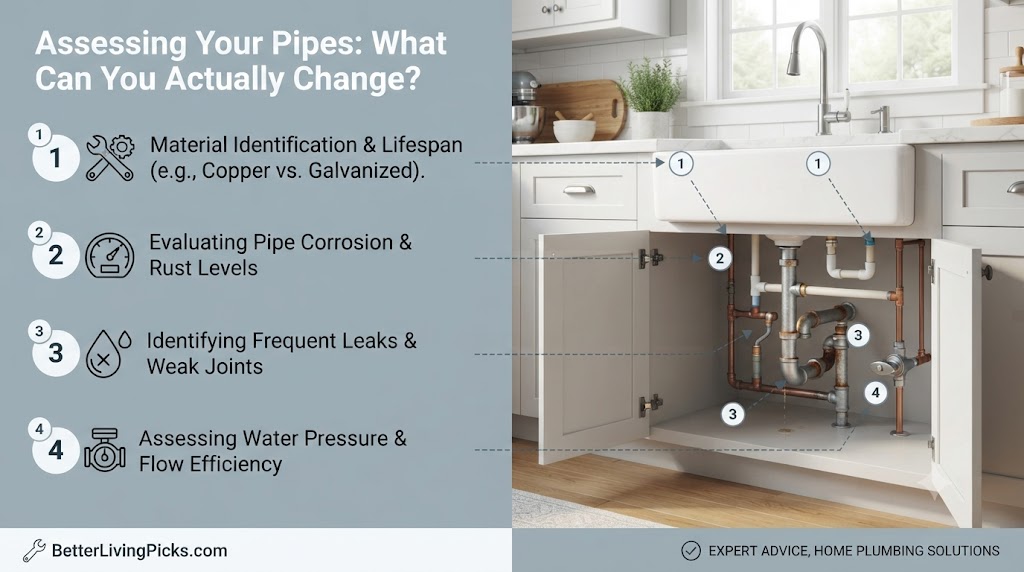
Before you start wrapping things in rope or moving heavy furniture, you need to know exactly what you are dealing with. Not all pipes are created equal, and some are “off-limits” for even the most harmless aesthetic upgrades. Taking the time to evaluate the pipe type and location is the most important step for a successful project.
Safety First: Pipes You Should Never Touch
If a pipe radiates intense heat, you must leave it alone. Covering radiator pipes or steam pipes can lead to dangerous overheating, moisture buildup inside the cover, and significant fire risks. Even if the pipe looks ugly, it is functioning as a heat exchange unit.
If the pipe is already dripping, shows signs of active rust, or has visible corrosion, do not apply anything to it. You need to document this with your landlord immediately, as trying to cover up a maintenance issue will only make it harder to report later. Attempting to mask a leaking pipe might trap moisture against the wall, leading to permanent mold growth that could definitely cost you your security deposit.
Determining Your Landlord’s “Mod” Threshold
Check your lease for specific clauses regarding “alterations.” While minor cosmetic changes are usually fine, anything involving adhesive strips, paint, or heavy mounting requires a quick, documented email to your landlord. Most landlords are reasonable if you explain that you want to improve the look of the unit while keeping everything reversible.
Keep it simple: ask if you can paint the metal components. If the answer is no, stick to solutions that aren’t physically attached to the pipe at all. This keeps you in the clear when it comes time for your move-out inspection. Always photograph the pipes before you start, so you have a “before” record in case there is ever a dispute about the condition of the metal upon move-out.
Concealing Vertical Pipes with Furniture and Decor
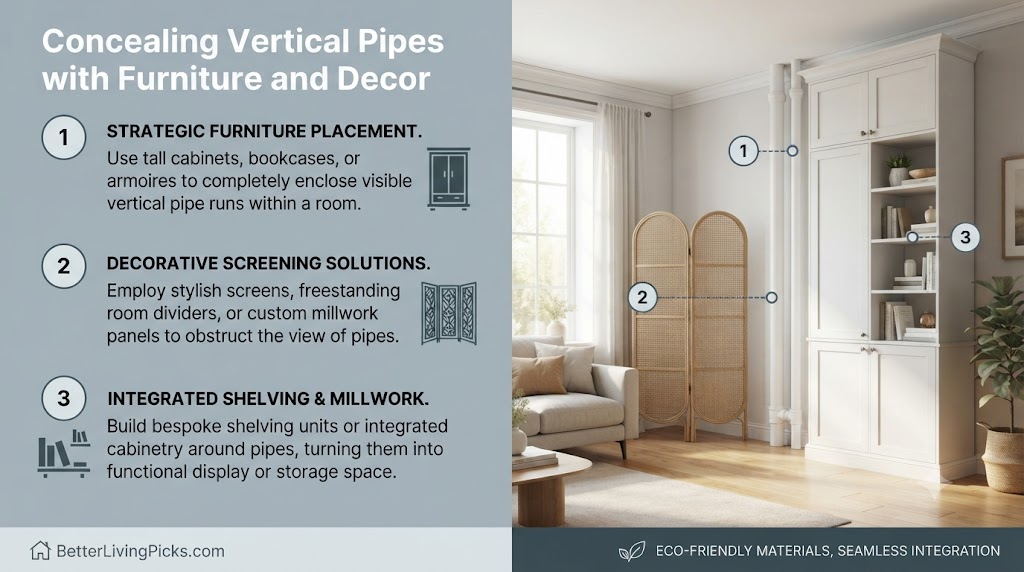
Furniture is your absolute best friend when you cannot renovate. By shifting your room layout, you can turn a structural eyesore into a background element that nobody, including your landlord, notices. The key is to select furniture that makes sense for the room’s function while providing the necessary coverage.
The Strategic Placement of Floor Lamps and Tall Plants
A tall, leafy plant like a fiddle-leaf fig or a snake plant is the ultimate pipe-hider. These plants are wide enough to block a vertical pipe from view but narrow enough to fit in corners where pipes usually congregate. Use a decorative basket or a ceramic pot to elevate the plant, which adds height and extra coverage.
If you don’t have a green thumb, a slim floor lamp works just as well. Look for designs with a thin base or a tripod design that can sit right against the wall, effectively creating a “visual wall” that stops the eye from wandering to the pipe. A floor lamp also serves a secondary purpose by providing ambient lighting in a corner that might otherwise be dark and uninviting.
Using Slim Shelving to “Frame” the Utility
If you have a pipe running along the middle of a wall, consider a shallow, freestanding bookshelf or a narrow console table. By placing the furniture directly in front of the pipe, you integrate the utility into your storage system.
If the shelf doesn’t fully cover the pipe, use decorative items on the shelves to draw the eye away. Books, photos, and small boxes create visual interest that dominates the space, making the pipe fade into the background. For a cleaner look, use uniform storage baskets to create a cohesive appearance that hides the bottom portion of the pipe entirely.
Mirror Magic: Using Reflection to Your Advantage
Another clever trick is to place a tall, leaning floor mirror in front of the area. Mirrors naturally make a room feel larger, and by angling the mirror slightly, you can reflect a more attractive part of the room while keeping the pipes hidden behind the frame. This is particularly effective in small entryways or narrow hallways where you don’t have space for bulky bookshelves or large plants.
Creative Camouflage: The Power of Paint and Fabric
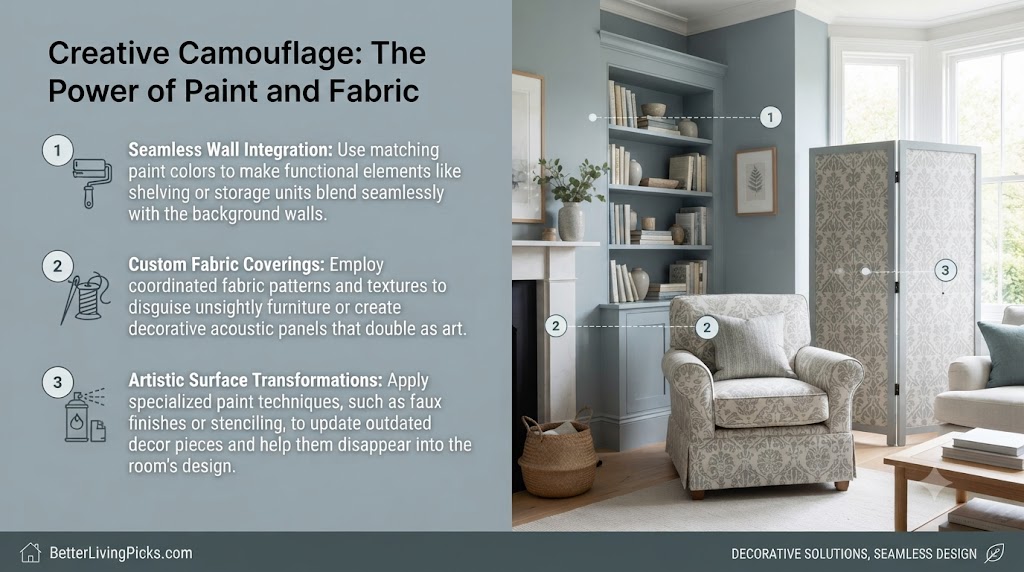
If you want the pipes to “disappear” rather than be hidden, changing their color or texture is the way to go. This requires more effort, but the results are often much cleaner than trying to hide them behind furniture.
Painting Pipes to Match Your Wall Color (With Permission)
If your landlord says yes to painting, don’t just use standard wall paint. Standard paint won’t adhere well to metal, and it will start to peel within weeks. Use a high-quality metal primer first to ensure the topcoat stays put.
Aim for a matte or eggshell finish that matches your wall color exactly. When the pipe matches the wall, it loses its ability to catch the light, which makes it look significantly less obvious. If you want a more intentional look, you can paint the pipes a matte black, which can turn an industrial-looking pipe into a deliberate design choice that complements a modern or mid-century interior.
Fabric Wraps and Rope Techniques for Character
For those who want to lean into the industrial aesthetic rather than hide it, rope wraps are a popular choice. Use jute, sisal, or cotton rope to wrap a vertical pipe from floor to ceiling.
Secure the ends with small, non-residue tape at the very bottom and top where it isn’t visible. This adds a rustic, organic texture to the room and turns a cold metal pipe into a decorative, column-like feature. You can even tuck small faux vines into the rope for a boho-chic vibe. Just ensure that the rope is dry-cleaned or synthetic to avoid attracting dust or causing issues in damp environments.
Removable Decorative Contact Paper
You can find high-quality, adhesive-backed films that look like wood grain, marble, or brushed metal. These are essentially stickers for your pipes. The advantage of these is that they are much easier to remove than paint.
Before applying, ensure the pipe is cleaned with rubbing alcohol so the adhesive has a clean surface to grip. When moving out, use a hairdryer to gently heat the adhesive, which will allow you to peel the film off without leaving any sticky residue behind. This is a game-changer for renters who want a high-end look on a budget.
Building Temporary Screens and Dividers
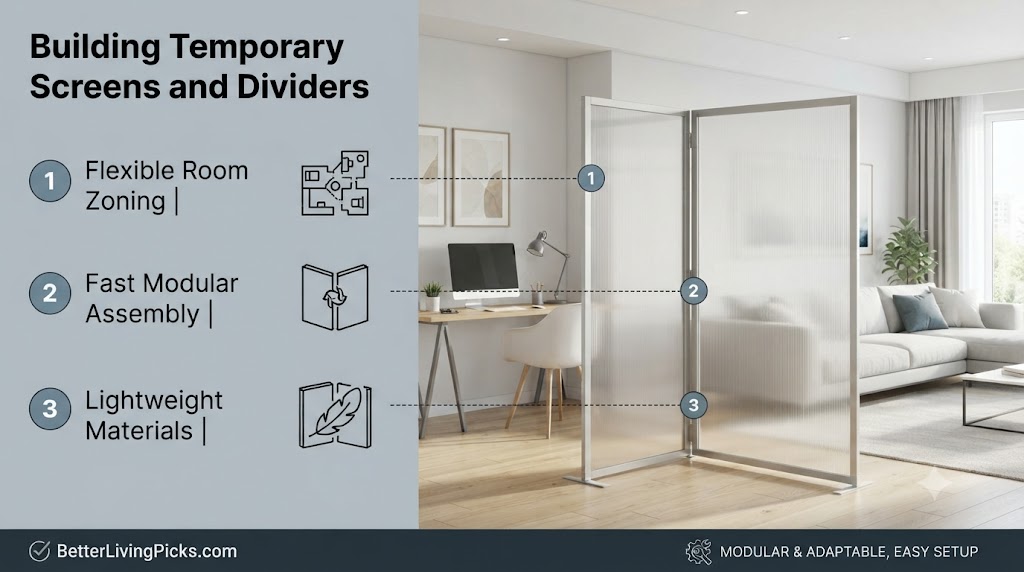
Sometimes, one pipe isn’t the problem, the whole wall is. When you have a cluster of utilities or a messy bank of pipes, a full-scale screen is a much better solution than trying to hide each piece individually.
Tension Rod Curtains: The Easiest Rental Hack
Tension rods are a renter’s miracle because they require zero screws or nails. You can install a heavy-duty tension rod between two walls, inside a corner, or from a corner to a piece of furniture.
Hang a curtain, a stylish piece of fabric, or even a woven tapestry from the rod to create a “soft wall.” This hides the pipes completely and allows you to change the aesthetic of the room whenever you feel like redecorating. You can choose a fabric that matches your couch or rug to tie the entire room’s color palette together.
Freestanding Privacy Screens and Room Dividers
If you don’t have a space where a tension rod will work, a folding privacy screen is your best bet. These screens are tall, stable, and completely portable. You can find them in rattan, wood, metal, and fabric styles.
Position the screen at a slight angle in front of the pipe, and you have an instant decor upgrade that doubles as a room divider. This works exceptionally well in studio apartments where you might want to create a visual separation between your living area and your kitchen without making permanent changes to the floor plan.
DIY Washi Tape Geometric Patterns
If you have a thin pipe and you can’t cover it, try making it part of the art. Use colored washi tape to create geometric patterns on the pipe itself. While this doesn’t “hide” the pipe, it turns it into a deliberate accent piece. This is a very popular trick in creative rentals and dorm rooms because it’s incredibly affordable and can be removed in less than five minutes.
Dealing with Radiator Pipes and Floor Obstructions
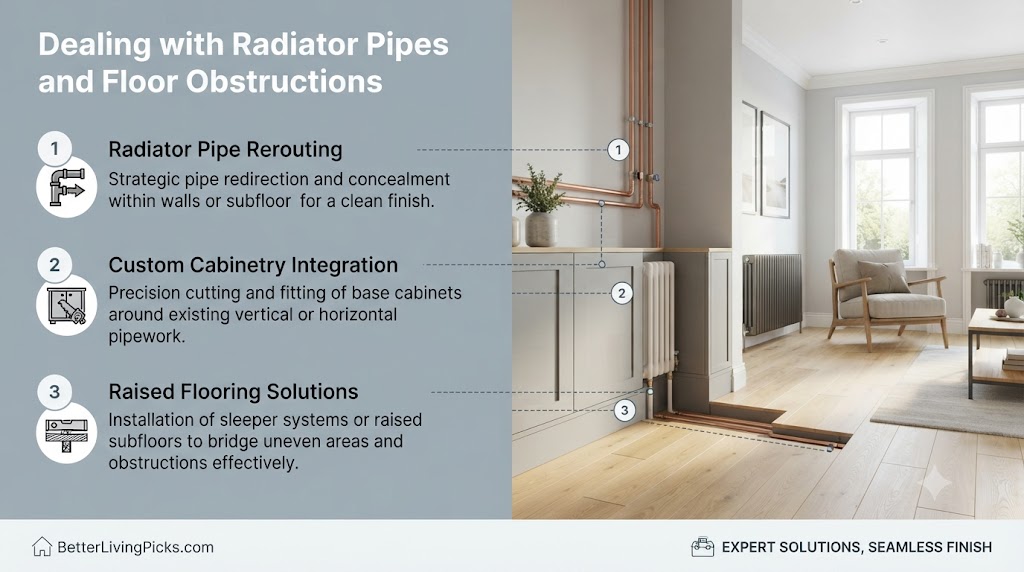
Pipes that run along the floor or near baseboards are often the most annoying because they trip you up and collect dust. Dealing with floor-level pipes requires a different approach since you need to account for foot traffic and cleaning.
Using Magnetic Covers or Decorative Boxes
If you have metal radiator covers or pipe enclosures, you can use magnetic decorative panels. These stick right to the metal and can be removed in seconds when you move out.
For pipes along the floor, a custom-cut wood “bridge” or box can hide them completely. Just make sure the box is easily removable so you or your landlord can still access the pipe if there is a leak. You can buy premade, U-shaped wooden channels that are designed specifically to hide baseboard wires and pipes.
Creating a Low-Profile “Console” Table
A very narrow “sofa table” or bench can slide right over floor-level pipes. This creates a clean line for your room and gives you extra space for plants or decorative objects.
Always measure the height and width of your floor pipes before buying furniture. You need a gap of at least an inch between the pipe and your furniture to ensure there is enough airflow, especially if the pipe carries heat. If you’re handy, you can even build a custom bridge out of scrap wood that acts as a narrow shelf, turning the pipe area into a functional surface for keys or a charging station.
Common Pitfalls and How to Avoid Security Deposit Loss
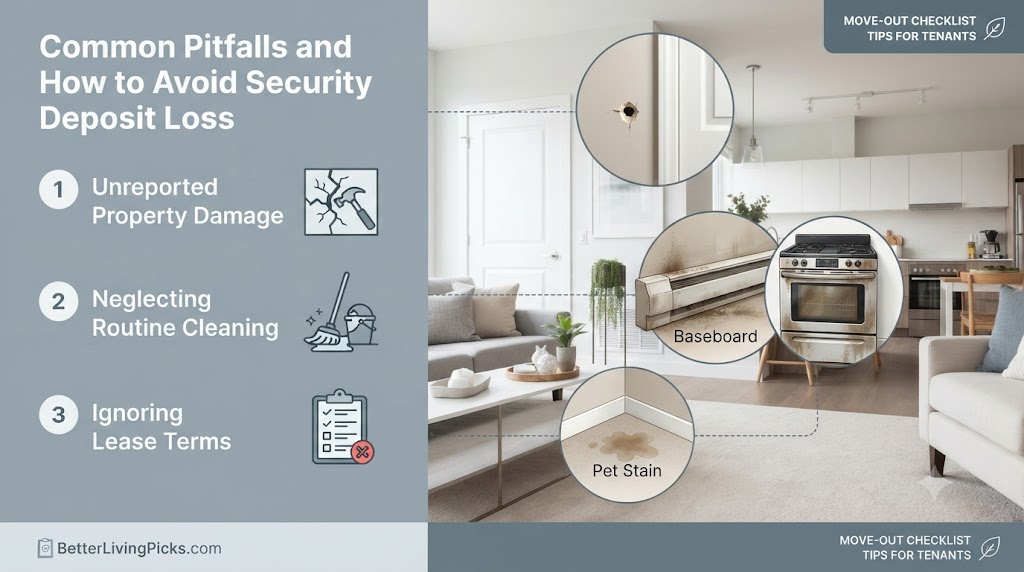
It is easy to get carried away when you are excited to fix your apartment, but don’t let your DIY spirit cost you your deposit. A few bad decisions can leave you with a bill from your landlord or a lost deposit, so keep these “don’ts” in mind.
Avoiding Permanent Adhesives and Drilling
Never use construction adhesive, liquid nails, or heavy-duty mounting tape directly on pipes or walls. These leave behind residue that is almost impossible to remove without damaging the paint or the finish of the pipe.
If you must attach something to a wall to hide a pipe, use Command strips or similar damage-free mounting hardware. For the pipes themselves, rely on tension-based solutions or friction-fit covers that don’t require any adhesives at all.
Choosing Materials That Don’t Damage Finishes
Before applying any decorative wrap, test a small piece in an inconspicuous area. Some materials might react with the finish on the pipe, especially if the pipe is old or has been painted multiple times by previous tenants.
If a material feels like it might peel the existing paint off when you remove it, skip it. Stick to loose-fitting covers and furniture that sits near the pipes, rather than on them. Remember, the best rental hack is one that leaves the space exactly as you found it.
The “Overheating” Warning
Always monitor the temperature of your pipes for a few days before committing to a cover. If you notice the surface of your “hide-the-pipe” project feels hot to the touch, you have a problem. Heat trapped by wood, plastic, or fabric can cause the material to warp, discolor, or even emit fumes. When in doubt, prioritize airflow over total concealment.
Frequently Asked Questions
Can I use peel-and-stick wallpaper on exposed pipes?
While you can, it is rarely a good idea. The heat fluctuations in pipes can cause the adhesive to lose its grip or, worse, leave behind a sticky, impossible-to-remove residue when you peel it off. If you really want to use a pattern, opt for a fabric wrap secured with a gentle ribbon or string instead.
Will hiding pipes with furniture cause mold?
It can if you completely seal the pipe off. Mold needs moisture and lack of airflow to grow. As long as you leave some space between your furniture and the pipe so that air can circulate, you should not have any issues with moisture buildup. Avoid pushing heavy furniture flush against a pipe that is prone to condensation.
How do I cover a pipe in a bathroom?
Bathrooms are humid, which makes fabric or paper covers a bad choice. Instead, use a slim, moisture-resistant storage unit or a tall plastic cabinet that matches your bathroom decor. Ensure the unit is anchored safely to the wall if it is tall, but check your lease about small screw holes first. If you can’t drill, look for tension-based shelving systems designed for bathrooms.
Can I build a wooden box around my pipes?
Yes, but it must be a “floating” box. Do not attach it to the wall or the pipe with nails or permanent glue. Build a simple three-sided frame that sits securely on the floor and can be lifted off easily for maintenance or move-out. This is a great way to hide unsightly vertical pipes in a living room while adding a modern architectural touch.
Is it better to blend the pipe in or hide it entirely?
This depends on the pipe’s location. If the pipe is tucked away in a corner, blending it in with paint or rope is usually enough. If the pipe is a focal point in the middle of a room, hiding it behind furniture or a screen is almost always a better visual choice. Don’t waste your time trying to “blend” a pipe that is clearly in the center of a wall; focus on obscuring it completely.
What if my landlord forbids any changes to the pipes?
If your landlord is strict, focus on “distraction” rather than “concealment.” Use your decor to pull the eye away from the pipes. Invest in great rugs, bold art on the walls, and interesting lighting that makes the room feel so stylish that the pipes become invisible by comparison. Sometimes, the best way to hide something is to make everything else in the room so interesting that nobody notices the utilities.
Final Thought
Living with exposed utilities doesn’t mean your apartment has to feel unfinished or industrial. By focusing on clever, temporary solutions like strategic furniture placement, tall plants, or simple tension-rod curtains, you can mask those eyesores completely without risking your security deposit. The most successful renter-friendly projects are the ones that prioritize safety especially around heat-conducting pipes, and rely on removable, non-damaging materials.
Take your time to measure your space, assess what is allowed, and choose the solution that fits your personal style. You might find that once you stop seeing the pipes, you have a much greater appreciation for the rest of your home. With a little creativity, you will transform those awkward utility lines into a background element that doesn’t distract from the beautiful space you have created. You’ve got this!

