
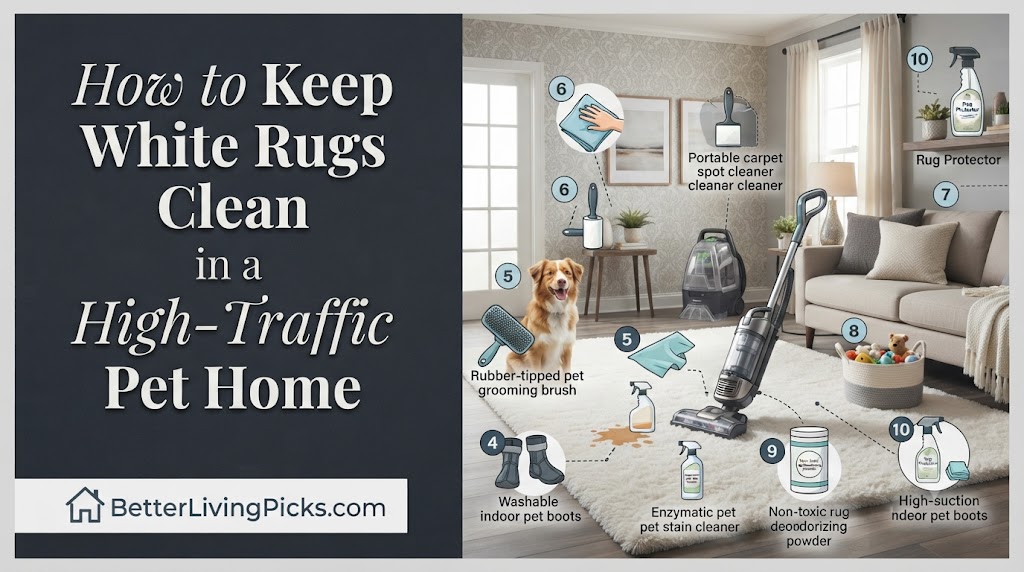
The secret is immediate blotting. Never scrub, as this pushes debris deeper. Use a clean white cloth to absorb liquids instantly, then treat with a mild enzymatic cleaner to break down organic pet proteins.
2. How often should I vacuum?
For white rugs, vacuum at least 3-4 times a week. Pet hair and dander are invisible killers that grind into fibers over time. A HEPA-filter vacuum ensures you aren’t just blowing dust back into the air.
3. How do I keep white fibers bright?
Avoid harsh bleach. Use a diluted mixture of white vinegar and water or a dedicated oxygen-based brightener. Always test a small corner first to ensure the solution doesn’t discolor or damage the rug’s backing.
4. What is the best protection?
Apply a rug-safe fiber protector like Scotchgard or a specialized wool protector once every six months. This creates a liquid-repellent barrier that gives you much more time to clean up accidents before they set.
You probably bought that white rug because it makes your living room look bright, airy, and expensive. Then, reality set in: muddy paws, shedding fur, and the occasional “oops” from your furry roommate. It is easy to feel like you are constantly fighting a losing battle against dirt and stains, turning your beautiful focal point into a source of daily anxiety.
Keeping a white rug spotless in a pet-friendly house isn’t about forbidding your pets from walking on it. It is about building a routine that stops the damage before it starts. By switching your focus from deep-cleaning marathons to proactive, simple daily habits, you can keep your space looking pristine without sacrificing your sanity or your pet’s comfort.
The Reality of White Rugs in Pet Homes
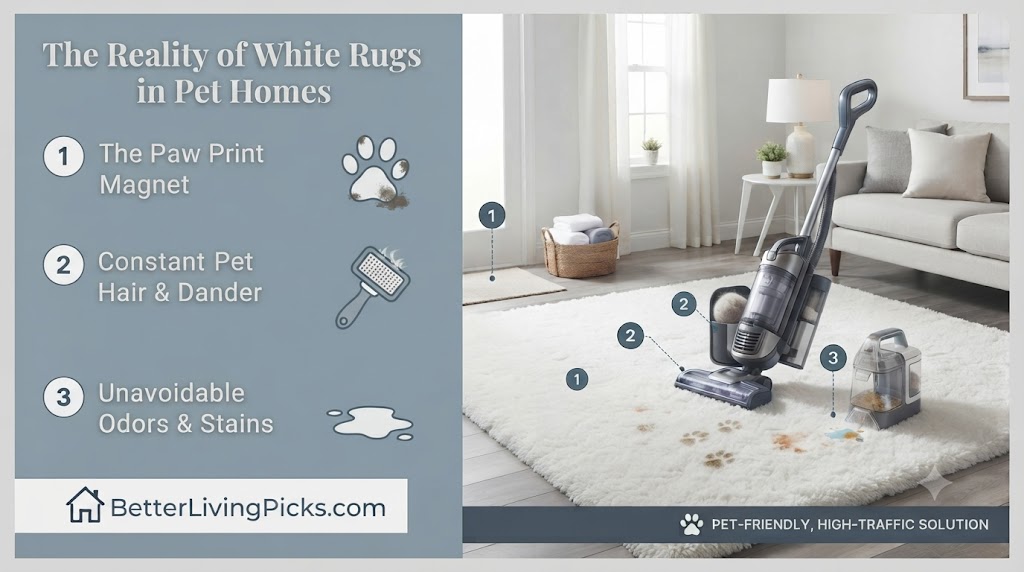
White rugs act as a magnet for everything your pets bring inside. Whether it is mud from the backyard, tracked-in gravel, or the constant shedding of fur, these rugs show every single imperfection. Many people think they made a mistake by choosing such a light color for a pet-friendly home, but the issue usually isn’t the rug, it is the lack of a specific maintenance strategy.
Why They Get Dirty (And Why You Keep Buying Them)
White rugs offer a clean, sophisticated backdrop that makes other furniture pop. They brighten dark rooms and create an immediate illusion of space. However, light-colored fibers lack the “forgiveness” of darker, patterned rugs, which naturally hide dust and pet hair. Once you accept that maintenance is part of the deal, you stop seeing the dirt as a personal failure and start seeing it as a predictable, manageable part of your daily home routine.
Setting Boundaries: High-Traffic Zones vs. Off-Limits
If you have a particularly messy dog or a cat that likes to hack up hairballs, you should consider designating the white rug area as a “low-traffic” zone. Use durable runners or darker-colored area rugs in entryways to trap the bulk of the outdoor debris before your pets even reach the main white rug. When you purposefully limit the time pets spend on the rug during “muddy” hours or peak activity, you naturally extend the time between deep cleanings significantly.
Daily Maintenance Habits That Save Your Sanity
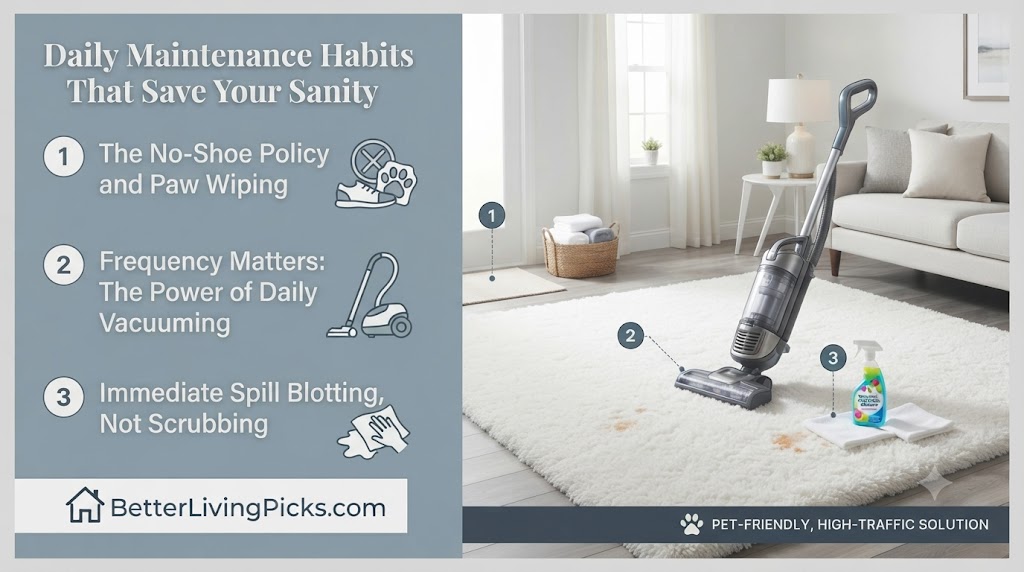
Consistency is the absolute secret weapon for white rug owners. If you wait until the rug looks dirty to clean it, you have waited too long. By that point, the dirt has settled deep into the base of the fibers, making it significantly harder—and more time-consuming to remove.
The “No-Shoe” Policy and Paw Wiping
The “no-shoe” rule isn’t just for humans; it is vital for four-legged family members too. Keep a dedicated, high-absorbency microfiber towel or specialized pet paw wipes right by the door. Wiping paws after every single outdoor excursion stops dirt from being tracked directly onto your white rug. It takes less than ten seconds, but it saves you hours of heavy scrubbing later. If you live in a rainy or snowy climate, a quick dry-down is even more critical to prevent wet, muddy paw prints from setting into the white fibers and causing discoloration.
Frequency Matters: The Power of Daily Vacuuming
You simply cannot skip vacuuming when you own a white rug in a pet home. While it might feel like overkill, running the vacuum over the rug every other day or even daily, is the most effective way to keep it looking showroom new. Use a vacuum with strong, adjustable suction and a high-quality HEPA filter to pull pet dander and microscopic dirt out from deep within the pile. When you leave fur and dust, they act like abrasive sandpaper. Over time, these particles grind against the rug fibers, wearing them down and turning them grey or dull regardless of how much you wash them.
Immediate Spill Management for Pet Messes
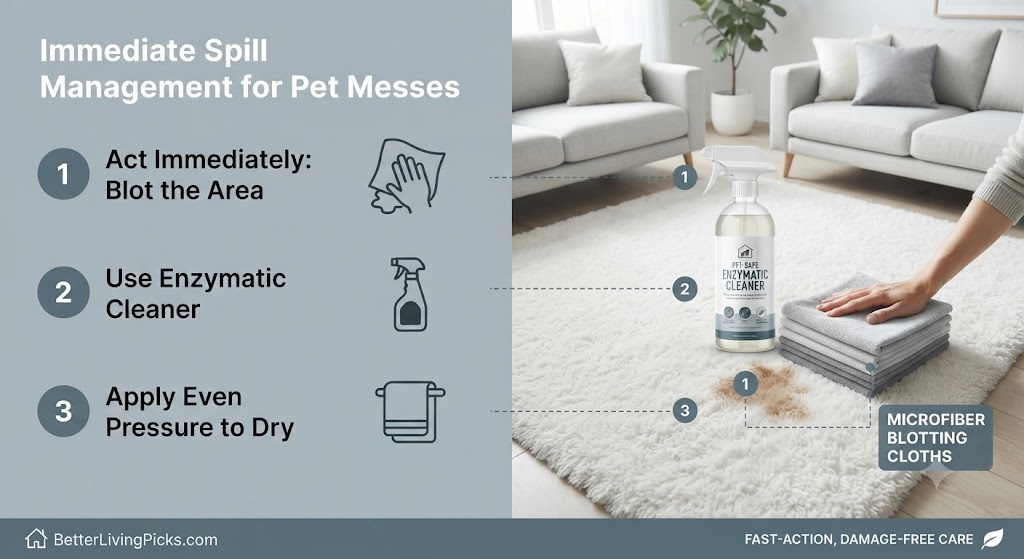
Even with the best planning and constant vigilance, accidents will eventually happen. The difference between a ruined rug and a clean one is how fast you react the moment a pet has an accident.
The Blotting Technique (And Why Scrubbing Is Your Enemy)
Most people instinctively scrub when they see a fresh stain. Never do this. Scrubbing untwists the delicate fibers and forces the liquid or solid mess deeper into the backing of the rug. Instead, use a clean, white paper towel or a soft microfiber cloth to blot the area firmly. Apply steady, downward pressure to soak up as much moisture as possible. Keep switching to a fresh, dry part of the cloth until no more pigment or liquid transfers to the towel.
Must-Have Spot Cleaners for White Fibers
Keep a high-quality enzymatic cleaner on hand at all times. Standard soaps can sometimes leave a sticky, soapy residue that attracts more dirt, effectively “staining” the rug over time. Enzymatic cleaners work differently; they actively break down the biological proteins found in pet urine, vomit, and saliva. This prevents the stain from setting and eliminates the underlying odors that might encourage your pet to mark the same spot again.
Deep Cleaning Strategies for Bright Whites
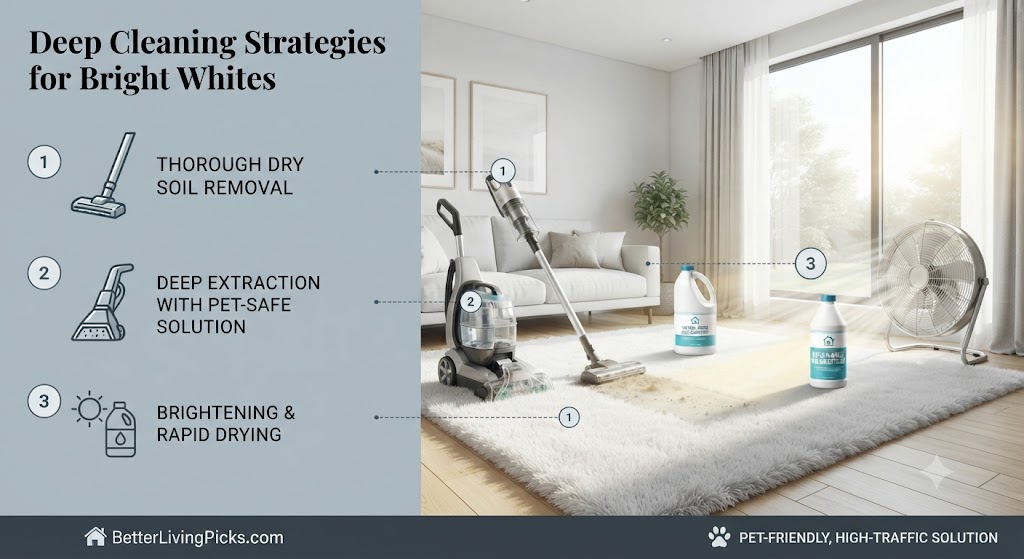
Periodic deep cleaning is inevitable. Even with the most diligent vacuuming, the natural oils from pet fur will eventually dull the brightness of the white fibers.
When to DIY and When to Call a Pro
Small, localized stains are great for DIY solutions like a simple mix of clear dish soap and warm water. However, if the entire rug has become dingy or developed a yellow tint, it is time for a professional. Professional steam cleaners have the high-heat extraction power needed to lift out years of accumulated dander and oils that a standard home vacuum simply cannot reach. Don’t be afraid to send a high-quality rug to a professional cleaning facility; it is often far cheaper to pay for a professional wash than to replace the rug entirely.
Preventing Yellowing After Cleaning
Yellowing often occurs when a rug is left too wet during the cleaning process. If you are cleaning it yourself, ensure you do not oversaturate the fibers. Use a fan or a dehumidifier to speed up the drying process significantly. The longer a rug stays damp, the more likely the backing materials are to bleed color or create an ugly yellow hue as they dry.
Long-Term Protection Methods
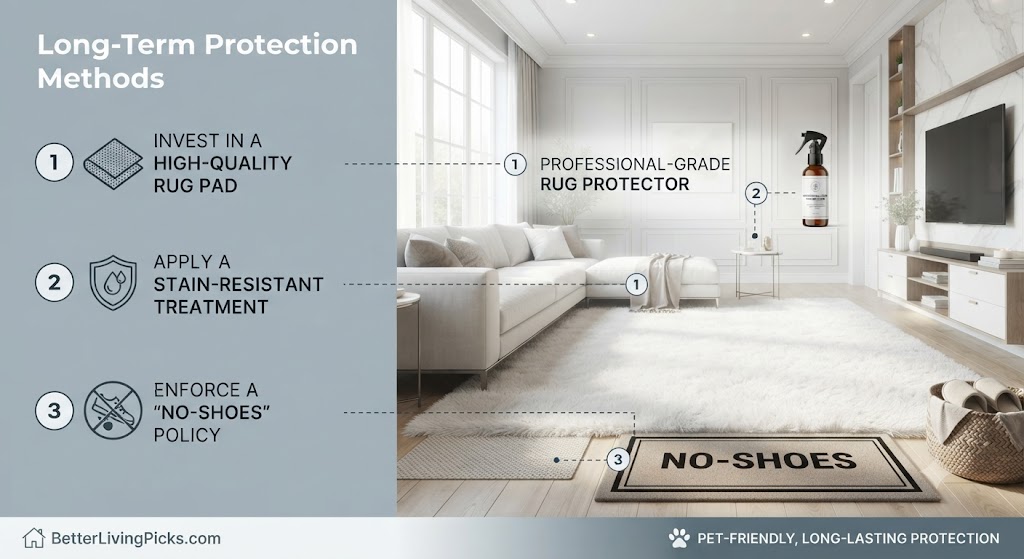
You can give yourself a massive head start by treating the rug before it sees any action.
Applying Fiber Protectors Safely
Products like professional-grade, wool-safe fiber protectors create an invisible, hydrophobic shield around each individual fiber. When a spill occurs, the liquid sits on top of the fibers rather than soaking in immediately. This buys you those crucial extra minutes to grab a towel. Always check the manufacturer’s label on your rug before applying any protector to ensure it is compatible with the specific material.
Rug Rotation: Evenly Distributing the Wear
If your rug is in a spot where your pet likes to lounge or play, it will inevitably wear down in that specific area faster than others. Rotate your rug 180 degrees every few months. This ensures that the high-traffic spots get a break and the wear pattern remains consistent across the entire piece, preventing the look of an uneven, “sunken” area.
The Role of Rug Pads
Many pet owners overlook the rug pad, but it is one of the most important components for longevity. A high-quality, moisture-resistant rug pad provides a cushion that protects the rug’s backing from the hard floor underneath. Furthermore, it adds a layer of airflow, which helps prevent moisture buildup that leads to odors and potential damage to both your rug and your flooring. Choose a pad specifically designed for pets that prevents skidding, as a moving rug can cause pets to run, scramble, and dig, which damages fibers.
Managing Pet Hair on Different Rug Textures
Not all white rugs are the same, and your cleaning approach should match your material. If you have a flat-weave rug, a standard vacuum is usually enough. However, for deep-pile or shag rugs, pet hair is notorious for hiding near the base. In these cases, a rug rake is your best friend. Dragging a rubber-tipped rake across the surface brings deeply buried hair to the surface, making your job much easier. If you have a natural fiber rug, such as jute or sisal, be extra careful with liquids, as these materials absorb moisture instantly.
Frequently Asked Questions
Can I use hydrogen peroxide to clean a white rug?
Yes, but you must be very careful. Hydrogen peroxide acts as a mild bleaching agent. It is excellent for removing stubborn, set-in pet stains from white fibers, but it can discolor certain materials or leave a spot that looks “too clean” compared to the rest of the rug. Always spot-test in an inconspicuous area first.
Why does my rug smell after I clean it?
The odor is likely trapped in the backing of the rug or the rug pad underneath. If the rug got too wet during cleaning, the moisture trapped against the floor can breed bacteria. Always ensure the rug and the pad are completely dry before putting them back down. If the smell persists, you may need to replace the rug pad.
Is baking soda safe for white rugs?
Baking soda is a fantastic, natural deodorizer. Sprinkle a generous amount over the dry rug, let it sit for at least an hour, and then vacuum it up. It helps absorb oils and neutralizes odors without the need for harsh chemicals. It is perfectly safe for almost all rug materials.
How do I get pet hair out of high-pile white rugs?
High-pile or shaggy rugs are notoriously hard to keep clean. If a vacuum isn’t getting all the hair, use a rubber-tipped pet brush or a dedicated carpet rake. These tools grab onto embedded fur and pull it to the surface, making it much easier for your vacuum to pick up.
Are white synthetic rugs easier to clean than wool?
Synthetic rugs, such as those made from nylon or polyester, are generally more stain-resistant and easier to spot-clean than natural wool. However, they can still hold onto smells and dirt. If you want the look of white with high durability, synthetic fibers are often the more practical choice for a busy pet home.
How often should I professionally clean my white rug?
In a high-traffic pet home, it is recommended to have your white rugs professionally cleaned every 6 to 12 months to remove deep-seated oils and dander that home vacuums miss.
Owning a white rug in a home with pets doesn’t have to be a nightmare. By accepting that your rug will get dirty and building simple, proactive habits into your day, you can keep your home looking exactly how you envisioned. Remember, the goal is to enjoy your living space, not to turn it into a museum. With the right tools and a quick reaction to spills, your white rug can remain a beautiful, clean foundation for your home for years to come.