

Prioritize pieces that serve at least three distinct functions, such as an ottoman that hides storage and unfolds into a guest bed. Always measure doorway clearances and floor swing radiuses before buying to avoid cramped walking paths.
2. Are transformable wall beds sturdy enough for daily long-term use?
Modern piston-assisted Murphy beds and cabinet beds are built for heavy everyday sleeping. Look for steel frames and reinforced slats rather than particleboard, ensuring the mechanism smoothly handles daily folding without sagging.
3. What is the biggest beginner mistake when buying small space furniture?
Buying furniture piece-by-piece without a unified layout plan often results in visual clutter and blocked walkways. Measure vertical and horizontal clearance first, mapping out a cohesive floor plan before purchasing anything.
4. How can I turn a tiny living room into a functional home office?
Invest in a convertible coffee table that lifts into a full-height workspace or a sleek wall-mounted fold-down desk. Keep cable management organized with hidden built-in grommets so your workspace vanishes when off the clock.
I remember staring at my first cramped 400-square-foot studio apartment, wondering how on earth a bed, a desk, and a couch were all supposed to fit without turning the place into an obstacle course. The initial impulse is to buy miniature furniture, but that usually just makes a room look awkward and toy-like. The real trick lies in multi-functional furniture that works smarter, not smaller, changing its shape and purpose throughout the day.
Tiny living forces you to look at every square inch as valuable real estate, where every single item must justify its footprint. Over years of trial, error, and cramped knuckles from assembling awkward flat-pack builds, I have learned which space-saving designs actually hold up to daily life. Let’s dive into the ultimate breakdown of how to transform your small space into an efficient, beautiful sanctuary.
The Psychology and Layout Rules of Tiny Living
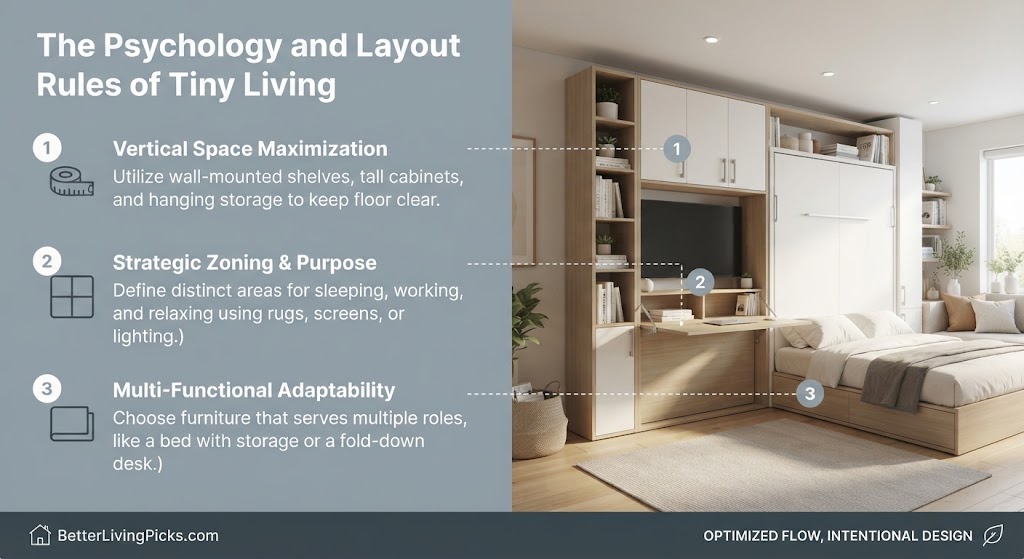
Rethinking Small Space Constraints
Living small does not mean you have to sacrifice comfort, style, or functionality. The secret is breaking away from traditional interior design rules that assume you have endless square footage to waste. When a single room has to function as your bedroom, office, dining hall, and living room, zoning becomes your best friend.
I learned the hard way that throwing random convertible pieces into a room creates more chaos than order. You have to evaluate your daily habits first. If you rarely cook elaborate meals, don’t waste precious floor space on an oversized dining table. Design around your actual routine instead of a fantasy lifestyle.
Measuring Twice, Living Better: The Golden Rule of Clearance
Nothing is more heartbreaking than waiting three weeks for a custom fold-down desk to arrive, only to realize its drop-leaf hits your door trim. Clearance is everything in a compact home. You must account for dynamic space—the physical area an item needs when it opens, unfolds, or swivels.
Always map out your floor plan using painter’s tape on the hardwood before buying anything. Walk around the taped boundaries with your laundry basket or groceries in hand. If you trip over the tape line or bump your hip against a corner, your future furniture layout needs adjustment immediately.
Avoiding the “Cluttered Showroom” Trap
Showrooms look spacious because they are staged sparsely with specialized lighting and zero clutter. When you bring those exact same pieces home, reality hits hard with winter coats, shoe racks, and charging cables.
To avoid the showroom trap, look for furniture with hidden compartments, enclosed cabinets, and clean silhouettes. Visual weight matters just as much as physical footprint. Pieces with exposed legs allow light to pass underneath, making a tiny room feel significantly larger and more breathable.
A wall-mounted drop-leaf table with heavy-duty steel triangular brackets offers the ultimate balance of durability, zero floor footprint, and exceptional versatility. It acts as a breakfast bar, writing desk, or prep station, then folds completely flush against the wall when not in use.
Living Room Transformation Hacks

Making the Living Area Do Double (and Triple) Duty
Your living room is usually the largest space in a compact home, meaning it carries the heaviest workload. Instead of a traditional stationary sofa and coffee table setup, look for modular arrangements that adapt on the fly.
When hosting friends, a modular sectional that splits into individual seating blocks or extra ottomans saves the day. Look for stain-resistant performance fabrics because small spaces experience heavy localized wear and tear on fewer pieces of furniture.
Coffee Tables That Convert into Dining Desks
Bulky dining tables have no place in a compact apartment unless they serve a dual purpose. Convertible coffee tables feature pneumatic or spring-assisted gas lifts that raise the tabletop smoothly to standard desk or dining height.
I’ve used lift-top tables for late-night laptop sessions and impromptu floor-picnic dinners. Check the internal mechanism rating before buying, as cheap gas springs lose pressure quickly if you rest heavy elbows on the raised surface daily.
Hidden Storage Ottomans and Modular Sectionals
Clutter destroys the visual calm of a tiny space faster than anything else. Storage ottomans act as comfortable footrests, extra seats, and hidden storage bins for bulky winter blankets or board games all at once.
Group two or three small cube ottomans together instead of one massive coffee table. They are lightweight, easy to rearrange when you need open floor space for yoga, and keep stray items completely out of sight.
Smart Bedroom and Workspace Integration
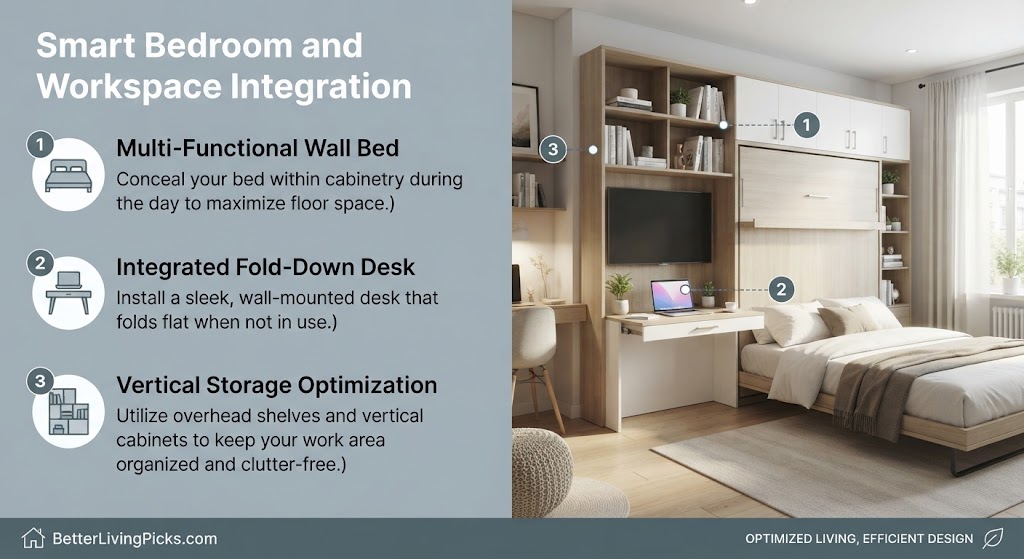
Reclaiming the Bedroom When Space is Scarce
A traditional bed frame eats up nearly half of a standard bedroom or studio floor plan, sitting entirely idle for sixteen hours a day. Reclaiming that space requires looking upward and outward. When your bed doubles as storage or folds away entirely, the entire room transforms into a breathable daytime sanctuary.
During my testing phase with various space-saving bedroom setups, I realized that comfort cannot be compromised just to save square footage. Never sacrifice mattress quality for a folding mechanism; look for designs that accommodate standard mattress thicknesses so you actually get a good night’s sleep.
Murphy Beds vs. Cabinet Beds: Real Experiences
Murphy beds are the classic space-saving heavyweight champions, folding vertically into the wall to reveal open floor space. However, they require anchoring into heavy wall studs and permanent installation, which can be a nightmare if you rent your home.
Cabinet beds offer a brilliant alternative. They fold out from a stylish wooden credenza or cabinet console, require zero wall mounting, and usually include a built-in charging station and a supportive memory foam mattress. They look like high-end media consoles during the day and sleep like a dream at night.
Fold-Down Desks for the Hybrid Work Era
Working from a cramped apartment means your kitchen counter or bed often threatens to become your makeshift office, which ruins your work-life balance. A dedicated fold-down desk mounted to the wall creates an instant psychological boundary between work time and personal time.
Look for wall desks equipped with integrated LED lighting and magnetic pinboards. When quitting time arrives, simply pack your laptop inside, latch the desktop shut, and your workspace vanishes completely from sight.
- Prioritize multi-use items: Focus on furniture pieces that serve at least three distinct functions to maximize every square foot.
- Account for dynamic clearances: Always map out swing radiuses and folding paths with painter’s tape before purchasing large items.
- Protect mattress quality: Choose transformable beds that support standard mattress thicknesses to prevent chronic back pain.
- Manage visual weight: Select pieces with exposed legs and clean lines to keep small rooms feeling open and breathable.
Beyond the Basics: Kitchen, Dining, and Specialized Solutions
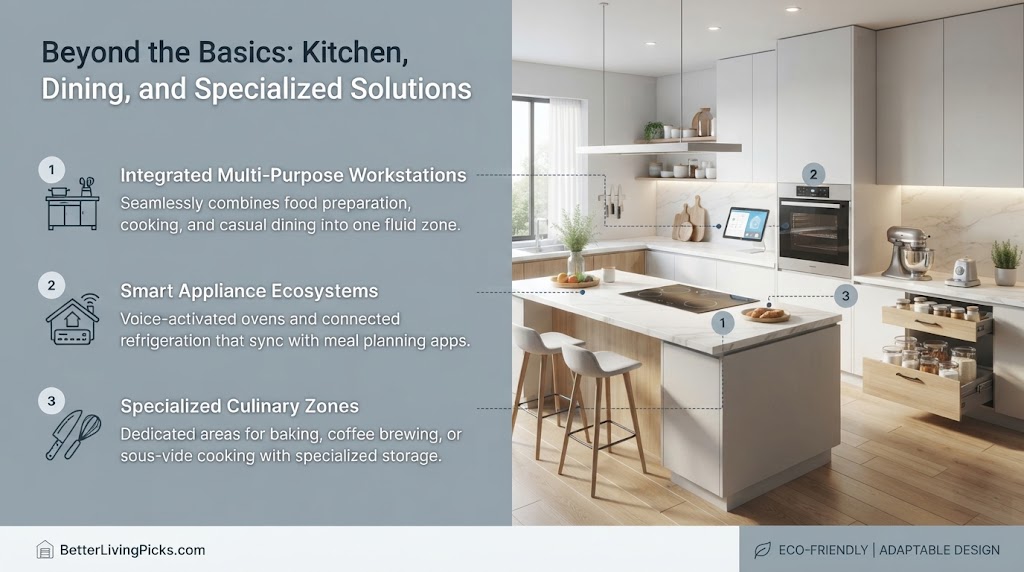
Expandable Consoles and Nesting Stools
Entertaining guests in a tiny home used to feel impossible until expandable console tables entered the mainstream market. These slim hallway consoles stretch out using internal telescopic rails and hidden leaf inserts, expanding from a 16-inch depth into a full-sized dining table that seats eight people comfortably.
Pair these expandable tables with nesting stools that tuck neatly underneath when not in use. They provide instant seating without cluttering your floor plan with bulky chairs that block pathways.
Hardware Maintenance for Transformable Mechanisms
Transformable furniture relies heavily on moving parts, including gas pistons, heavy-duty hinges, sliding tracks, and locking pins. Over time, frequent folding and weight shifts can cause hardware to loosen, squeak, or jam.
Make it a habit to check and tighten all structural screws and piston brackets every six months. Apply a light silicone-based lubricant to sliding metal tracks to keep every folding mechanism operating smoothly without annoying squeaks.
If you live in a rental property and want to install heavy wall-mounted folding desks or Murphy beds, use heavy-duty toggle bolts or locate studs precisely with an electronic finder. For lighter shelves and organizers, industrial-grade mounting adhesives can support surprising weight loads without leaving massive drywall holes behind.
Maximizing Vertical Real Estate: Walls Are Your Best Friend

Floating Shelving Systems That Double as Display and Storage
When floor space is completely maxed out, your walls become your most valuable untapped asset. Standard bookshelves take up precious floor area, whereas floating shelving units utilize air space without cluttering pathways.
I’ve found that staggering floating shelves vertically draws the human eye upward, making standard 8-foot ceilings feel significantly taller. Keep your everyday items on the middle shelves at eye level, reserving the top tier for rarely used seasonal items stored in matching fabric bins.
When mounting heavy vertical shelving or fold-down desks, never rely solely on hollow wall anchors for items holding dynamic loads. Always screw directly into timber studs or use rated toggle bolts to ensure structural stability under daily weight shifts.
Pegboard Workstations and Tool-Free Hanging Rails
Industrial pegboards are no longer confined to garages; they have evolved into sleek, customizable organization powerhouses for home offices and kitchens. A wall-mounted metal pegboard lets you hang desk accessories, headphones, small planters, and wire baskets dynamically.
The beauty of a pegboard system is its modular flexibility. As your storage needs change over time, you can pop hooks out and rearrange your entire wall layout in seconds without drilling a single new hole.
Incorporate acrylic ghost chairs, glass tabletops, and low-profile sofas with slender exposed legs. Allowing natural light to pass completely unobstructed underneath and through your furniture tricks the eye into perceiving twice the actual square footage.
Optical Illusions and Material Choices That Expand Small Spaces

The Power of Low-Profile Furniture and Exposed Floor Lines
One of the most common beginner mistakes in tiny homes is buying oversized, heavy furniture that sits flush against the floor. Bulky upholstery creates a heavy visual barrier that makes rooms feel cramped and suffocating.
Choosing low-profile sofas and media consoles with slender, tapered wooden legs allows light to flow freely underneath. When your eyes can see uninterrupted flooring stretching all the way to the baseboards, your brain subconsciously registers the room as much larger than it actually is.
Reflective Surfaces, Glass, and Acrylic Translucency
Materials play a massive role in how spacious a compact interior feels. Solid dark wood furniture absorbs ambient light, whereas glass, high-gloss lacquer, and transparent acrylic bounce daylight across the room.
Using an acrylic ghost chair at your fold-down desk or a tempered glass coffee table eliminates visual bulk entirely. Pair these transparent pieces with a strategically placed wall mirror opposite your window to double your natural light instantly.
Choosing modular furniture built with standardized replacement parts ensures you can swap out a broken caster or worn hinge rather than tossing the entire piece into a landfill. Prioritize brands that offer lifetime hardware warranties and modular expansion add-ons.
Long-Term Maintenance and Sustainability of Multi-Functional Living
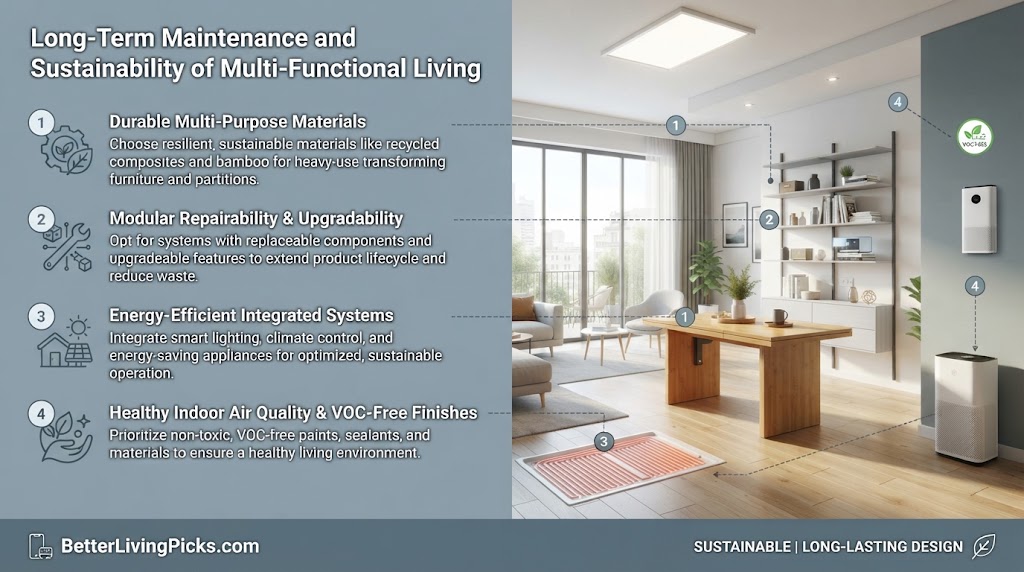
Investing in Heirloom-Quality Mechanisms Over Fast Furniture
When you live in a tiny space, your furniture takes a beating because the exact same piece handles sitting, sleeping, dining, and working daily. It is tempting to buy cheap flat-pack transformable items to save money upfront, but low-end cam-locks and weak particleboard strip out within eighteen months of heavy folding.
Investing in heirloom-quality pieces with solid hardwood frames, steel gas pistons, and precision hinges pays for itself over time. When your furniture withstands thousands of transformation cycles without sagging or squeaking, your tiny home remains a stable, stress-free haven.
Adapting Your Layout as Your Life Evolves
A truly great multi-functional setup is never static; it evolves alongside your changing lifestyle and career needs. What works as a dedicated single-person studio layout today might need to convert into a hybrid couple’s workspace or a nursery annex tomorrow.
Keep your layout flexible by sticking to modular foundational pieces that can be reconfigured, sold, or repurposed in a different room. By viewing small-space living as an ongoing, creative design puzzle rather than a permanent restriction, you unlock true freedom and comfort in your home.
Frequently Asked Questions
How do I safely anchor heavy multi-functional furniture in a rental apartment?
Always locate wall studs using an electronic stud finder before securing heavy folding mechanisms or wall beds. If studs are misaligned, use rated toggle bolts to distribute the load evenly across the drywall and prevent dangerous tipping hazards.
What materials hold up best for transformable small space furniture?
Solid wood, reinforced steel frames, and high-pressure laminate surfaces withstand daily folding and mechanical stress far better than cheap particleboard. Inspect joint construction to ensure reinforced dowels or metal brackets are used at every stress point.
Can a lift-top coffee table safely double as a dining table while working from home?
Yes, provided you choose a model with heavy-duty pneumatic gas lifts rather than weak spring hinges. Pneumatic lifts lock firmly into place and support downward elbow pressure without accidentally slamming down on your laptop.
How do I maintain gas piston mechanisms on wall beds and folding desks?
Keep the metal tracks and piston cylinders clean from dust accumulation by wiping them down monthly with a microfiber cloth. Apply a few drops of dry silicone lubricant spray annually to maintain smooth motion and prevent squeaking.
Are cabinet beds easier to install than traditional Murphy beds?
Cabinet beds require zero permanent wall anchoring or professional carpentry, making them much easier to set up and move. They arrive as freestanding modular units that assemble quickly with basic household hand tools.
What is the best way to light a tiny multi-functional room?
Combine upward-facing floor lamps with under-shelf LED strip lighting to bounce light off ceilings and walls. Avoid bulky bedside lamps that clutter valuable surface space on nightstands or fold-down desks.
How can I hide unsightly charging cables on my fold-down work desk?
Choose wall desks that feature built-in wire management grommets and a power strip concealed inside a rear raceway. This keeps phone chargers, laptop cords, and power banks out of sight when the desk is folded shut.
Do expandable console tables wobble when fully extended?
High-quality expandable consoles feature heavy steel telescopic slides and extra support legs that drop down at the center seam. Check user reviews for stability ratings before buying tables with long extension lengths to avoid annoying dining wiggles.
How do I prevent storage ottomans from scratching hardwood floors?
Attach heavy-duty felt pads or silicone furniture sliders to the bottom corners of all ottomans and storage benches. This protects your flooring from scratches when you slide them around to reconfigure your living room layout.
What is the ideal clearance space to leave around transformable furniture?
Always leave at least 30 to 36 inches of clear walking path around furniture even when it is fully unfolded or opened. Mapping this out with painter’s tape before purchasing ensures you never get trapped behind a drop-leaf table or bed.
How do I clean performance fabrics on small space modular sectionals?
Blot liquid spills immediately with a clean, dry microfiber cloth rather than rubbing the stain into the weave. Use a mild water-based upholstery cleaner approved for performance polyester or microfiber blends to remove stubborn marks.
Can modular furniture handle frequent disassembly during a move?
Modular pieces designed with metal cam-locks and reinforced threaded inserts survive multiple moves much better than glued dowel construction. Look for modular brands that specifically advertise tool-free rearrangement and relocatable parts.
Final Thought
Living in a compact space forces you to be intentional about every object you bring across your threshold. When you choose multi-functional furniture designed with durability and smart engineering in mind, your home stops feeling like a compromise. Instead, it becomes a streamlined, adaptable environment tailored precisely to how you live, work, and rest every single day.

