
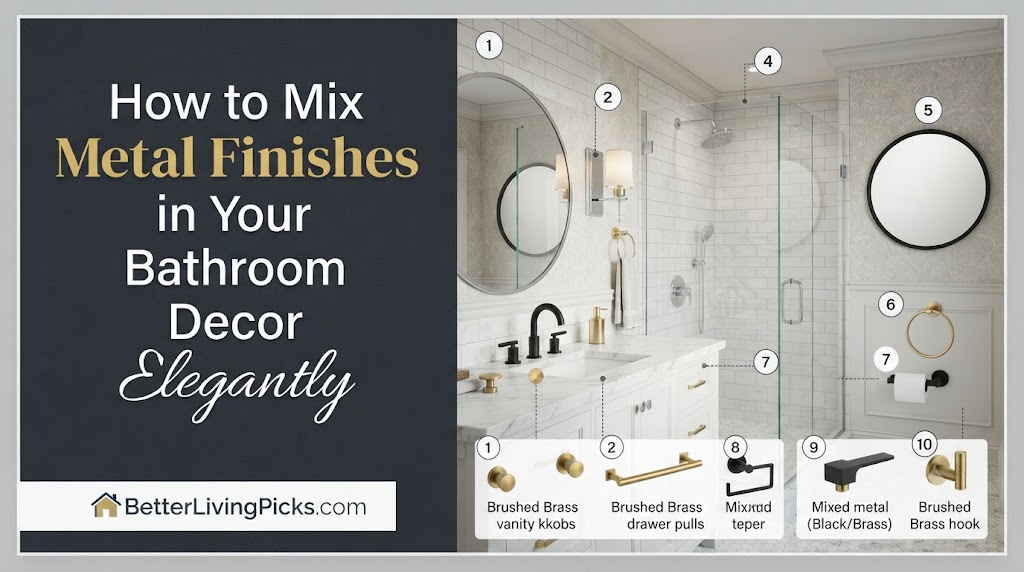
Follow the 70/30 rule. Dedicate 70% of your hardware to a dominant finish (like chrome or black) and 30% to a secondary accent metal (like brass or gold) for a balanced look.
2. Can I mix warm and cool metal tones?
Yes. The key is to balance undertones. Pair a cool metal like polished chrome with a warm gold, but keep the overall style consistent across both to avoid a disjointed aesthetic.
3. Where should the accent metal go?
Use your secondary accent metal on smaller items like drawer pulls, cabinet knobs, or light fixtures. Keep your larger fixtures, such as the main faucet and showerhead, in your primary finish.
4. What is a common mistake when mixing metals?
The most common mistake is overcrowding by using too many different finishes. Stick to two metals maximum in most bathrooms to keep the space from feeling cluttered.
Walking into a bathroom where every single piece of hardware, from the faucet to the toilet paper holder, is a perfectly identical match can often feel a little flat. While the “matching set” approach is safe, it frequently robs a room of its personality, leaving the space feeling like a sterile showroom rather than a thoughtfully designed retreat. Mixing metals is the secret weapon that professional designers use to add instant depth, warmth, and a custom, high-end feel to even the smallest powder rooms.
However, many homeowners worry that combining gold with chrome or black with brass will lead to a chaotic visual mess. The good news is that mixing metals is surprisingly straightforward once you understand how to balance undertones and establish a dominant finish. If you are ready to move past basic monochromatic hardware and create a space that feels curated and intentional, here is how to get the balance right the first time
Why Mixing Metals Is No Longer a Taboo
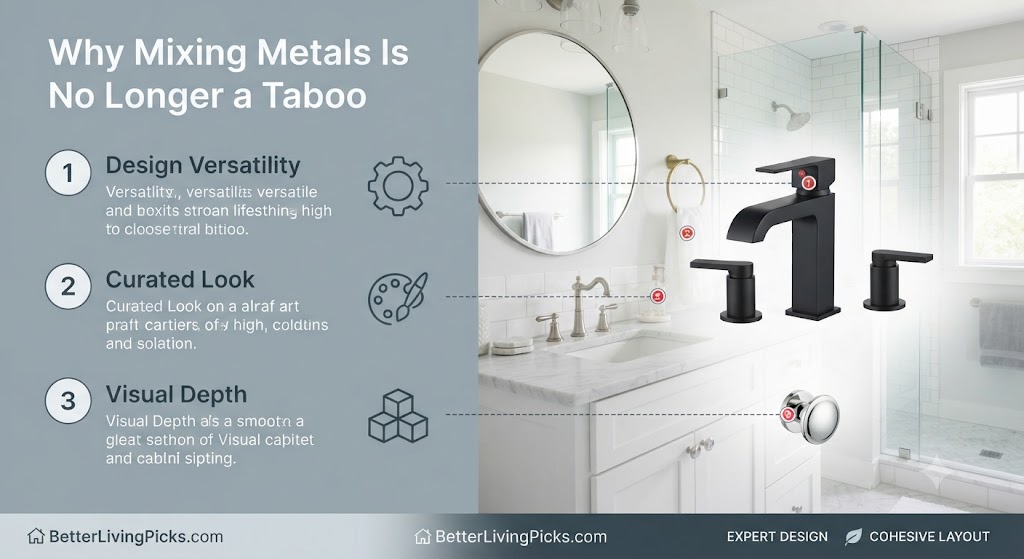
For decades, the design rulebook insisted that everything in your bathroom, from the showerhead to the toilet paper holder, had to come from the exact same manufacturer collection. This was the “safe” way to avoid mistakes. Today, designers agree that this approach often creates a flat, predictable environment that lacks soul. Mixing metals breaks that monotony and gives your space an intentional, lived-in feel that reflects a sophisticated design sense.
Breaking the “Matching Sets” Myth
The biggest fear homeowners have is that mixed metals will look like a mistake or a “leftover” project. In reality, a room with varied finishes looks like it was collected over time rather than purchased in a single, rushed shopping trip. When you move away from the “everything matches” mentality, you open up the ability to highlight specific features. For instance, a brass faucet becomes a piece of jewelry for your vanity when it sits against a neutral backdrop of matte black lighting.
How Mixed Metals Add Depth and Character
Metal finishes carry different visual “weights.” A dark matte black finish absorbs light and creates a modern, grounded feeling. A polished nickel or chrome finish bounces light around, making a small bathroom feel larger and cleaner. By combining these, you create layers of interest. You are not just decorating with shapes; you are decorating with light and shadow. This contrast is exactly what makes a bathroom look expensive and professionally styled.
The Evolution of Modern Bathroom Design
In the past, plumbing fixtures were strictly functional. Today, they are design statements. By choosing different metals for your light fixtures, towel bars, and mirrors, you draw the eye around the room. This movement prevents the bathroom from feeling static. It invites the visitor to explore the textures and nuances of the materials, turning a mundane utility space into a boutique-hotel experience.
The Golden Rule: The 70/30 Principle
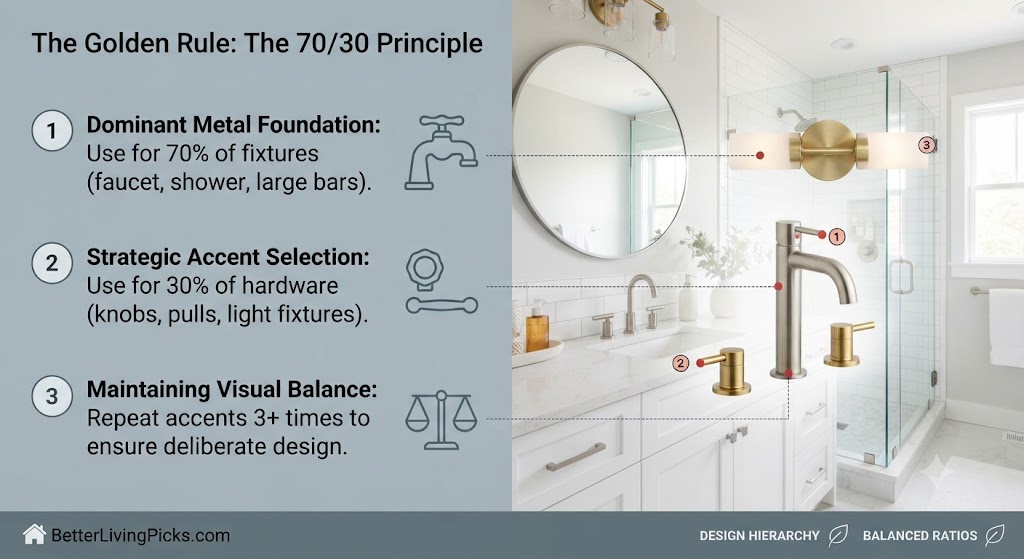
If you want to mix metals without it looking chaotic, you need a strategy. The 70/30 rule is your best friend in this process. Think of it as a way to create a clear hierarchy so your eyes know where to land first when entering the room.
Selecting Your Dominant Metal
Your dominant metal should cover about 70% of the hardware in the room. Choose a finish that feels neutral and timeless for this role. Brushed nickel, polished chrome, or matte black are excellent choices because they work with almost any color palette. Put this metal on your most functional, high-traffic pieces: the shower faucet, the sink faucet, and the main showerhead. This creates a foundation of consistency.
Choosing a Secondary Accent Metal
The remaining 30% is for your “jewelry.” This is where you bring in a warmer or bolder finish, like polished brass, antique gold, or even copper. Use this accent metal for items that are easily changeable or less permanent, such as vanity drawer pulls, cabinet knobs, or light fixtures. Because this finish is limited to smaller elements, it feels like an intentional design choice rather than a mismatch.
Managing Visual Balance
If you find that your 30% accent feels a bit too jarring, the solution is to introduce a “bridge” element. This could be a light fixture that features both metals, or even artwork that incorporates both color palettes. The goal is to make the secondary metal feel supported by the primary one, rather than fighting for dominance in the space.
Popular Metal Combinations That Actually Work
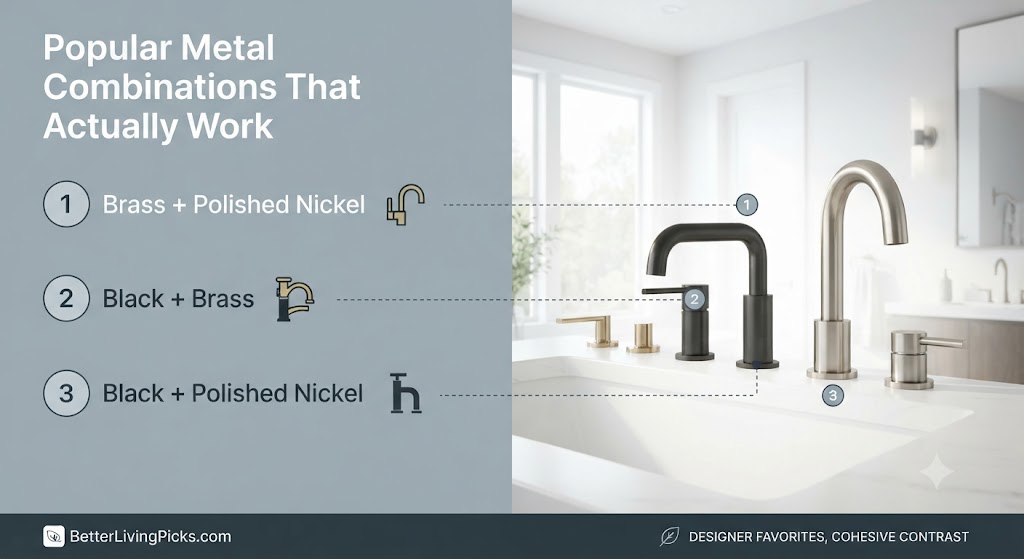
If you are struggling to pick your duo, stick to these tried-and-true pairings. They are popular for a reason: they provide enough contrast to be interesting but share enough common ground to feel cohesive.
The Sophisticated Duo: Matte Black and Brushed Brass
This is arguably the most popular combination in modern home design right now. The matte black provides a strong, graphic edge that looks great in contemporary settings. When paired with brushed brass, it softens the room and adds a touch of necessary warmth. The trick here is to keep the brass finish brushed or satin; high-gloss, shiny brass can sometimes feel too intense against the flat finish of black.
The Classic Contrast: Polished Chrome and Warm Gold
This combination is a masterclass in elegance. Polished chrome is a cool, crisp, and timeless staple of bathroom design. By adding gold accents, you take the coldness out of the chrome and make the space feel more luxurious. This works exceptionally well in bathrooms with white marble or light-colored cabinetry, as the gold creates a focal point against the bright, reflective surfaces.
The Industrial Edge: Brushed Nickel and Matte Black
If you prefer a more masculine or industrial aesthetic, nickel and matte black are a perfect match. Brushed nickel has a soft, warm silver undertone that doesn’t feel as sterile as chrome. When you mix it with matte black, you get a high-contrast look that feels grounded and architectural. This duo works beautifully in bathrooms with concrete accents, subway tiles, or natural wood elements.
The Timeless Trio: Polished Nickel, Brass, and Black
While we generally suggest sticking to two, there is an exception. If you have a very large space, you can introduce a third metal as long as it is very subtle. For example, use polished nickel as your dominant finish, brushed brass for the lighting, and matte black for small cabinet knobs. Keep the black strictly limited to small items so it doesn’t distract from the main two metallic finishes.
Avoiding Common Design Mistakes
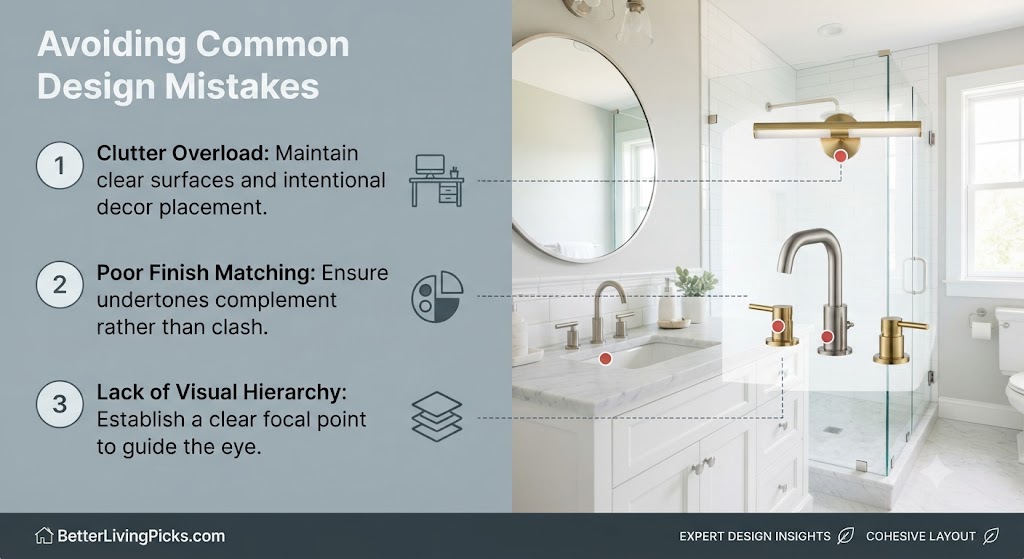
Even with a plan, it is easy to veer into “cluttered” territory. Keep these guardrails in mind to ensure your bathroom stays elegant and polished throughout the renovation process.
The Overcrowding Trap: When Less Is More
It is tempting to try three or four different finishes, but stop at two for most standard bathrooms. Adding a third metal usually creates visual noise rather than “design flair.” If you have a smaller bathroom, stick to one dominant finish and one accent. In larger primary baths, you might get away with three, but only if they are spread out significantly so they don’t fight for attention.
Texture Matters: Mixing Finishes (Not Just Colors)
Don’t just think about color; think about how the finish reflects light. Pairing a high-shine polished metal with a matte or brushed finish is usually better than mixing two high-shine finishes. If you put polished chrome next to polished gold, the reflection can be jarring. Pairing a matte black faucet with a brushed brass knob feels much more sophisticated because the textures provide a subtle, tactile difference.
The Importance of Undertones: Keeping Warm and Cool Balanced
Every metal has an undertone some lean warm (yellow, red, orange) and some lean cool (blue, green). While you can mix them, try to keep the saturation balanced. A very bright, saturated gold can clash with a cool, blue-toned silver. If you are mixing a warm metal with a cool one, try to ensure the warm metal has a “muted” or “brushed” quality, which makes the transition between the two feel much more natural.
Don’t Ignore the “Metal” of Your Appliances and Vents
Often, people forget about items like HVAC vents, hinges, and radiator covers. While these aren’t “hardware” in the traditional sense, they are part of the room’s metallic landscape. If you have an ugly, white-painted vent, consider spray painting it to match your dominant metal. It’s a small detail, but it prevents these items from looking like an afterthought that ruins your carefully curated design.
Pro Tips for Placement and Flow
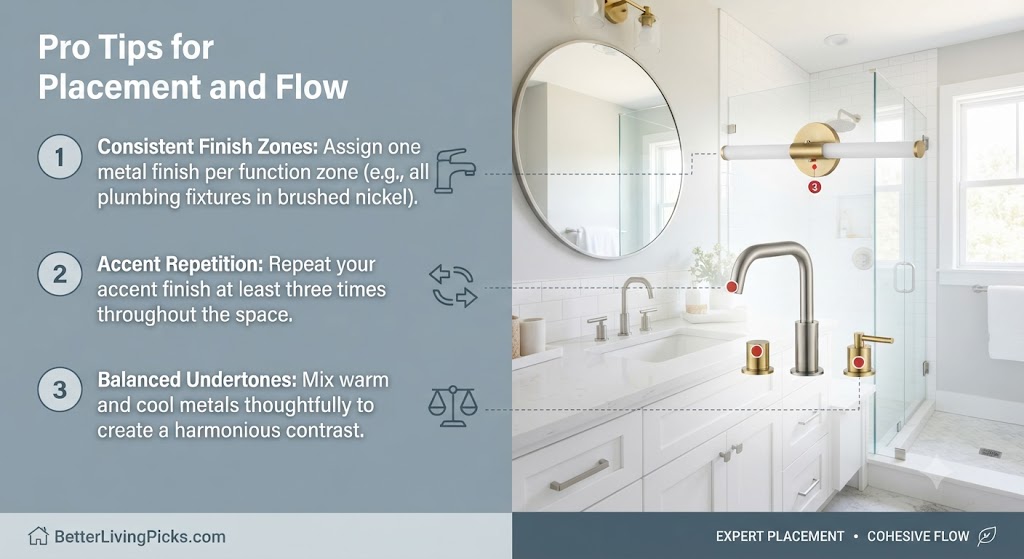
Placement is everything. If you are stuck on where to put your secondary metal, follow this guide for a balanced look that feels intentional.
Faucets vs. Accessories: Where to Put Your Metals
Always treat your main plumbing fixtures as your dominant metal. Your faucet and shower valve are permanent and expensive to change; keep them in a neutral, long-term finish. Use your accent metal on “moveable” accessories. Towel bars, robe hooks, and mirror frames are perfect candidates for your secondary, bolder finish. If you decide you don’t like it in five years, these are easy to swap out without calling a plumber.
Using Lighting to Tie Finishes Together
Light fixtures are the “bridge” of your bathroom. They are often the link between your faucets and your hardware. If you have chrome faucets and brass cabinet handles, a light fixture that features both metals (or a metal that ties them together) can unify the space. A black fixture with brass accents is a great way to blend two separate finish choices into one cohesive unit.
Small Bathrooms: Why You Need to Be More Selective
In a small powder room, every design choice is magnified. If you go too bold with mixed metals in a tiny space, it can quickly feel cramped. In these rooms, opt for a more subtle contrast, like brushed nickel and matte black, rather than a high-contrast mix like polished chrome and bright gold. The goal is to add interest without overwhelming the square footage.
The Role of Mirror Frames
The bathroom mirror is often the largest piece of hardware in the room. If your mirror has a frame, it is a significant visual anchor. You can choose to match your mirror frame to your accent metal to make it a focal point, or match it to your dominant metal to make it disappear. Neither is wrong, but being intentional about this choice determines the entire vibe of the vanity area.
Frequently Asked Questions
Can I mix more than two metal finishes in one bathroom?
While it is technically possible, it is risky for most DIY projects. Sticking to two finishes ensures a clean, professional look. If you have a very large primary bathroom, you might introduce a third, but keep it minimal to avoid a cluttered appearance.
Do the faucets need to match the showerhead?
Yes, absolutely. Your main plumbing fixtures should share the same finish. These are considered the “base” of your room. Keeping them consistent creates a strong foundation, which then allows you to have more freedom with smaller, decorative accents like hardware and lighting.
What is the best way to transition between metals?
Use a bridge piece to help the finishes talk to each other. For example, if you have black faucets and brass drawer pulls, try a light fixture that incorporates both black and brass. This makes the mix feel intentional rather than accidental.
Does the style of the hardware matter as much as the metal?
Yes, the style is just as important as the finish. If you mix a modern, square-edged faucet with vintage, ornate brass knobs, the room will feel confused. Keep the silhouette or design language consistent across all pieces to ensure the different metals look like they belong together.
How do I fix a mix that feels off?
If a combination looks “wrong,” it is usually because the ratio is off or the undertones clash. Check if you have too much of the accent metal. Try swapping one or two pieces back to the dominant finish. Sometimes, simply changing the cabinet hardware back to match the faucet is enough to balance the room.
Should I consider the color of my fixtures when picking metal?
Yes, metal finishes interact with your color scheme. Warm metals like gold and brass pop beautifully against navy, forest green, or black cabinetry. Cool metals like chrome or nickel look crisp against white, grey, or soft blue backdrops. Always consider your wall color and vanity finish before choosing your metals.
Final Thought
Mixing metal finishes is one of the most effective ways to upgrade the personality of your bathroom. It moves your space away from the generic “catalog look” and into something that feels uniquely yours. Remember that this isn’t about rigid perfection; it’s about balance and cohesion. Start slow, stick to your 70/30 ratio, and don’t be afraid to experiment with textures. You will be surprised at how much warmth, character, and luxury a simple change in hardware can bring to your daily routine, transforming your bathroom into a truly curated space.

