

Yes, but use the upholstery attachment on a low-suction setting. Avoid using a stiff brush roll or high-power setting, as this can pull at the fibers and cause premature pilling or fraying.
2. How do I get a stain out of a felt desk mat?
Mix a mild dish soap with cool water. Dip a clean white cloth into the solution, wring it out until barely damp, and gently dab the stain. Avoid aggressive circular scrubbing motions.
3. Should I ever put my desk pad in the washing machine?
No, never machine wash these pads. The agitation, heat, and heavy soaking will deform the acoustic backing, ruin the structural integrity of the fabric, and cause the pad to shrink or warp.
4. How do I fix a warped or curled edge?
Lay the pad on a flat surface and use a heavy, flat object like a stack of books to flatten it for 24 hours. You can also lightly steam it from a distance to relax the fibers.
You invested in a high-quality sound-dampening desk pad to transform your workspace. Those thick felt or acoustic polyester mats do an incredible job of absorbing the harsh “clack” of mechanical keyboards and silencing the vibration of your hardware against a hard desk surface. But after a few months of daily use, that once-pristine surface starts to look tired. Crumbs from your morning snack, dust bunnies, and accidental coffee splashes can quickly turn a premium accessory into an eyesore.
It is easy to reach for common household cleaners when a spill occurs, but that is the fastest way to ruin your investment. Most chemical sprays, soaps, and even standard cleaning tools are too harsh for the specialized fibers found in acoustic desk pads. If you scrub them wrong or soak them, you don’t just get them wet, you destroy the tiny, engineered air pockets that make the pad effective in the first place. You might end up with pilling, fuzzy textures, or a warped, wavy edge that refuses to lay flat. This guide will walk you through the precise, gentle techniques needed to clean your pad without compromising its acoustic performance or structural integrity.
Understanding Your Desk Pad Material

The Physics of Sound-Dampening
To clean these items effectively, you must understand what they are. Sound-dampening desk pads aren’t just fabric; they are high-density, porous materials designed to trap sound waves. The fibers are often layered or pressed to create a dense honeycomb of air gaps. These gaps are what stop your keyboard from echoing off your desktop. When you apply too much liquid or excessive friction, these gaps collapse, permanently changing how the pad handles sound.
Distinguishing Between Materials
Most pads on the market fall into two categories: natural wool felt and synthetic polyester felt. Natural wool is an incredible acoustic insulator, but it is “living” fiber that can shrink if exposed to hot water. Synthetic blends are more durable and hydrophobic, but they are prone to static buildup and can develop an unattractive “pilling” effect if scrubbed. Always check if your manufacturer recommends a specific care method, as some synthetic mats have a rubberized underside that reacts poorly to chemical cleaners.
The Role of the Backing
The bottom layer of your desk pad is just as critical as the top. Many manufacturers use natural rubber or non-slip synthetic foam. This backing ensures the pad stays anchored during intense gaming or fast-paced work. This material is highly sensitive to heat. If you expose the backing to high temperatures (like a hot car interior or a heater), it can become brittle or lose its non-slip grip. Protecting the integrity of this backing is just as important as keeping the top surface clean.
Routine Maintenance: The Secret to Long-Term Quality
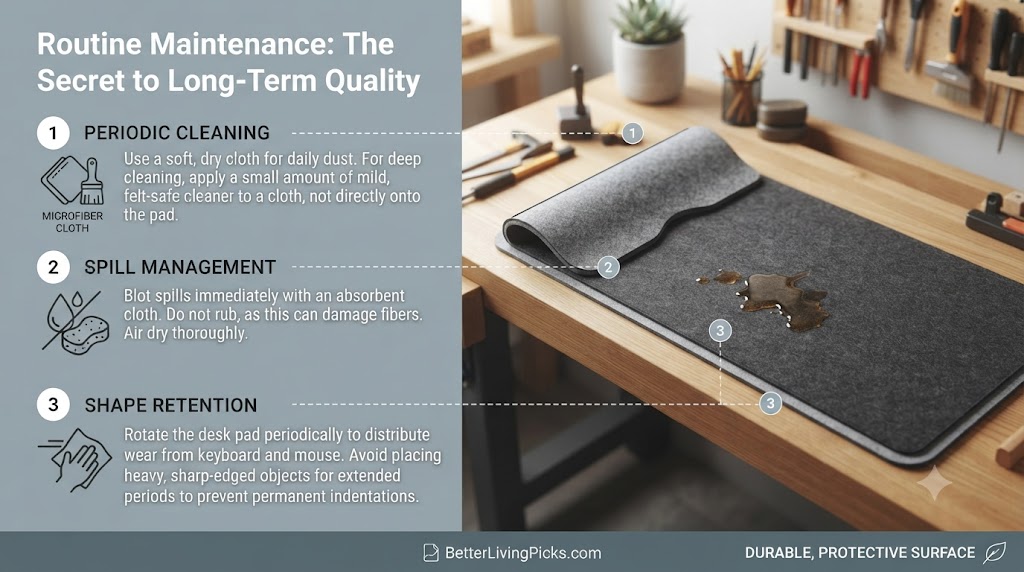
The Weekly Vacuuming Ritual
You don’t need a deep clean if you maintain the surface properly. Once a week, take the upholstery attachment from your vacuum and gently glide it over the surface. Do not use the main floor brush, as it is often too heavy and the rotating bristles can snag the fabric. Keep the vacuum head moving; if you leave it in one spot, the high suction can lift the fibers and create permanent indents. Ensure your vacuum nozzle is clean before starting, as any leftover dust from your floors could transfer onto your desk pad.
Mastering the Lint Roller
For everyday dust and small keyboard debris, a lint roller is far safer than a vacuum. However, be cautious with the adhesive strength. Some acoustic pads have a delicate finish that can be pulled up by extra-sticky rollers. If you have a sensitive pad, “prime” your lint roller by rolling it once on your clothing before touching the mat to reduce the tackiness. Use smooth, continuous strokes rather than jerking the roller up, which helps maintain the alignment of the fibers.
Combating Static and Allergens
In dry climates, acoustic pads can become magnets for dust and static electricity. A light misting of an anti-static spray, designed for upholstery, not hard surfaces can help. Never spray it directly on the mat. Spray the mist into the air and pass the mat through the cloud, or spray your microfiber cloth first. Regularly dusting your desk surface underneath the pad is also essential, as grit trapped between the pad and the desk can cause abrasive wear from the bottom up over time.
Preventing Environmental Damage
Where you place your desk pad matters. Avoid direct sunlight near a window, as constant UV exposure will cause fading and can make natural wool fibers brittle. Additionally, if you have a habit of keeping drinks on your desk, consider using a dedicated coaster. This eliminates the risk of condensation rings or accidental spills that are the primary cause of deep stains on acoustic fabric.
Deep Cleaning: Precision Techniques for Stains
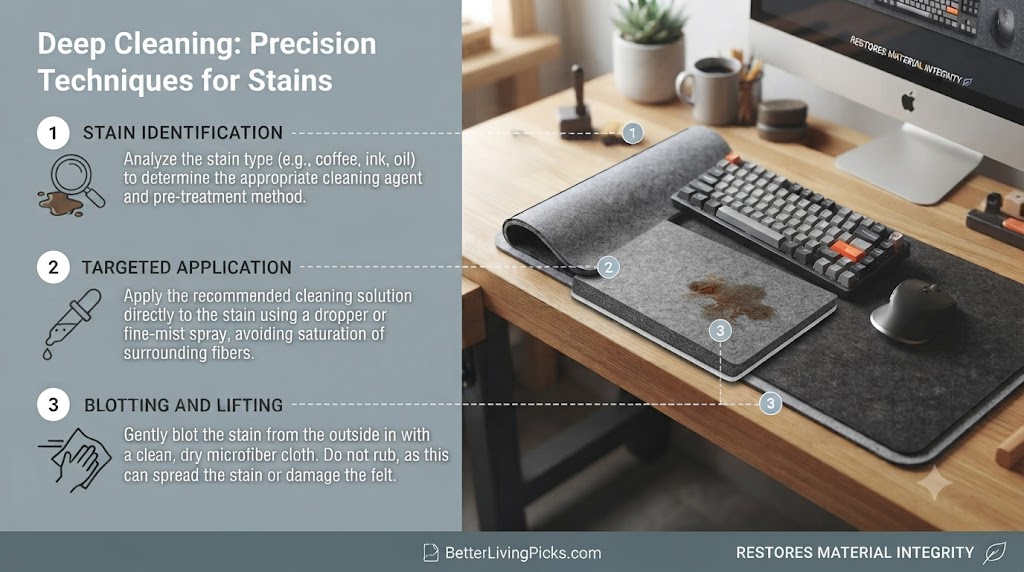
Immediate Response: The “Wick and Blot” Method
Speed is the difference between a minor accident and a ruined desk accessory. When a liquid hits the surface, do not wipe. Wiping spreads the spill across a larger surface area and forces the liquid into the deeper acoustic layers. Take a dry, absorbent white towel and press it firmly into the spill. Let the fabric do the work for you. Change the towel once it becomes damp and repeat until no more liquid transfers to the towel. Using a white towel is important so you can clearly see the transfer of the stain and ensure you aren’t leaving dye behind.
Preparing the Gentle Cleaning Solution
Do not use off-the-shelf carpet cleaners, which often contain optical brighteners or strong bleaching agents. These will leave visible spots on your pad where the color has faded. Instead, mix:
- 2 cups of cold, filtered water.
- 1 teaspoon of mild, pH-neutral clear dish soap.
- Optional: A drop of white vinegar (only if the manufacturer confirms the material is colorfast). Always mix this in a bowl, not directly on the mat. You want to ensure the soap is fully dissolved before it touches the delicate fibers.
The Art of Dabbing
The goal is to lift the stain, not move it. Dip a clean, white, lint-free microfiber cloth into your solution and wring it out until it is barely damp. You should be able to squeeze it without water running out. Starting from the outside of the stain, dab toward the center. This prevents the stain from expanding. If the mat is large, tackle the stain in small, light increments rather than trying to saturate the entire section. Once the stain starts to lift, follow up with a fresh cloth dipped in plain, cool water to remove any soapy residue that might attract future dust.
The “Drying Flat” Philosophy
Never use a hairdryer or a heat gun. Heat is the ultimate enemy of acoustic backing, as it can soften the adhesive that keeps the top layer attached to the bottom layer. Instead, lay the pad flat on a dry towel. Place another dry towel on top and gently press to remove excess moisture. Then, lay the pad flat in a well-ventilated area away from direct sunlight, which can fade the fabric fibers. Do not try to “hurry” the process by putting it near a space heater or radiator. The fabric needs to dry uniformly to prevent warping.
Protecting Your Pad: What You Must Avoid

The Dangers of Harsh Chemicals
It is tempting to grab a multi-purpose cleaner when you see a smudge. Do not do it. Many of these contain solvents designed to break down oils, but they also break down the integrity of the synthetic fibers used in desk mats. The result is often a “patchy” look where the surface coating has been stripped away. Even “all-natural” cleaners can be problematic if they contain essential oils, which can leave a greasy residue that is nearly impossible to remove from dense acoustic material.
Preventing Pilling and Fuzzing
Pilling occurs when surface fibers rub together and tangle into little balls. This often happens if you move your mouse aggressively in one specific spot or if you clean with a terry cloth towel. Use only high-quality microfiber cloths. If pilling does occur, do not try to pull them off by hand. Pulling can damage the healthy fibers nearby. Use a battery-operated fabric shaver, but keep it on the lowest setting and move in a circular, hovering motion without pressing down. Think of it as “trimming” the top of the grass rather than digging into the soil.
Handling Mechanical Wear
Your desk pad is under constant pressure from your keyboard, mouse, and wrists. Over time, the area where your mouse travels will naturally compress. This isn’t necessarily a “dirt” issue, but a structural one. By periodically shifting the position of your keyboard and mouse (rotating the pad by 180 degrees every few months), you can distribute the wear and tear more evenly across the surface, extending the life of the acoustic structure.
Reviving an Old, Compressed Pad

Restoring Surface Texture
After a year of heavy use, you might notice your mouse area looks “flat” compared to the rest of the pad. This is simply the compression of fibers. You can often restore the “fluffy” look by using a clean, soft-bristled clothes brush. Brush in different directions to lift the fibers back up. Be extremely gentle; you want to massage the fibers back into an upright position, not scrape them off.
Addressing Edge Delamination
If you notice the top fabric layer starting to separate from the bottom rubber/foam base, this is usually due to improper storage (like folding) or extreme heat. If the separation is minor, a very small amount of fabric-safe adhesive applied with a toothpick can fix it. Clamp the edges together with a heavy book for several hours while the adhesive cures. Avoid using super glue, as it dries hard and creates a sharp, uncomfortable edge that will irritate your wrists.
Fixing Warped or Curled Edges
If your pad has developed a curl on the corners, it is usually because it was stored in a roll or had a heavy object placed unevenly on it. To fix this, lay the pad flat on a table and place heavy, flat books over the curled area for 24 hours. If it persists, a professional garment steamer can be used, but keep the steam nozzle at least 6-8 inches away. The goal is to provide a gentle “warmth” to relax the memory of the material, not to get it wet.
Frequently Asked Questions
Is it safe to use a carpet cleaner on my desk pad?
No, never use carpet cleaners or steam cleaners on acoustic desk pads. The high heat and intense moisture injection from these machines will destroy the specialized backing and cause the fabric to stretch or lose its shape permanently. These machines are designed for thick, tufted carpets, not the delicate, dense weaves of a desk mat.
Can I clean a spill with vinegar?
You should avoid vinegar because its acidity can potentially degrade certain synthetic dyes or acoustic coatings. While it is a great household cleaner for glass and counters, the chemical makeup of acoustic fabrics is often sensitive to pH fluctuations. Stick to a neutral, mild dish soap and water solution to ensure the integrity of the fabric remains unchanged.
How do I get rid of an oily stain, like from food?
For oily stains, apply a tiny amount of cornstarch or talcum powder to the area and let it sit for a few hours. The powder will absorb the oil. Afterward, gently vacuum the powder away with an upholstery brush before following up with the standard soap-and-water dabbing method. This is much safer than trying to scrub the oil out, which usually just pushes it deeper into the porous material.
Will my desk pad lose its sound-dampening properties after washing?
If you are careful and use only minimal moisture, the acoustic properties should remain intact. However, if you soak the pad or use aggressive chemicals, the internal structure will collapse, significantly reducing its ability to absorb sound. Once the fibers are matted down from excess moisture, they can no longer effectively trap sound waves.
How often should I deep clean my desk pad?
Deep cleaning should be done only when necessary, such as after a spill or if the pad appears visibly soiled. For regular maintenance, stick to weekly vacuuming and quick spot-checks. Constant deep cleaning will naturally shorten the lifespan of any fabric-based desk accessory, so treat it as a seasonal or “as-needed” task rather than a monthly ritual.
What should I do if the pad starts to fray at the edges?
If the edges are fraying, you can carefully trim the loose threads with a sharp pair of embroidery scissors. Avoid pulling the threads, as this can cause the entire seam to unravel. Applying a tiny drop of clear fabric glue (like fray check) to the edge can help seal it and prevent further damage. This maintains the clean, minimalist aesthetic of the desk setup.
Final Thought
Maintaining your sound-dampening desk pad is about consistency rather than intensity. You don’t need to spend hours scrubbing or buy expensive specialty kits to keep your workspace clean. By establishing a simple weekly routine and handling spills with immediate, gentle care, you protect the specialized acoustic properties of the material. Think of your desk pad as a premium piece of equipment rather than a disposable accessory, and it will continue to provide that professional, muted typing experience for years. With a little patience, your workspace will stay looking as good as the day you set it up.