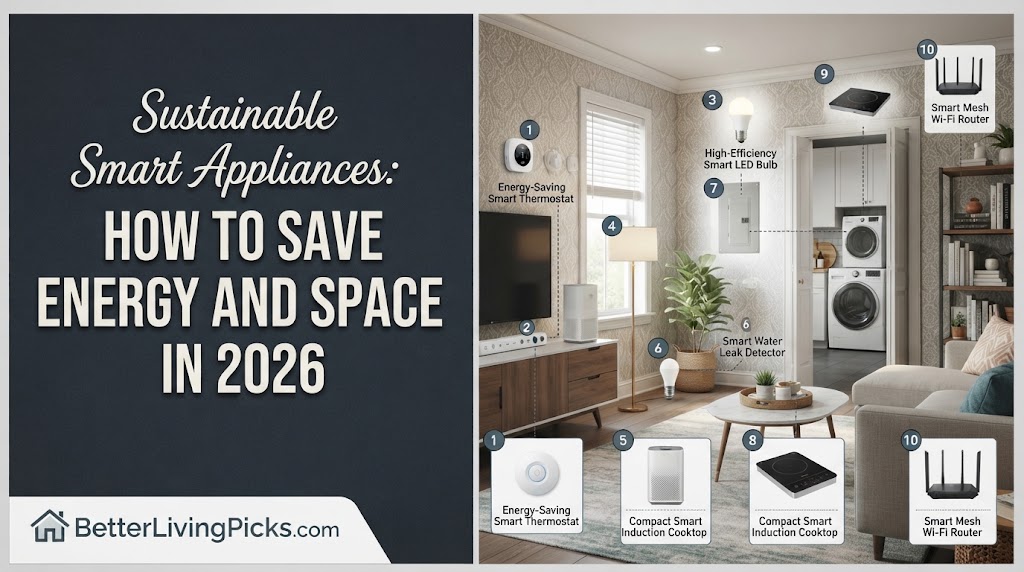
Using automated scheduling, real-time power tracking, and low-power standby modes, sustainable smart appliances minimize wasted electricity during idle hours and off-peak utility times.
2. Do compact smart devices sacrifice performance for size?
Modern engineering ensures that space-saving smart appliances maintain full functional capacity, utilizing multi-functional designs that integrate several machine capabilities into a single compact housing footprint.
3. What is the best way to eliminate phantom energy loads?
Deploying smart plugs and intelligent power strips allows you to cut power entirely to idle entertainment centers and kitchen electronics, maximizing your energy-efficient smart home tech setup.
4. Are repairable smart appliances widely available?
Manufacturers now offer modular components and software diagnostics, making it easier to replace individual broken parts rather than discarding the entire electronic hardware assembly.
Upgrading your home typically leads to a familiar frustration: your utility bills spike, and your living space feels even more cramped than before. Traditional household machines consume vast amounts of electricity while taking up valuable square footage in kitchens and utility rooms. Relying on outdated hardware means you are paying extra for inefficient energy usage every single month. Sustainable smart appliances solve this dual crisis by combining compact footprints with intelligent power management. Integrating these modern devices allows you to cut utility costs without sacrificing valuable room layout space.
Modern households face an ongoing battle against clutter and surging electricity expenses. Implementing sustainable smart appliances acts as a practical solution to streamline your daily routines. Instead of letting bulky machinery drain resources quietly in the background, smart technology lets you monitor, regulate, and optimize your environment. This guide explores the exact methods, configurations, and considerations required to transform your living quarters into an efficient powerhouse.
Deploying Matter-compatible smart plugs alongside energy-monitoring power strips provides the highest return on investment for existing non-smart hardware, instantly turning legacy units into valuable energy-efficient smart home tech assets.
The Real Cost of Inefficient, Bulky Home Tech with Sustainable Smart Appliances
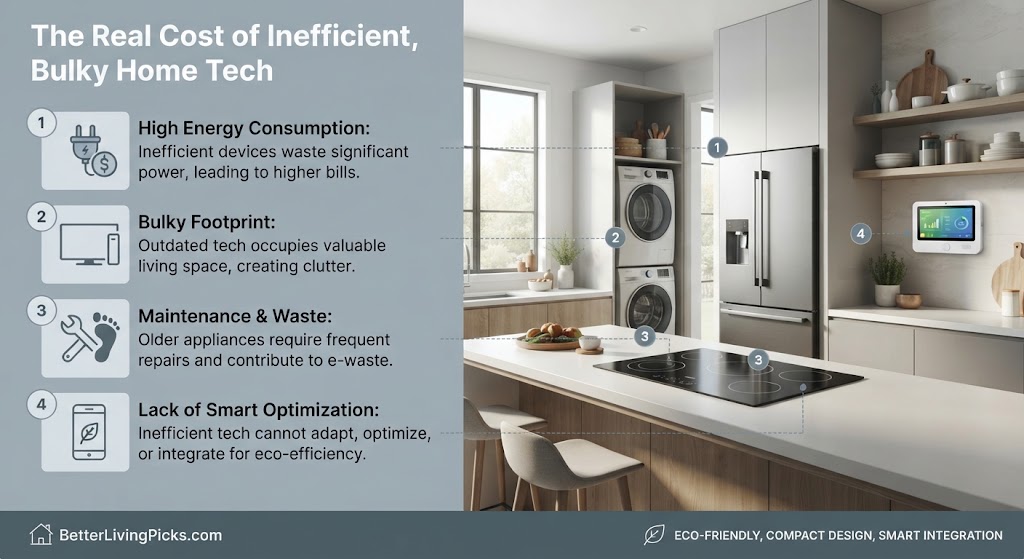
Traditional home infrastructure hides significant financial drains behind every wall outlet and cabinet door. When you rely on legacy hardware, appliances run at single-speed maximum capacities regardless of actual demand. This constant heavy draw accelerates wear and tear while pushing monthly utility expenses higher. Replacing these outdated units with sustainable smart appliances fundamentally alters how your living space consumes power.
Bulky appliances also steal precious floor area, forcing homeowners into awkward room layouts. In urban environments where every square foot carries a high financial premium, large single-purpose machines represent poor space utilization. Modern efficient technology shifts the paradigm by shrinking the physical dimensions of hardware while expanding internal capabilities. Transitioning to integrated systems prevents the cramped feeling common in older homes.
Evaluating your current setup requires looking beyond the initial purchase price of home upgrades. Inefficient units leak heat, waste water, and draw continuous baseline current even when turned off. By tracking these hidden losses, you realize why upgrading to intelligent systems pays for itself over time. Smart management tools give you absolute visibility into your resource consumption habits.
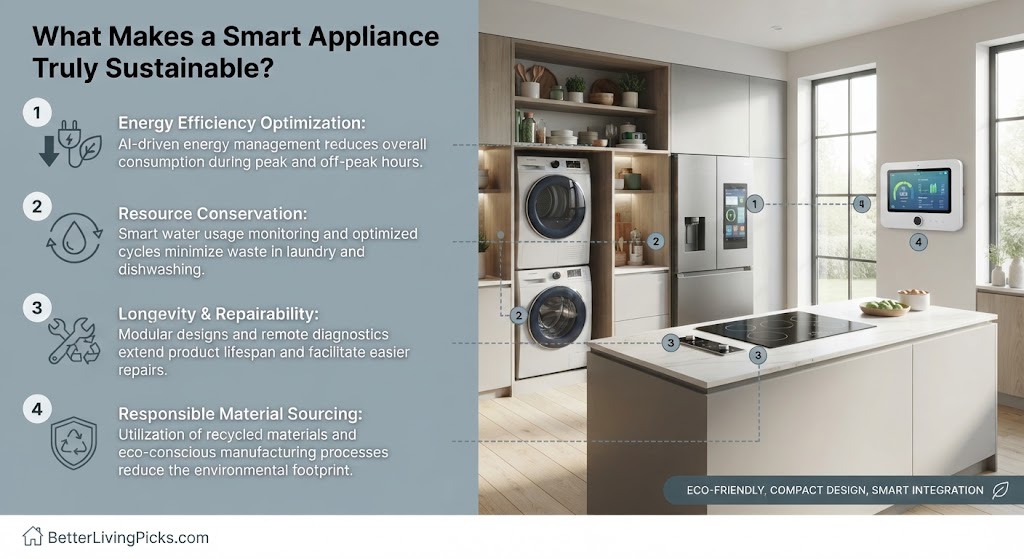
What Makes a Smart Appliance Truly Sustainable in Modern Living?
/
True sustainability extends far beyond a simple green marketing label pasted onto retail packaging. A genuinely eco-friendly device must demonstrate low lifecycle emissions, high material recyclability, and intelligent energy optimization. When evaluating sustainable smart appliances, look for certifications that guarantee reduced water and power usage during everyday operation cycles.
Manufacturers committed to sustainability also focus on ethical material sourcing and minimal packaging waste. They design circuit boards using conflict-free minerals and housing shells built from recycled plastics. This holistic approach ensures that the production phase of your household tech leaves a smaller carbon footprint. You are voting with your wallet for cleaner industrial manufacturing practices.
Energy Tracking Features Versus Actual Energy Reduction
Many devices feature flashy digital dashboards that display live energy metrics without helping you lower consumption. Real efficiency requires automation that acts on those metrics rather than leaving data interpretation entirely up to you. Sustainable smart appliances use built-in machine learning to adjust power draws dynamically based on grid pricing fluctuations.
When your smart refrigerator or washing machine knows when utility rates spike, it delays heavy cooling or heating cycles until off-peak hours. This automated shift reduces stress on local electrical grids while lowering your utility bill automatically. You gain the financial benefits of energy conservation without needing to manually monitor clocks or switches.
Material Lifespan and Repairability Metrics for Long-Term Value
Planned obsolescence remains a major hurdle in the consumer electronics and appliance industry. Sustainable design combats this issue by utilizing modular internal architecture that simplifies component replacement. If a heating element or control board fails, a repairable unit allows technicians to swap out the single faulty module.
Investing in durable hardware means you avoid contributing to the massive global crisis of electronic waste. Sustainable smart appliances built with stainless steel frames and serviceable parts last twice as long as cheap plastic alternatives. This durability protects your long-term investment and keeps functional hardware out of local landfills.
Space-Saving Smart Tech for Compact Urban Living
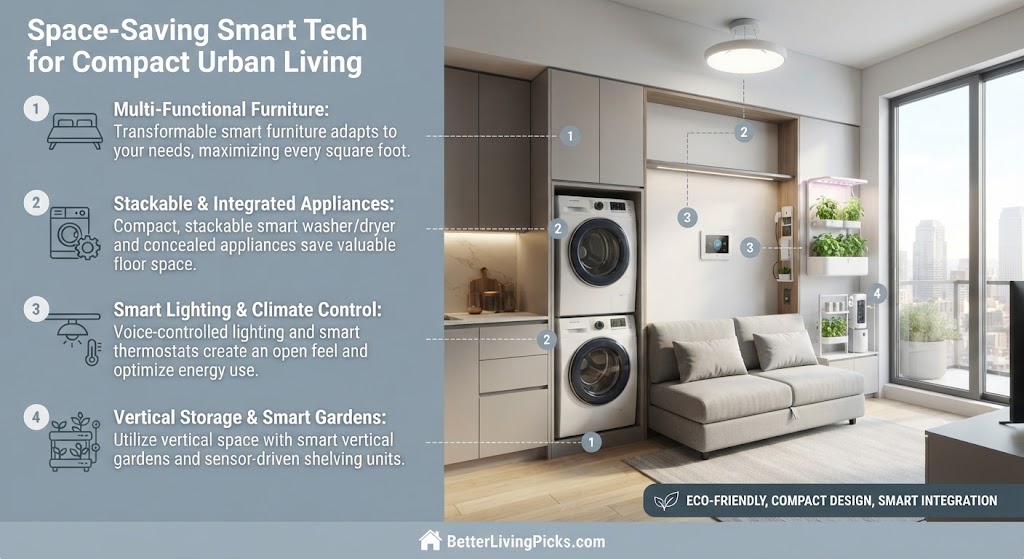
Living in smaller spaces demands clever architectural and technological choices to maintain comfort. When square footage is tight, every appliance must pull double duty or feature an ultra-slim profile. Space-saving smart technology eliminates redundancy by merging multiple single-task machines into unified, multi-functional appliances.
Modern urban apartments benefit immensely from compact engineering breakthroughs. Instead of installing a separate oven, microwave, and air fryer, homeowners can utilize unified countertop smart cookers. These multi-functional units reduce kitchen clutter while consuming a fraction of the total electrical current required by traditional full-sized kitchen suites.
Multi-Functional Kitchen Appliances That Replace Three Devices
The modern kitchen often suffers from appliance overcrowding, with counters buried under specialized gadgets. Multi-functional cooking appliances combine convection roasting, steam injection, pressure cooking, and smart air frying into one streamlined footprint. Integrating these sustainable smart appliances frees up valuable workspace while reducing overall material consumption.
Furthermore, these smart cooking hubs connect to mobile applications that download exact recipe profiles. The appliance automatically adjusts cooking temperatures and durations down to the second, preventing burnt food and wasted ingredients. This precision reduces both food waste and unnecessary electrical consumption during meal preparation.
Stackable and Modular Laundry Solutions for Small Apartments
Syncing your automated routines with dynamic pricing feeds delivers the greatest utility savings, letting sustainable smart appliances capitalize on low-demand hours automatically.
Laundry areas traditionally demand significant floor space for side-by-side washers and dryers. Modern vertical column units and modular washer-dryer combos solve this spatial challenge efficiently. These systems feature intelligent moisture sensors and inverter motors that use minimal water and electricity per load.
By utilizing smart water-recycling filters within the washing drum, these advanced units capture and filter rinse water for subsequent cycles. This ingenious conservation method drastically cuts down household water waste. Installing such advanced laundry technology ensures maximum cleaning performance within minimal spatial boundaries.
Setting Up Your Home Automation for Peak Energy Efficiency
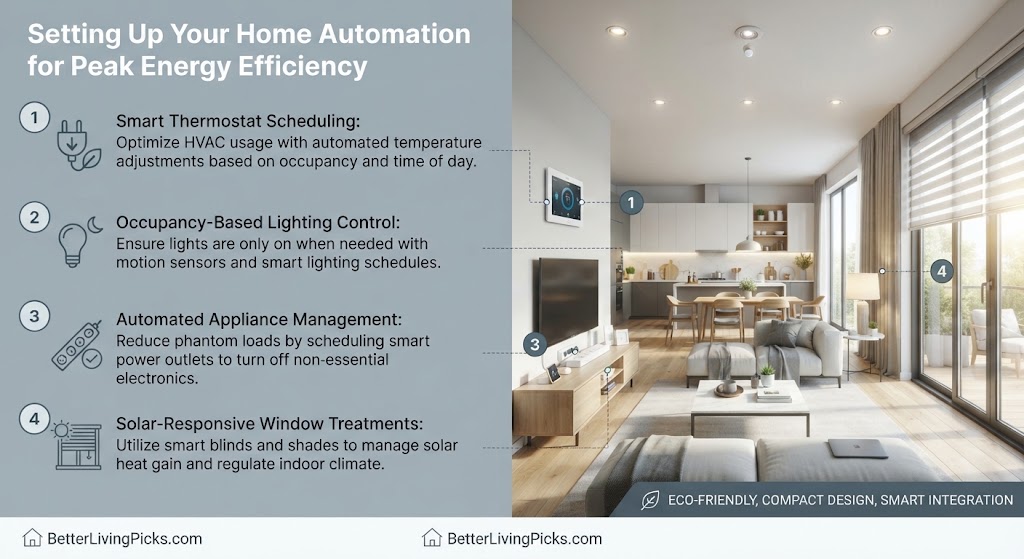
Optimizing your household infrastructure requires more than just buying efficient hardware; it demands a cohesive automation strategy. When your devices communicate seamlessly through a central home hub, you can eliminate wasteful overlap in power consumption. Connecting your sustainable smart appliances to intelligent triggers ensures they only draw power when human presence or actual demand is detected. This eliminates the invisible drain of appliances running idle cycles in empty rooms.
Building an efficient automation framework starts with mapping your daily household routines. Program your heavy-draw appliances, such as dishwashers and water heaters, to run during off-peak hours when municipal grid demand is lowest. Centralized apps allow you to monitor these routines and tweak schedules as your seasonal energy needs shift. Taking control of these operational windows prevents sudden spikes on your monthly utility statement.
Automating Daily Schedules and Off-Peak Power Usage
Energy grids experience severe pricing and carbon-emission fluctuations throughout a standard 24-hour cycle. Manual operation usually means running appliances during peak evening hours when electricity rates reach their maximum. Smart scheduling bypasses human forgetfulness by syncing appliance start times directly with dynamic utility pricing feeds.
By leveraging automated routines, your washing machine and dryer can complete cycles just before you wake up or return from work. This ensures maximum convenience while shifting energy consumption to times when renewable sources like wind and solar saturate the grid. Smart optimization turns standard chores into eco-friendly habits without requiring daily manual intervention.
Eliminating Phantom Loads Using Advanced Smart Plugs
Many electronics continue drawing electrical current even when switched off or placed in standby mode. This hidden consumption, known as phantom load or vampire power, accounts for up to ten percent of an average home’s electricity bill. Deploying smart plugs across entertainment systems, home offices, and kitchen counters lets you cut power completely during periods of inactivity.
Advanced smart plugs feature automated schedules and current-sensing technology that detects when a device finishes a task. Once complete, the plug severs the circuit entirely, preventing trickle currents from leaking through your wall outlets. Integrating these low-cost accessories with your sustainable smart appliances secures total command over your baseline energy profile.
Common Mistakes People Make When Installing Sustainable Smart Appliances
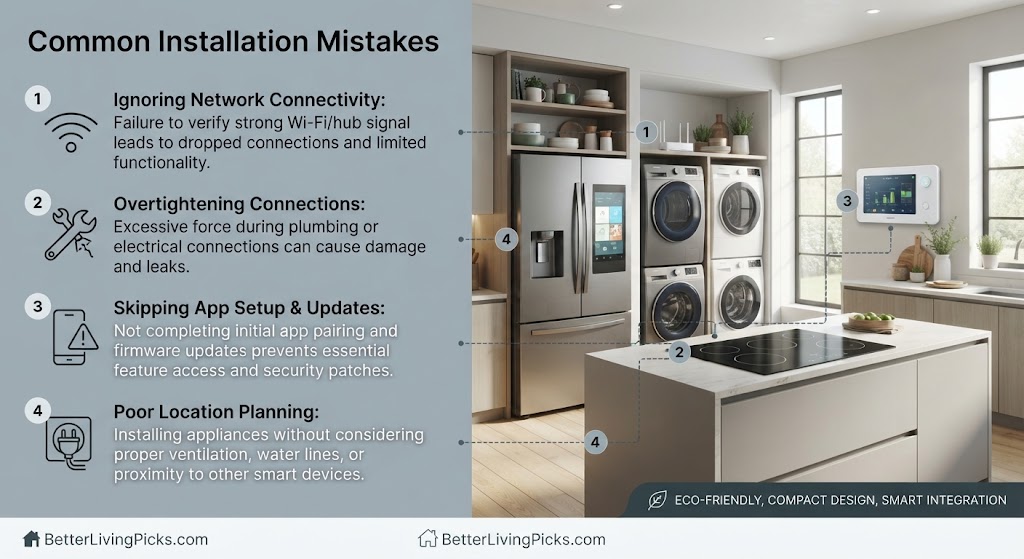
Transitioning to a smart, eco-friendly home environment can present unexpected hurdles if approached without careful planning. One common misstep is purchasing incompatible devices that operate on isolated, closed-loop proprietary apps. When your appliances cannot communicate with one another, you lose the synergy required for true home energy optimization. Ensuring universal protocol compatibility prevents frustrating setup roadblocks down the line.
Another frequent error involves placing smart sensors or hubs in poor physical locations within the home. Thick concrete walls, metal framing, and electronic interference can disrupt wireless signals, causing devices to drop offline frequently. Taking time to map out your home’s wireless network coverage ensures reliable connectivity and uninterrupted automation schedules.
Opting for vertical washer-dryer columns and multi-functional smart cookers delivers the absolute best spatial efficiency, making them essential space-saving smart appliances for modern urban apartments.
Over-Automating Non-Essential Devices That Waste Power
The temptation to automate every single gadget in the house often leads to counterproductive energy waste. Adding smart chips, continuous Wi-Fi radios, and standby power supplies to simple mechanical tools increases their baseline energy footprint. True efficiency means selectively automating only those devices where intelligent control yields genuine resource savings.
Evaluate each addition carefully before integrating it into your smart home network. If a device requires constant cloud connectivity just to perform a basic mechanical function, it may compromise your overall sustainability goals. Prioritize hardware that operates efficiently on local mesh networks rather than relying on heavy remote server processing.
Ignoring Firmware Updates and Critical Security Patches
Smart appliances are essentially connected computers housed inside physical utility chassis, making them vulnerable to software bugs and security threats. Skipping regular firmware updates can leave your network exposed while preventing your appliances from running at peak operational efficiency. Manufacturers frequently release software patches that optimize motor performance and reduce power consumption.
Establishing a routine maintenance schedule for your smart ecosystem keeps your hardware running securely and smoothly. Enable automatic background updates whenever possible to ensure your sustainable smart appliances always utilize the latest efficiency algorithms. Proactive software management extends the functional life of your investment.
- Embrace Solar Storage: Sync your energy-efficient smart home tech with residential battery systems for peak grid resilience.
- Automate Zone Control: Use remote wireless sensors to cut down unnecessary HVAC runtime in empty rooms.
- Insist on Repairability: Select modular hardware to prevent appliance obsolescence and cut down e-waste.
- Track Baseline Metrics: Use smart energy monitors to evaluate consumption before expanding your home automation network.
Evaluating Smart Lighting and Climate Control Systems
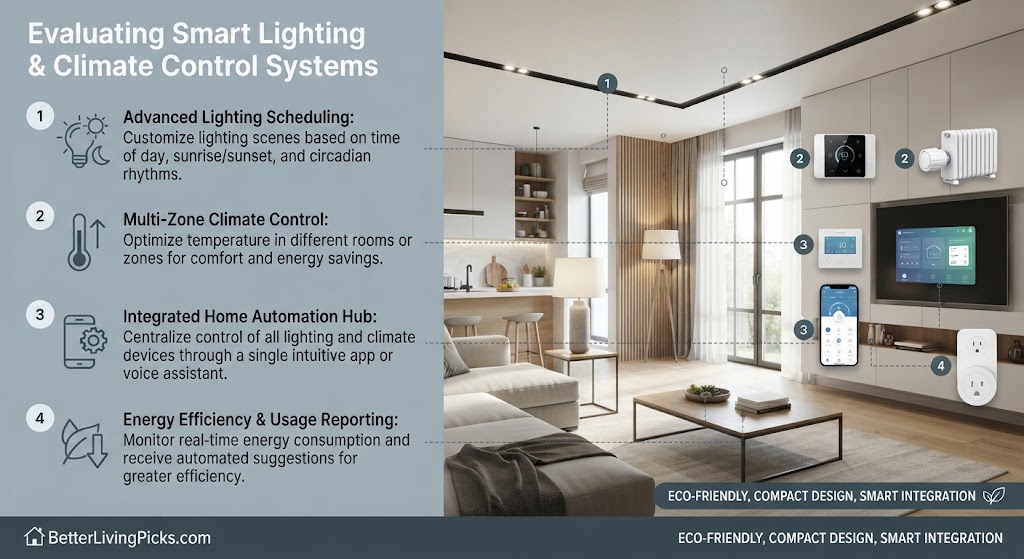
Heating, cooling, and lighting typically consume the largest share of a residential energy budget. Upgrading these systems represents your best opportunity to achieve dramatic reductions in utility expenses. Modern climate and lighting ecosystems use granular room occupancy data to condition spaces only when human activity is actively detected.
Integrating these systems with automated window shades and weather feeds allows your home to anticipate thermal shifts. Instead of blasting air conditioning or heating at full capacity all day, your home adapts dynamically to external weather conditions. This precise environmental management maximizes occupant comfort while minimizing energy waste.
Precision Zone Heating and Cooling with Smart Thermostats
Traditional thermostats measure temperature at a single hallway location, often leaving bedrooms freezing and living rooms overheated. Smart climate systems utilize remote wireless temperature sensors placed throughout individual rooms to map thermal gradients accurately. This data allows the system to direct heating and cooling precisely where it is needed most.
By combining zone control with automated geofencing, your climate system reduces output when you leave the house and ramps up just before you return. This intelligent pacing prevents the immense energy spikes associated with conditioning an empty home. Upgrading to these systems ensures optimal indoor comfort paired with strict energy conservation.
Daylight Harvesting and Automated LED Lighting Arrays
Lighting automation has evolved far beyond simple motion-activated switches or basic automated timers. Modern LED arrays feature daylight harvesting capabilities, automatically dimming fixtures when natural sunlight floods through windows. The system balances artificial output against available ambient light to maintain a consistent brightness level throughout the day.
Furthermore, smart lighting ecosystems utilize circadian rhythm profiles that adjust color temperatures naturally as evening approaches. This creates a comfortable atmosphere while cutting electrical consumption to absolute minimums during daylight hours. Transitioning to intelligent lighting complements your broader energy-saving goals seamlessly.
Future-Proofing Your Home Ecosystem for 2026 and Beyond
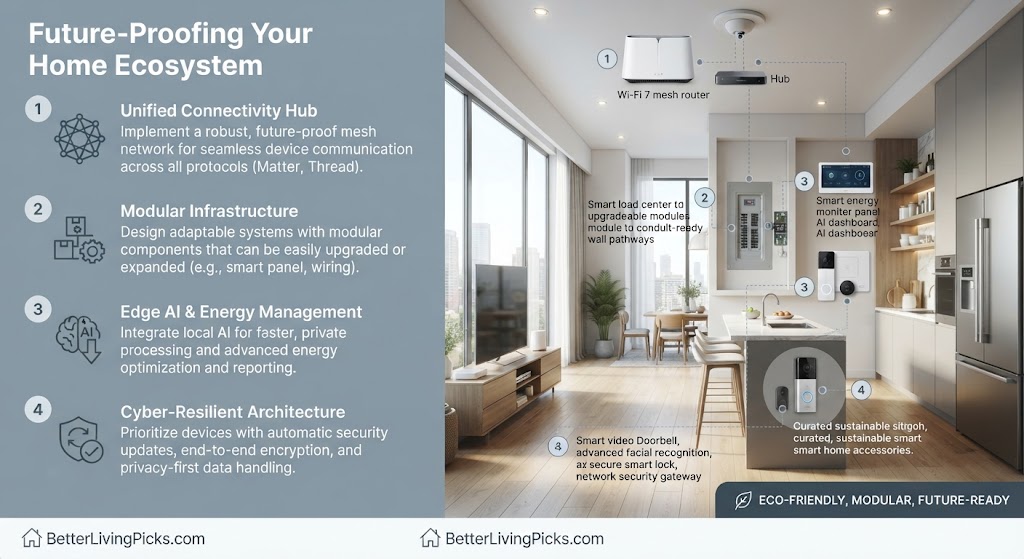
Technology evolves rapidly, making it vital to design a home ecosystem capable of adapting to future innovations. Future-proofing your living space involves choosing open-standard hardware that resists obsolescence and integrates easily with upcoming green technologies. Building an adaptable infrastructure protects your financial investment as smart home standards mature.
As micro-generation systems like residential solar panels and battery storage become standard, your appliances must be ready to interface with them. Modern hardware equipped with smart grid communication protocols can ingest surplus solar energy directly. This capability moves your household closer to complete energy independence.
Integrating Solar Arrays with Intelligent Energy Storage
Solar panels provide clean electricity, but generation peaks rarely match your household’s heaviest consumption windows. Pairing your solar array with an intelligent home battery system captures surplus daytime energy for use during evening peak hours. Advanced smart management software orchestrates this energy flow automatically.
When grid electricity rates surge or a blackout occurs, your stored battery power seamlessly takes over critical household circuits. Your sustainable smart appliances coordinate directly with this storage system, prioritizing essential loads like refrigeration and climate control. This integration guarantees resilience, sustainability, and substantial financial savings.
The Role of AI Diagnostics in Preventing Appliance Failure
Artificial intelligence is transforming home appliance maintenance by shifting the industry from reactive repairs to predictive care. Modern smart motors and compressors feature internal diagnostic sensors that track vibration patterns, electrical resistance, and thermal output. Machine learning algorithms analyze these telemetry streams to detect microscopic wear before a breakdown occurs.
When an anomaly is flagged, the system notifies you via smartphone and can even order replacement parts automatically. This predictive approach prevents catastrophic hardware failures, saves expensive repair bills, and extends the operational lifespan of your equipment. Embracing AI diagnostics ensures your smart home runs reliably for years to come.
- Prioritize Open Standards: Choose sustainable smart appliances and hubs supporting universal protocols to prevent vendor lock-in.
- Automate Off-Peak Cycles: Schedule heavy-draw machines to run during low-demand grid hours using energy-efficient smart home tech.
- Save Floor Space: Integrate multi-functional, space-saving smart appliances to eliminate urban apartment clutter.
- Embrace Predictive Care: Leverage AI-driven diagnostics to catch hardware wear early and avoid emergency replacements.
Frequently Asked Questions
How do I know if my current appliances are wasting excessive energy?
Plugging a portable electricity monitor into individual wall outlets for 48 hours reveals exact baseline consumption and phantom loads. High baseline figures indicate that outdated or inefficient hardware is secretly driving up your monthly utility bills.
Can smart appliances operate effectively without a continuous internet connection?
Most modern smart appliances rely on local mesh networks to execute basic automated schedules and routines. While cloud connectivity enables remote smartphone monitoring and firmware updates, core automation functions typically continue running locally if your internet drops.
Are multi-functional smart kitchen appliances durable enough for daily family use?
Reputable manufacturers build multi-functional cookers and compact units with heavy-duty commercial-grade stainless steel components. Choosing modular designs ensures that individual parts can be serviced easily if wear occurs over years of heavy daily use.
What is the easiest way to start automating my home energy usage?
Beginning with smart plugs and a programmable smart thermostat offers the fastest return on investment. These accessories require minimal installation effort while immediately giving you visibility and control over your primary energy consumers.
Do smart appliances increase cybersecurity risks in residential homes?
Any internet-connected device introduces potential vulnerability if default security settings remain unchanged. Securing your home network with a strong encrypted router, changing default passwords, and enabling automatic firmware updates effectively mitigates these risks.
How do smart appliances help reduce household water waste?
Advanced washers and dishwashers utilize intelligent turbidity sensors and internal water-recycling filters to optimize rinse cycles. These systems measure exact soil levels and reuse filtered clean water, cutting overall water consumption significantly per load.
What should I look for when purchasing repairable smart hardware?
Look for manufacturers that provide accessible service manuals, modular replacement parts, and open-source software compatibility. Avoid brands that use proprietary fasteners or sealed electronic assemblies designed to prevent third-party repairs.
How do smart thermostats handle multi-room temperature imbalances?
Smart climate systems use remote wireless temperature sensors placed in frequently used rooms to map thermal gradients. The system then balances HVAC output to ensure uniform comfort across your entire living space rather than just one hallway.
Can smart plugs completely eliminate vampire power drain?
Smart plugs equipped with current-sensing technology can sever electrical current entirely when a device enters standby mode. This physical disconnect stops trickle currents, completely eliminating phantom load waste from idle electronics.
Are solar-compatible appliances difficult to integrate into existing electrical setups?
Most modern smart appliances feature built-in grid communication protocols that interface smoothly with standard residential inverters. Professional electricians can easily configure these units to prioritize surplus solar energy during peak generation hours.
How does AI-driven maintenance prevent appliance breakdowns?
Internal sensors track vibration, thermal output, and electrical resistance continuously, feeding data into machine learning algorithms. These algorithms spot microscopic anomalies early, alerting you to potential component failure long before a breakdown occurs.
What is daylight harvesting in smart lighting systems?
Daylight harvesting uses ambient light sensors to automatically dim indoor LED fixtures when natural sunlight enters through windows. This balances artificial output dynamically, ensuring consistent room brightness while reducing electrical consumption.
How long does it take for sustainable smart appliances to pay for themselves?
Depending on your local utility rates and previous energy baseline, most smart home upgrades pay for themselves within two to four years. The combination of automated off-peak scheduling and eliminated phantom loads accelerates these financial returns.
Smart Living For Tomorrow
Transforming your living space into an eco-friendly powerhouse does not require sacrificing comfort or aesthetic appeal. By making deliberate choices, investing in modular and repairable hardware, and leveraging intelligent automation, you take control of your environmental impact and utility expenses. The future of household efficiency belongs to smart systems that work harmoniously behind the scenes. Start small, optimize your routines, and enjoy a streamlined home designed for sustainable living.