
When I first started mounting heavy shelving, I relied on cheap digital finders that blinked constantly. The foolproof real-world fix is using a strong neodymium magnet to locate the drywall screws already driven into the framing studs, saving you from trial-and-error holes.
2. What is the biggest beginner mistake when installing hanging tracks?
The most common mistake is failing to level the very top mounting rail. If your header track is off by even a millimeter, every vertical upright and shelf tier that clips onto it will cascade crooked, forcing you to completely uninstall and restart.
3. How much weight can standard drywall safely hold with heavy-duty anchors?
While toggle bolts can support up to 50 to 100 pounds each, I never trust standard drywall for high-load garage tools or massive book collections. Always anchor your primary vertical supports directly into solid wooden wall studs for structural integrity.
4. What is the most effective way to maximize vertical space in small closets?
Instead of single clothing rods, install double-hung tiered closet rods and utilize the upper 18 inches of vertical wall space for clear plastic storage bins labeled clearly for seasonal clothing rotation and lesser-used accessories.
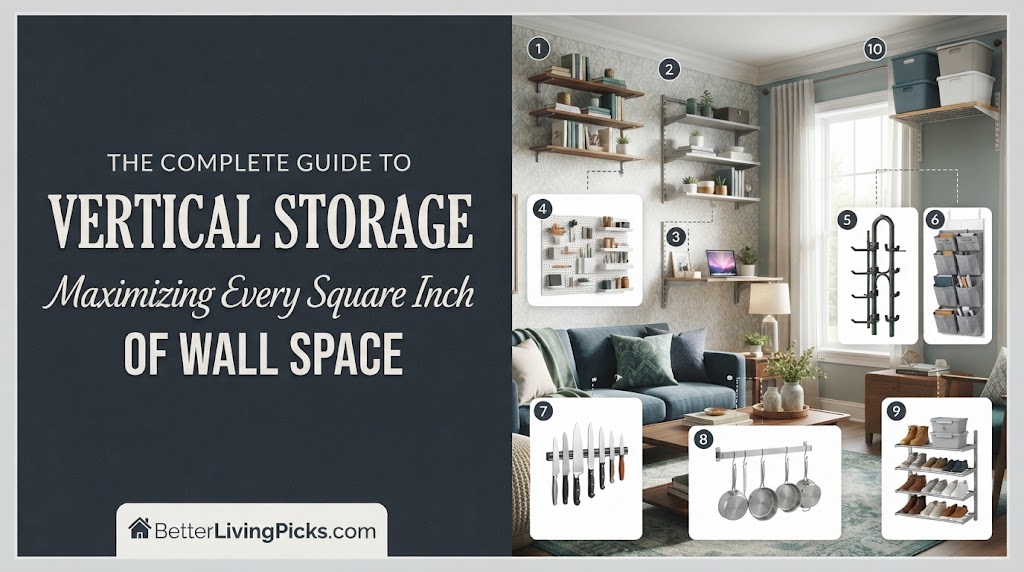
I remember staring at a mountain of clutter in my first tiny apartment, wondering why my floor felt completely swallowed up by bins, suitcases, and miscellaneous gear. The secret I was missing wasn’t buying more furniture; it was looking up. Most people ignore ninety percent of their room’s actual surface area simply because their eyes stay at eye level.
Mastering vertical storage transforms your walls from blank drywall into hard-working structural assets. By shifting your perspective upward, you free up floor space, eliminate tripping hazards, and bring a clean, intentional look to any room. Let us dive into the mechanics of maximizing every single square inch of your walls.
The Anatomy of Wall Framing and Load Distribution
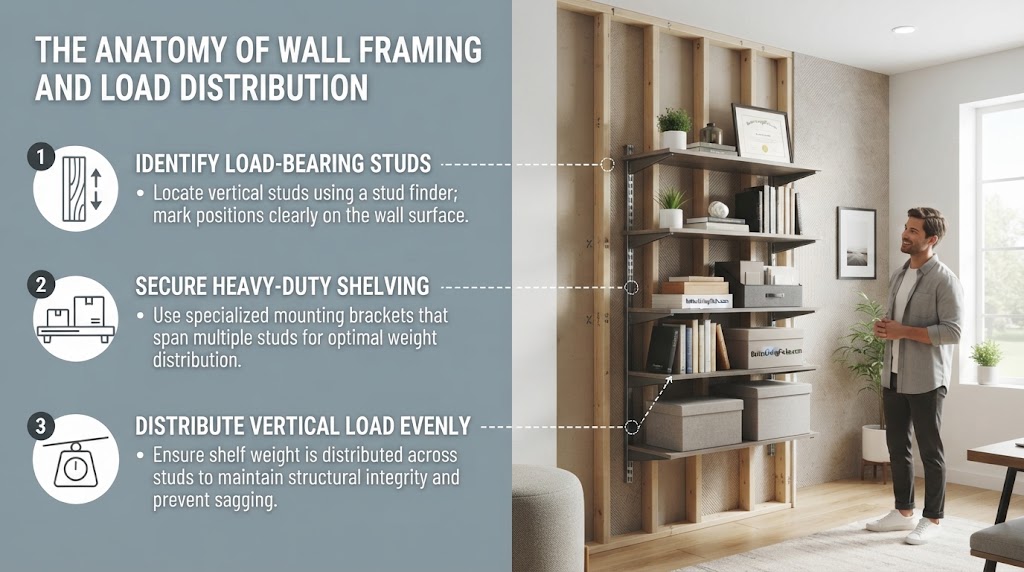
Before you drive a single screw into your drywall, you need to understand what is happening behind the surface. Walls are not just flat planes; they are engineered skeletons made of vertical framing members called studs.
Understanding Stud Spacing and Wall Construction
In standard modern construction, wall studs are placed either 16 inches or 24 inches apart on center. When you hang heavy items, anchoring straight into these wooden beams provides maximum security.
I learned this the hard way when a heavy shelving unit pulled clean out of a hollow drywall section, taking half the plaster with it. Always map out your stud layout with a high-powered magnet or stud finder before purchasing your mounting hardware.
Choosing the Right Anchors for Drywall vs. Plaster
Not every item you want to hang will line up perfectly with a stud. When you are forced to mount between studs, your choice of anchor makes or breaks the project.
Plastic expansion anchors are fine for lightweight picture frames, but for shelving, you must use heavy-duty toggle bolts or threaded metal drywall anchors. These expand behind the wall board to distribute weight across a much larger surface area.
Heavy-Duty Track Systems and Modular Hardware
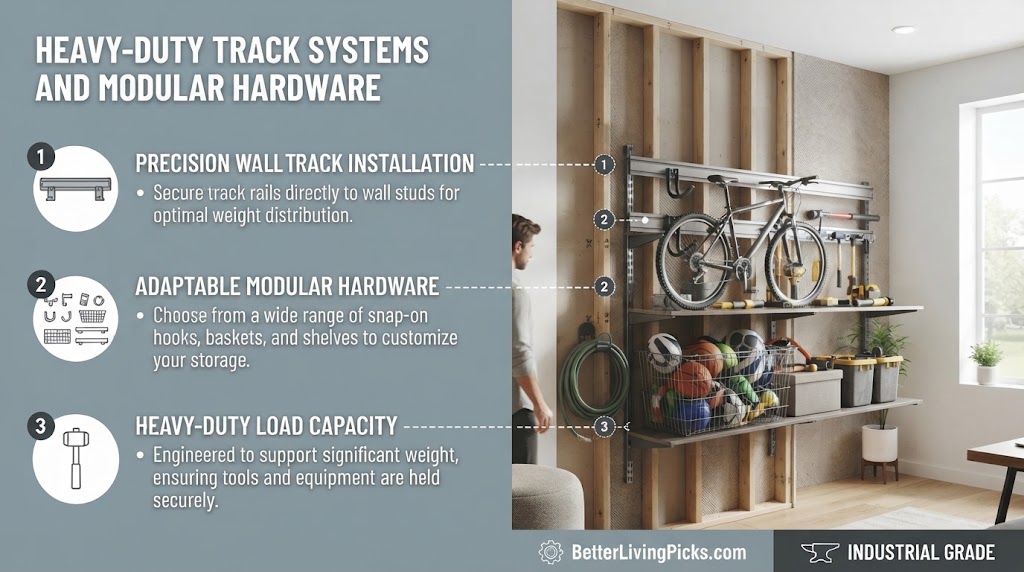
If you want storage that can adapt over time, fixed brackets will quickly limit you. Modular track systems offer the flexibility to move shelves up and down as your storage needs shift.
I recommend using double-slot vertical standards paired with heavy gauge steel brackets. They provide superior lateral stability compared to single-slot systems, ensuring your shelves never wobble or slip under heavy loads.
Why Track Systems Beat Standalone Brackets
Standalone brackets require precise measuring for every single shelf tier. Track systems, however, only require you to level and mount a single horizontal header rail at the very top.
Once that top rail is secured into your studs, vertical hanging standards simply click or hang down from it. You can adjust shelf heights instantly without drilling new holes.
Installing Your Primary Header Rail
The golden rule of track installation is treating your top horizontal rail as the anchor of the entire system. Use a 4-foot carpenter’s level to ensure it is completely plumb before securing it.
Drive your first screw loosely, check the bubble level again, and then drive the remaining screws into every available stud. If your header is level, your entire shelving wall will align effortlessly.
Vertical Storage in the Kitchen and Pantry
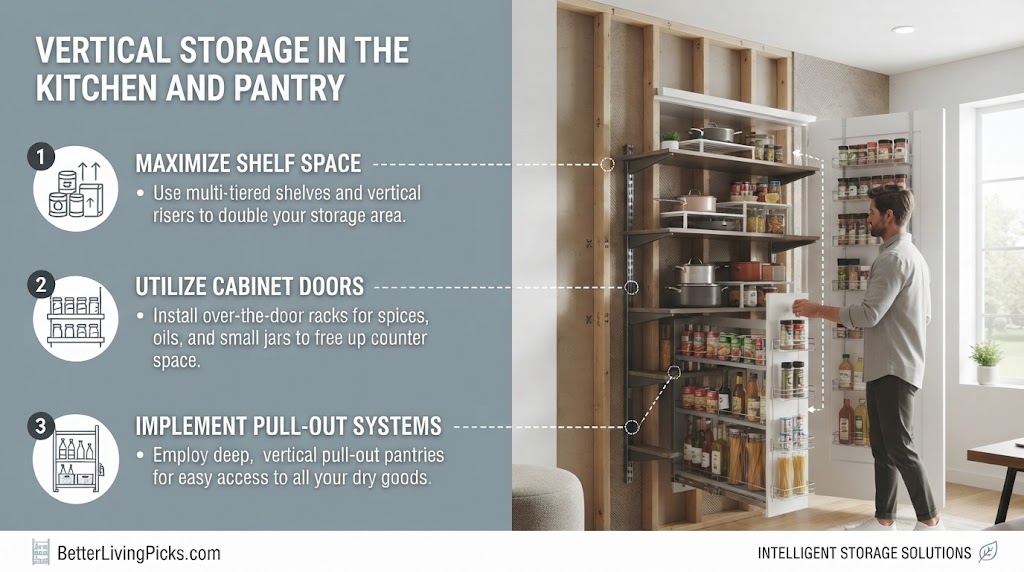
Kitchens are notorious for running out of counter space, but your walls are practically begging to be utilized. The secret to an organized kitchen is keeping everyday tools within arm’s reach while pushing bulk goods upward.
Over-the-Door Racks and Deep Cabinet Backs
Do not ignore the interior and exterior surfaces of your pantry doors. Over-the-door wire rack systems add four to six tiers of shallow shelving that are perfect for spices, oils, and small jars.
On the backs of cabinet doors, small adhesive or screw-mounted wire baskets hold pot lids, cutting boards, and foil boxes securely out of the way.
Magnetic Strips and S-Hook Rails for Utensils
Countertop knife blocks take up valuable real estate. Installing a heavy-duty magnetic knife strip on the wall clears your counters and displays your tools cleanly.
Similarly, running a stainless steel rod beneath your upper cabinets with S-hooks allows you to hang frequently used pots, pans, and cooking utensils right where you cook.
Transforming Garage and Workshop Walls
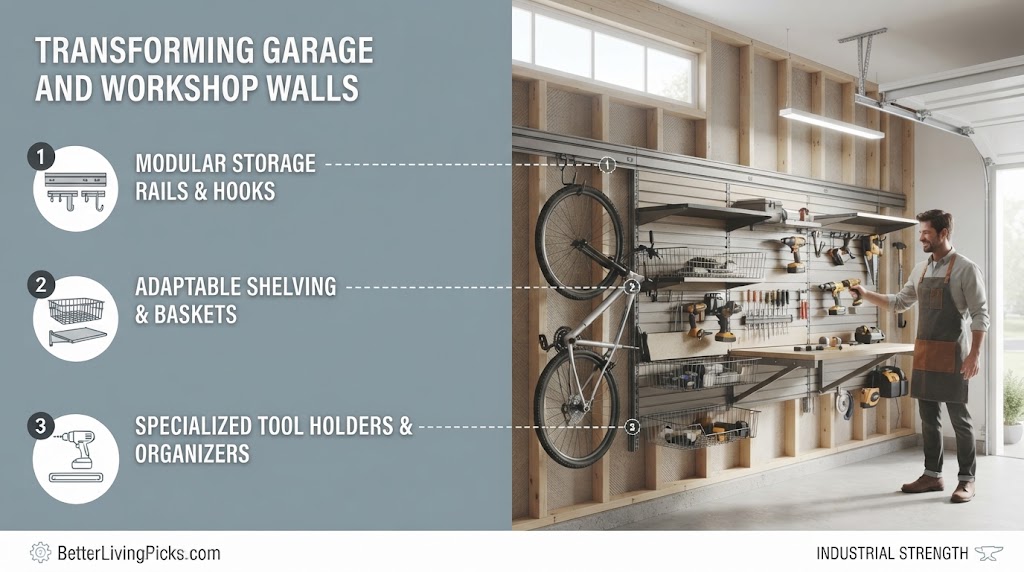
Garages are where vertical storage shines brightest. Without wall organization, tools, bikes, and bins quickly conquer the floor, leaving no room for your car.
French Cleat Systems for Ultimate Customization
If you want professional-grade workshop organization, build or buy a French cleat system. This involves cutting strips of wood at a 45-degree angle, attaching one piece to the wall, and securing the matching angle to your toolholders.
It lets you slide tool racks, drill holders, and clamp stations on and off the wall instantly without tools.
Slatwall Panels and Heavy-Duty Utility Hooks
Slatwall panels cover your entire wall in horizontal grooved channels designed to accept specialized hooks, baskets, and brackets.
I installed PVC slatwall in my own garage workspace last year, and being able to reconfigure shovel racks, ladder hooks, and sports equipment storage in seconds completely changed how I use the space.
Maximizing Bedroom and Closet Vertical Real Estate
Closets are legendary clutter magnets. Most built-in contractor setups give you a single high shelf and one clothes rod, leaving massive dead zones above and below your garments.
Tiered Clothing Rods and High Shelf Extensions
To double your hanging capacity instantly, install a second clothing rod halfway down your closet space for shirts, skirts, and folded trousers.
For the upper dead zone above your main rod, add two adjustable laminate shelves. Use this high real estate for out-of-season blankets, suitcases, and lidded storage boxes.
Utilizing the Back of Bedroom Doors
The back of your bedroom or master closet door is prime vertical territory. Over-the-door shoe organizers with clear vinyl pockets are not just for shoes; use them to store rolled belts, sunglasses, charging cables, and small clutch purses where you can see everything at a glance.
Living Room and Office Wall Organization

Living rooms need to balance aesthetic warmth with practical storage. Piling up books and media on tables creates visual chaos, whereas wall-mounted displays keep rooms feeling open and breathable.
Floating Bookshelves and Hidden Mounting Brackets
Floating shelves create the illusion that books and decor are magically resting against the wall. The secret to their strength lies in internal steel support brackets that anchor directly into the studs before a hollow wooden box slides over top.
When installing floating shelves in a living room, stagger them diagonally rather than stacking them in a rigid column for a modern, high-end designer look.
Pegboard Accent Walls for Desk Organization
Home offices suffer quickly from desk clutter. Mounting a clean wooden or steel pegboard directly above your monitor lets you hang headphones, calendars, pen cups, and reference notebooks.
Paint the pegboard to match your accent wall color so it blends seamlessly into the room when not cluttered with gear.
Bathroom and Laundry Vertical Hacks
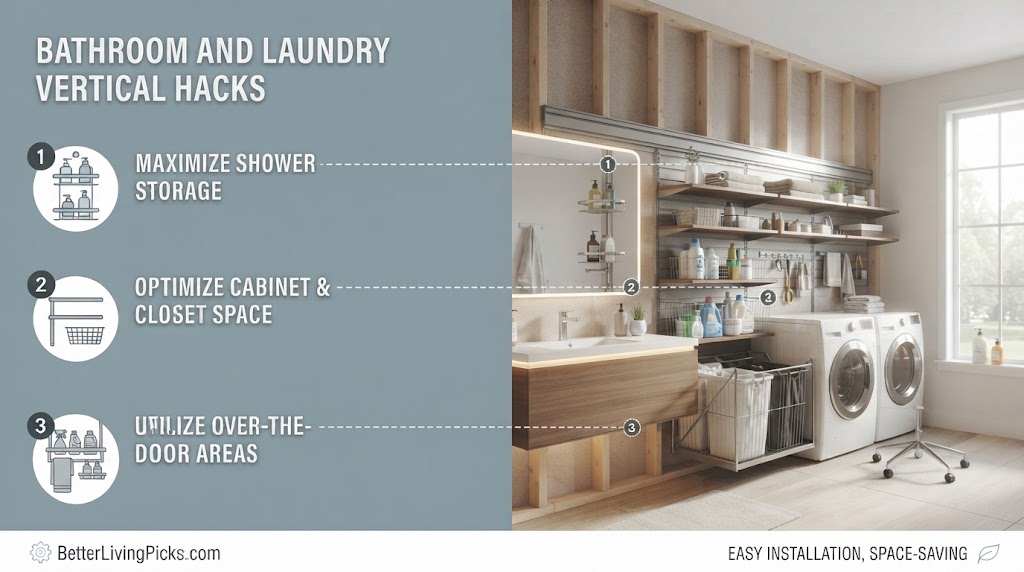
Bathrooms and laundry rooms are typically the smallest rooms in the house, making vertical storage a strict necessity rather than an optional design choice.
Over-the-Toilet Storage Towers
The awkward empty space sitting directly above your toilet bowl is screaming for attention. Freestanding or wall-mounted over-the-toilet storage towers provide three to four open shelves for extra toilet paper, towels, and decorative jars without taking up an inch of floor footprint.
Hanging Baskets and Slim Tower Units
In laundry rooms, mount slim wire or wicker baskets on the side of your washing machine or directly onto the wall to hold stray dryer sheets, stain sticks, and laundry pods.
If you have a narrow gap between your washer and dryer, slide in a rolling vertical utility tower to capture every available inch.
Common Installation Mistakes and How to Avoid Them

Even seasoned DIYers make mistakes when rushing through vertical storage projects. Avoiding these common pitfalls saves you from patched drywall and broken gear.
Skipping the Level and Measuring Twice
Eyeballing a shelf placement is a guaranteed recipe for crooked brackets. Always use a digital or bubble level for every single horizontal line you draw.
Measure from the floor up in multiple spots rather than relying on your ceiling or baseboards, which are often uneven in older homes.
Overloading Upper Shelves Beyond Weight Limits
It is easy to get carried away stacking heavy storage bins on high shelves. Always respect the manufacturer’s maximum weight limits for your specific brackets and anchors.
Keep your heaviest items near the floor or on lower wall tracks, scaling down to lighter items as your shelving goes higher up the wall.
Maintaining and Rebalancing Your Storage Systems
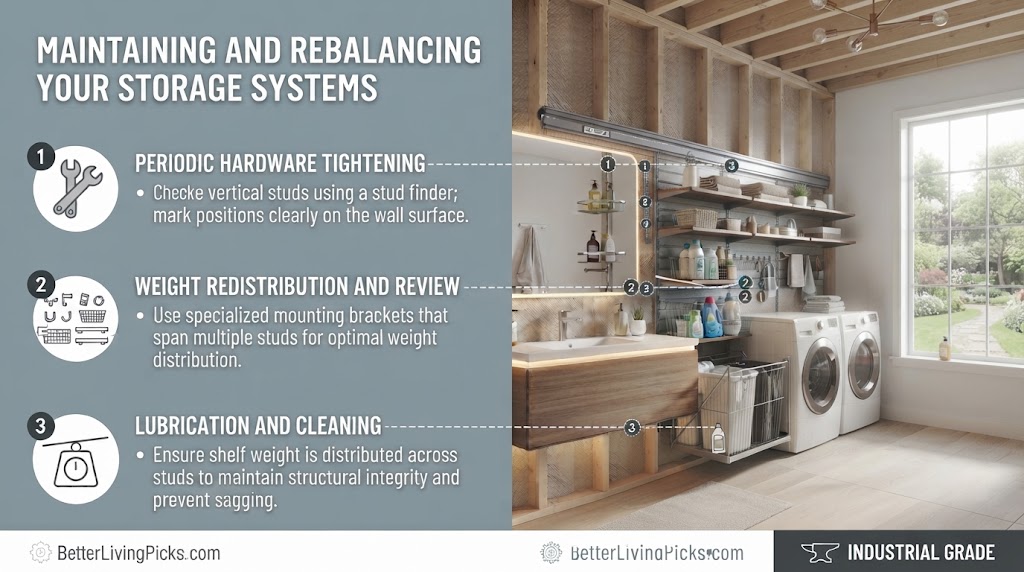
Vertical storage is not a “set it and forget it” project. Over time, hardware shifts, and storage loads change as your household habits evolve.
- Map Your Studs First: Always locate wooden framing members with a magnet or stud finder before anchoring heavy shelving units.
- Prioritize Track Systems: Header rail track systems offer superior adjustability and distribute wall stress much better than standalone brackets.
- Zone Your Heights: Keep heavy items at waist height and reserve high vertical shelves for lightweight, bulky seasonal gear.
- Perform Annual Audits: Tighten wall screws and inspect toggle anchors once a year to prevent structural sagging and hardware failure.
Seasonal Audits and Weight Redistribution
Twice a year, do a quick audit of your vertical storage zones. Donate items you no longer use to lighten the load, and shift heavy seasonal gear up or down depending on the time of year.
This keeps your storage systems balanced and prevents localized overloading on specific wall brackets.
Tightening Hardware and Inspecting Anchors
Vibration from opening doors, slamming garage entries, and daily use can slowly loosen wall screws. Take ten minutes every autumn to grab a screwdriver and check every mounting screw, rail clip, and anchor bolt to ensure everything remains rock solid.
When you shift storage onto your walls, visual clutter can quickly become overwhelming if color palettes and item sizes clash. Sticking to a unified color scheme for your storage bins, baskets, and containers ensures your vertical setups look like intentional interior design rather than a crowded warehouse wall.
Lighting and Aesthetic Integration for Vertical Displays
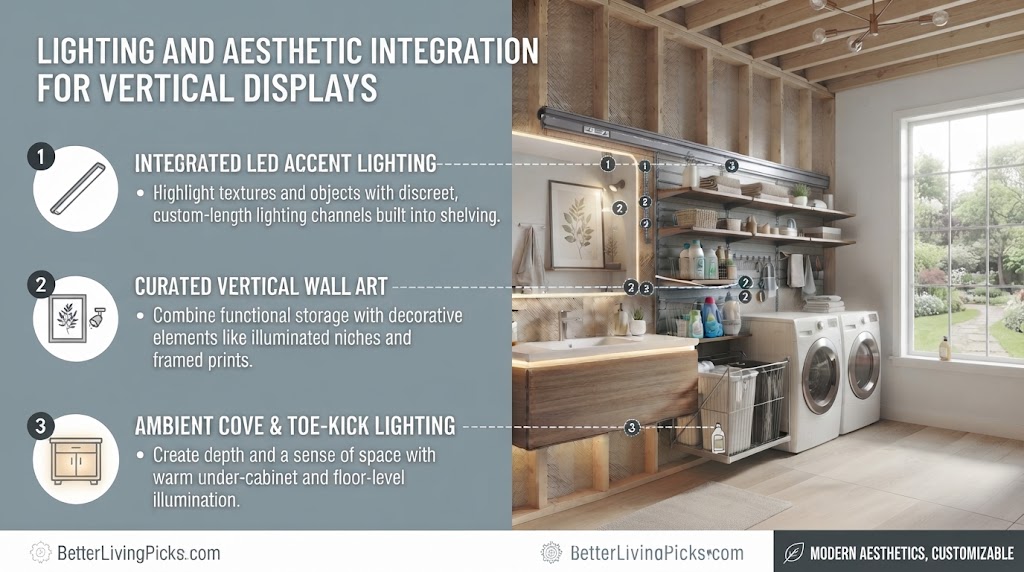
When you start maximizing your wall space with shelving, track systems, and hanging pegboards, you alter how light moves through the room. Poorly planned vertical storage can cast deep shadows over your workspace, countertops, or living areas, making rooms feel smaller and darker.
Integrating Under-Shelf LED Strip Lighting
If your wall shelves stretch high or hang above kitchen counters and office desks, adding low-profile LED tape lighting beneath the bottom shelves changes everything.
I wired slim, rechargeable motion-sensor LED strips under my primary office wall shelves last year, and it completely eliminated dark desk shadows while making the entire wall pop at night.
Balancing Open Display with Concealed Storage
Not everything you store vertically looks great on open display. A common amateur mistake is turning every square foot of wall space into exposed wire shelving packed with mismatched boxes.
Combine open floating shelves for books and plants with enclosed wall cabinets or lidded bins on the upper tiers to keep visual noise under control and maintain a balanced, breathable room aesthetic.
Frequently Asked Questions
How can I hang heavy items on drywall without hitting a stud?
When wall studs do not align with your hanging points, you must use heavy-duty hardware like toggle bolts, snap toggles, or heavy metal threaded anchors. These expand behind the drywall sheet to distribute weight across a wider surface area, though you should still avoid loading them beyond 50 pounds per anchor.
What is the best height to install floating shelves in a living room?
For living rooms and dens, position your lowest floating shelf between 48 and 60 inches from the floor for optimal eye-level viewing. If stacking multiple shelves vertically, leave at least 12 to 15 inches of clearance between each tier to accommodate books and taller decor items comfortably.
How do I prevent metal wall tracks from sagging over time?
Sagging tracks usually happen when the primary top header screw is not driven directly into a solid wooden stud or when the spacing between vertical standards is too wide. Always anchor your top rail into at least two studs and keep vertical standards spaced no more than 24 inches apart.
Can I install vertical storage systems on plaster walls safely?
Plaster is much more brittle than modern drywall and tends to crumble under heavy localized stress. When mounting vertical tracks on plaster, pre-drill your pilot holes carefully and use spring-loaded toggle bolts or specialized plaster anchors to prevent the material from cracking.
What tools do I need to get started with wall storage installation?
At minimum, you will need a 4-foot carpenter’s level, a stud finder or strong magnet, a power drill with appropriate bits, a screwdriver set, a tape measure, and a pencil. For heavier garage projects, a stud marking laser can also speed up layout planning significantly.
How do I hide messy cords and cables on wall-mounted shelves?
You can conceal cords by running them through paintable plastic wire raceways attached vertically down the wall. Alternatively, position your shelves directly over existing electrical outlets or drill clean pass-through holes in the back edges of wooden shelving boards.
What is a French cleat and why should I use one?
A French cleat is a hanging system featuring two mating pieces of wood or metal cut with 45-degree bevels. One piece mounts to the wall pointing up, while the matching piece attaches to your shelf or cabinet pointing down, locking together securely while allowing instant repositioning.
How much weight can a standard wire closet shelf hold?
Most standard vinyl-coated wire closet shelves can hold up to 45 pounds per linear foot if they are securely clipped to wall clips and supported by diagonal braces. However, overloading them with heavy books will cause the wire grid to bend and pull away from the back clips.
Are modular track systems better than fixed wooden shelving?
Modular track systems are vastly superior if your storage needs change frequently, as they allow you to click shelves up and down instantly. Fixed wooden shelving offers a cleaner, more permanent built-in look but requires patching and repainting holes if you ever want to adjust heights.
How do I choose between slatwall and pegboard for a garage?
Pegboard is lightweight, budget-friendly, and ideal for hanging hand tools, pliers, and screwdrivers. Slatwall panels are constructed from heavier PVC or MDF, support much higher weight capacities, and are better suited for heavy items like ladders, bicycles, and heavy garden hoses.
Can I install heavy shelves on brick or masonry walls?
Yes, masonry walls actually offer superior holding power compared to drywall, but you cannot use standard wood screws. You must use a hammer drill with a masonry bit and insert plastic or lead wall expansion shields designed specifically for concrete and brick fasteners.
How do I keep wall-mounted pantry shelves from looking cluttered?
Maintain visual harmony on open pantry shelves by decanting bulk dry goods into matching square or rectangular acrylic canisters with uniform labels. Group items by category such as baking supplies, snacks, and canned goods so your vertical layout looks intentional rather than chaotic.
Final Thought
Mastering vertical storage is one of the most rewarding home improvements you can tackle. By looking past your floor plan and treating your walls as functional canvases, you unlock hidden square footage that instantly declutters your living space. Take your time measuring, anchor securely into your studs, and enjoy a cleaner, more organized home for years to come.

