
Yes, but use the upholstery attachment and avoid pushing down hard. Keep the nozzle slightly above the surface to gently lift dust without crushing the delicate pile or snagging the fibers.
2. How do I get a stain out of velvet?
Immediately blot the spill with a clean, dry microfiber cloth—never rub. Use a tiny amount of mild dish soap mixed with water, whipped into foam, and apply only the foam to the stain.
3. How do I fix flattened velvet?
The best method is to steam the fabric from a distance using a handheld steamer. Keep the nozzle moving constantly, then gently brush the fibers in the opposite direction of the pile to lift them.
4. What should I absolutely avoid?
Avoid excessive water, which leaves permanent water rings, and never use stiff-bristled brushes or harsh chemical cleaners. Always test a small, hidden area of the furniture first to check for colorfastness.
Velvet is stunning until you spill a drop of coffee on it or notice that inevitable flat spot where everyone sits. It feels like a high-maintenance fabric that only a professional can handle, but the truth is, you can maintain its plush appearance at home with just a little patience.
The biggest mistake people make is treating velvet like standard cotton, which leads to permanent crushing or water spotting. By understanding how the fibers react to moisture and pressure, you can keep your furniture looking brand new without the stress of professional cleaning costs.
Understanding Your Velvet: Codes and Materials
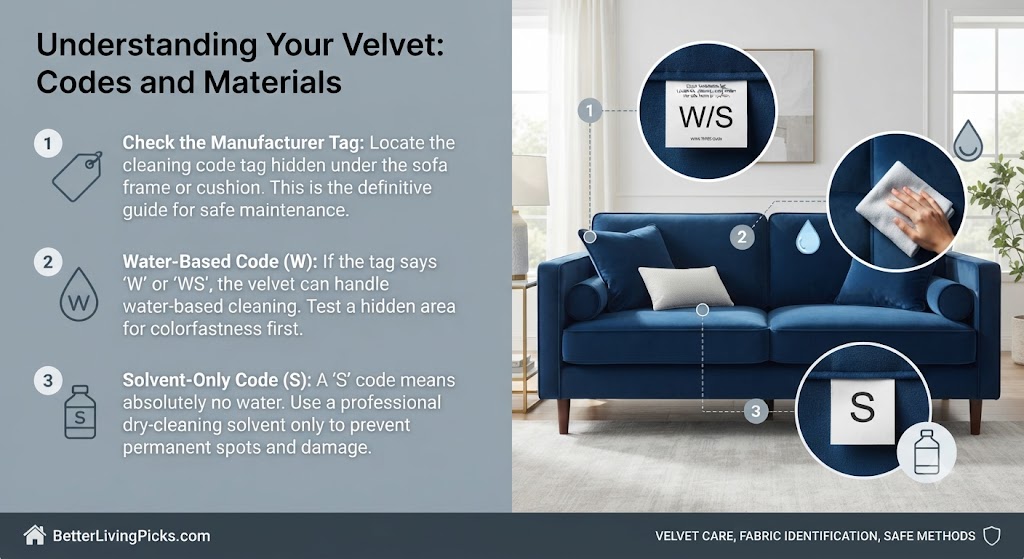
Before you touch your cushions with any cleaning product, you need to know exactly what you are dealing with. Most manufacturers attach a cleaning code tag, usually hidden under the frame, inside a cushion zipper, or on the bottom of the piece. If you ignore this, you risk permanent damage.
- Code S (Solvent-Only): This is common for high-end velvet. Do not use water. You will need a water-free upholstery cleaner or a dedicated dry-cleaning solvent. If you use water, you will likely cause immediate discoloration.
- Code W (Water-Based): This is the gold standard for easy care. It means the fabric is safe to clean with mild water-based detergents or even just plain distilled water if the spill is fresh.
- Code S/W (Combination): This is the most versatile option. It allows for either solvent-based spot cleaning or mild water-based cleaning. Even here, proceed with caution and test in a hidden area first.
- Code X (Professional Only): If you see this, stop immediately. It means the fabric is extremely fragile or moisture-sensitive. Professional cleaning is your only safe path.
Velvet composition also dictates how you clean. Synthetic velvets, often made from polyester or nylon, are generally durable and hold up well to light, cautious cleaning. Natural fiber velvets, such as cotton or silk, are much more temperamental. Cotton velvet tends to absorb moisture quickly, which makes it prone to deep-set water stains, while silk velvet is highly sensitive to heat and pressure. Always prioritize the manufacturer’s label over generic advice, and never assume two velvet pieces are identical in their needs.
Preparation: The Golden Rules of Velvet Care
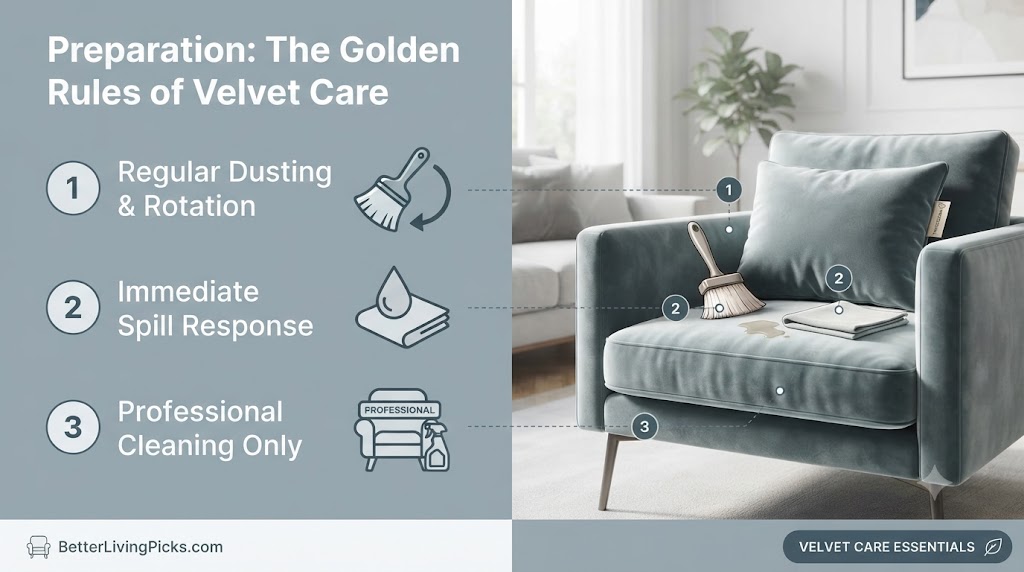
The secret to cleaning velvet successfully lies entirely in your preparation. If you rush into scrubbing or dabbing, you will almost certainly damage the “nap” the specific direction the fibers naturally lay. When the nap is crushed or disturbed, the fabric loses its signature sheen and can look permanently worn out.
Start with a thorough, dry vacuuming. Use the soft upholstery brush attachment on your vacuum. Do not drag the vacuum head forcefully across the fabric, as the stiff plastic can leave scratches or create permanent lines in the pile. Instead, use a “hovering” or light-touch motion to pull dust, pet hair, and crumbs out of the deep crevices without pressing the fibers flat.
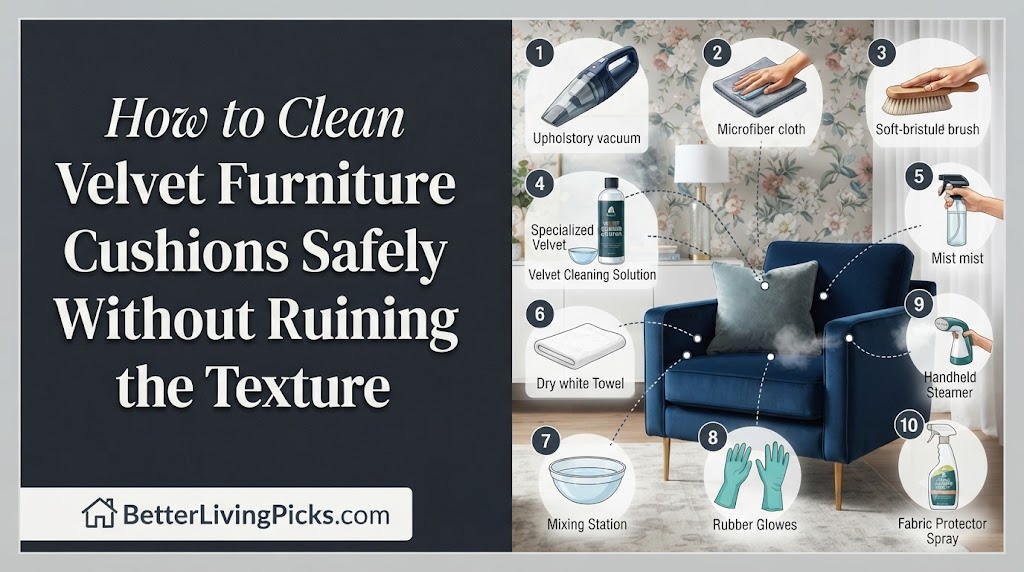
Gather your specialized toolkit. You do not need expensive chemicals. You need the right tools to prevent damage:
- Clean white microfiber cloths: Colored cloths can bleed dye into the velvet.
- A dedicated upholstery brush: A soft-bristled brush or even a clean, soft hairbrush works wonders.
- Distilled water: Standard tap water contains minerals, chlorine, and salts that can leave unsightly water rings once they evaporate.
- Mild, clear dish soap: Use a brand that is free of dyes, scents, and heavy oils.
- A high-quality handheld garment steamer: This is your best friend for resetting the pile.
Ensure your workspace is clean. If you are spot cleaning, physically pull the cushion away from the sofa frame to prevent moisture from seeping into the wooden structure or soaking the internal foam core, which can lead to hidden mold growth.
The Step-by-Step Cleaning Process
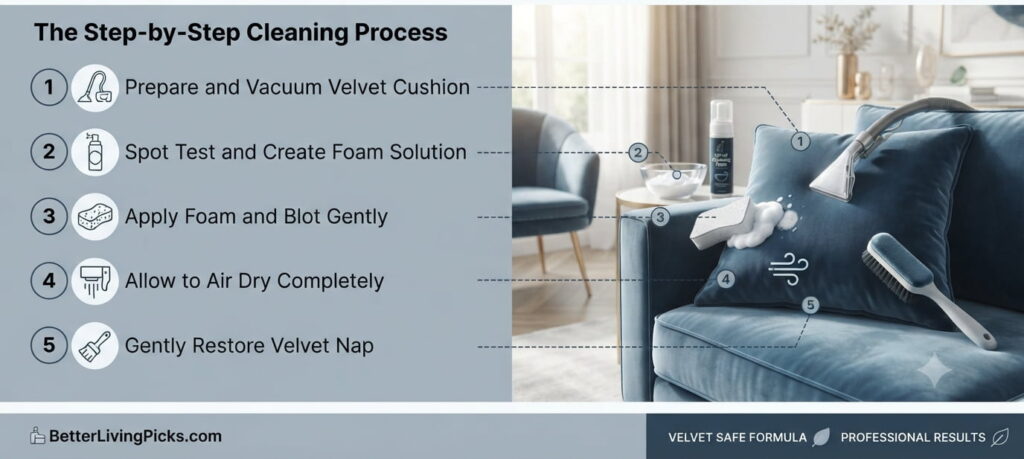
For general surface dirt, a dry brush is often enough to keep the velvet looking crisp. Use your soft brush and gently stroke the velvet in the direction of the pile to lift dust. If you have a stubborn spill, follow these detailed steps carefully.
1. Blot immediately (The Dry Phase). Never rub, scrub, or wipe. If the spill is fresh, press a dry, white microfiber cloth firmly into the area to absorb as much liquid as possible. Think of this as “transferring” the spill from the sofa to the cloth. Keep changing the cloth as it becomes saturated until no more liquid is transferring.
2. Create a stable foam solution. In a bowl, mix a very small drop of clear dish soap into a cup of distilled water. Whisk it vigorously with a spoon or a whisk until you have a thick, stable pile of bubbles or foam. The goal is to use the cleaning power of the soap without the soaking power of the water.
3. Apply only the foam. Dip your cloth into the foam not the soapy water below. Apply only the bubbles to the stained area. The goal is to clean the surface fibers without allowing moisture to penetrate the backing of the fabric. Let the foam sit for about thirty seconds to break down the stain.
4. Lift and blot. Take a clean, dry microfiber cloth and gently blot the area. Again, do not rub. You are trying to lift the foam and the dissolved soil out of the pile. Repeat this process applying foam, waiting, and blotting until the stain is visibly gone.
5. The rinse and dry. If you feel the area is soapy, take a separate cloth barely dampened with plain distilled water to “rinse” the spot. Blot firmly with a dry towel to remove as much moisture as possible.
6. The steam-lift. Once the area is dry, it might look slightly flat or matted. Use your handheld steamer from about four to six inches away. Keep the steamer moving constantly to avoid over-heating. Follow this immediately with a light brush in the direction of the nap to reset the fibers and restore the original sheen.
Common Mistakes That Ruin Velvet Texture
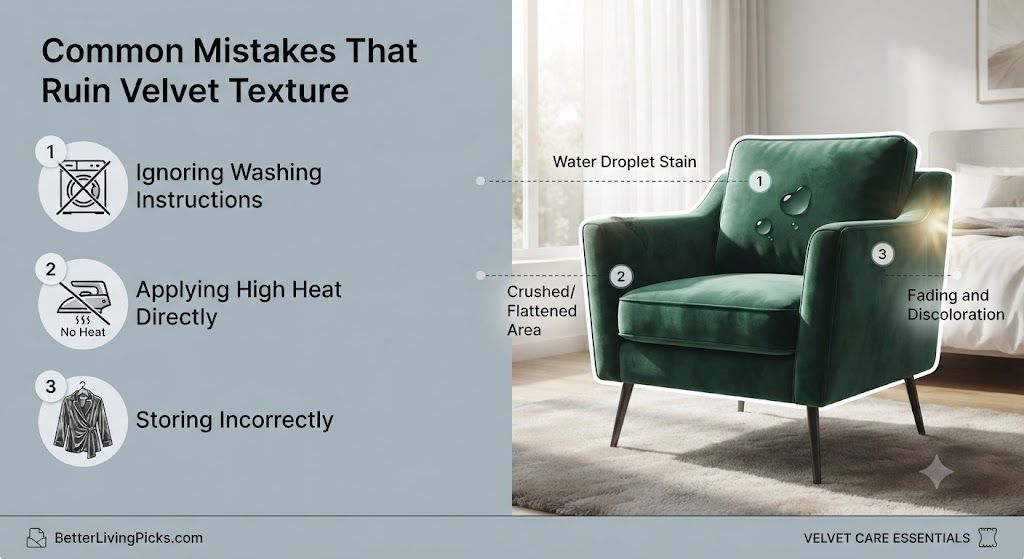
Velvet is a high-pile, three-dimensional fabric, which means it is easily permanently altered. The most frequent error homeowners make is over-saturation. When too much water soaks into the base layer, it pulls minerals to the surface as it evaporates. This leaves a “tide mark” or ring that is notoriously difficult to remove without professional help.
Rubbing is the ultimate enemy. Even if a stain feels like it needs aggressive scrubbing, resist the urge. Scrubbing pushes dirt deeper into the weave and tangles the delicate fibers, leading to a permanent “bald” spot or a flattened texture that will never look right again.
Ignoring the nap direction. Velvet has a distinct “grain.” If you brush, clean, or vacuum against this grain, the fabric will look shadowed, streaky, or dirty even when it is perfectly clean. Always identify which way the fibers lay by stroking it—the direction that feels smooth is with the nap. Always work in that direction.
Using the wrong chemicals. Avoid heavy-duty cleaners, bleaches, or even multi-purpose surface sprays. These often contain harsh surfactants or bleaching agents that will strip the color and ruin the delicate sheen of the velvet. Always stick to mild, pH-neutral soaps and distilled water.
Rushing the drying time. Do not sit on a damp cushion. If you apply moisture, the cushion needs hours to dry completely. Sitting on it while damp forces moisture into the foam and crushes the fibers into a permanent, unwanted shape.
Deep Maintenance: Keeping That Luxe Look Over Time

Maintenance is far easier and more effective than deep cleaning. If you keep the fibers healthy, you rarely need to reach for a cleaning cloth.
- Rotate and flip your cushions. If a certain seat on your sofa is a favorite, the velvet will start to show wear faster. Flip and rotate the cushions weekly to distribute the wear patterns. This prevents localized crushing and keeps the fabric looking even across the entire piece.
- Weekly dry brushing. Spend sixty seconds once a week brushing the velvet with a soft-bristled brush. This simple action keeps the fibers standing tall, prevents dust from settling into the deep weave, and maintains that beautiful, high-end shimmer.
- Address crushed spots early. If you notice a flat area, do not wait for it to become permanent. Use the “steam-lift” method mentioned earlier to re-energize the fibers. The longer a spot stays crushed, the more “memory” the fibers develop in that position, making it much harder to reverse later.
- Managing sunlight exposure. Velvet is highly susceptible to fading. If your furniture is near a window, consider using UV-filtering curtains or blinds. Once the color fades on one side of a cushion, it is essentially impossible to match the color back to the original without re-dyeing the entire piece.
Frequently Asked Questions
Can I use a vacuum on velvet?
Yes, you can, but you must use the right technique. Always use a soft upholstery brush attachment and avoid pressing down on the fabric. The goal is to lift dust away from the fibers using light suction, not to grind the nozzle into the velvet pile.
How do I remove water stains from velvet?
Water stains occur because of mineral deposits or drying unevenly. To fix them, lightly dampen the entire affected area with a clean cloth and distilled water to “re-wet” the area evenly. Let it air dry naturally, then use a steamer and a soft brush to restore the texture once it is completely dry.
Should I use a professional cleaner?
If the velvet is a high-end natural fiber like silk, mohair, or an antique cotton blend, it is best to leave it to the professionals. For standard synthetic velvet sofas (polyester/nylon), DIY care is perfectly safe if you avoid over-wetting the fabric.
Can I use soap and water on velvet?
You can use a very mild, clear dish soap, but you must only use the foam. Do not pour water directly onto the velvet. Excessive water will soak through to the foam cushion core, which can lead to mildew, odor, and permanent damage to the structural integrity of the cushion.
How do I fix crushed velvet pile?
Crushed velvet is usually caused by sustained pressure. The most effective fix is gentle heat from a steamer. Keep the steamer moving constantly to avoid burning the fabric, and use a soft brush to gently lift the fibers while they are still warm and pliable. This “relaxes” the fibers so they can stand back up.
Is vinegar safe for velvet?
It is generally best to avoid vinegar. While it is a popular household cleaner for many surfaces, its natural acidity can react poorly with certain dyes used in velvet. This can potentially cause discoloration, fading, or even weaken the delicate fibers over time, ruining the finish.
Keep Your Velvet Looking Luxurious
Cleaning velvet doesn’t have to be a source of constant anxiety. Once you understand that less moisture is always better and that gentle handling is your most effective tool, you will find that keeping your furniture beautiful is actually quite simple. The key is consistency addressing dust and small spots early ensures you never have to deal with the major disasters that require professional intervention. Take your time, test your methods on a small, hidden corner of the sofa first, and enjoy the rich, plush comfort that only velvet can provide. With these techniques in your back pocket, your velvet furniture will remain a stunning focal point in your home for years to come.