Opt for a high thrust ratio caulk gun (12:1 to 18:1) to easily push thick polyurethane or exterior hybrid sealants smoothly without causing hand fatigue.
2. How do I prevent messy caulk oozing after pulling the trigger?
Using a true dripless caulk gun featuring a smooth pressure-relieving friction rod automatically releases pressure on the drive plunger whenever you let go of the trigger.
3. Is a sausage caulk gun worth it for exterior siding projects?
Yes, choosing a sausage caulk gun heavy duty model reduces waste, lowers material costs per ounce, and fits bulk foil packs common in high-volume exterior sealing.
4. What is the best applicator for silicone bath and window joints?
A smooth rod dispenser with a sensitive trigger stroke serves as the best caulk gun for silicone, giving you precise flow control over thin, sticky formulas.
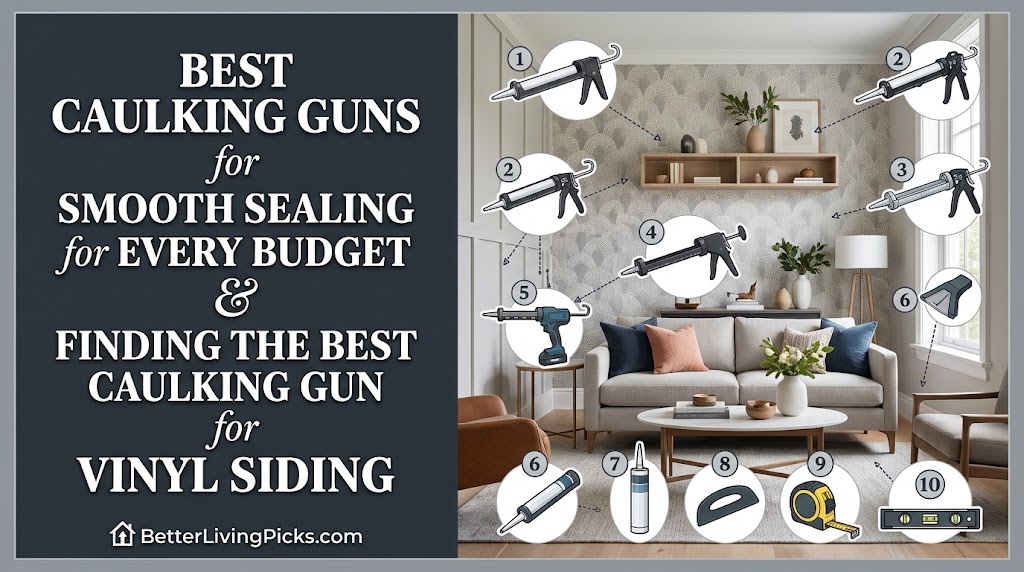
Sealing gaps around exterior trim, windows, and siding joints is one of the most critical maintenance tasks for protecting your home from water intrusion and air leaks. Finding the best caulking gun for vinyl siding can mean the difference between a clean, smooth, professional seal and an exhausting, messy disaster that leaves hand muscles sore and caulk dripping down your walls. From thick exterior polyurethane sealants to flexible silicone adhesives, choosing a dispensing tool with the right mechanical advantage keeps your lines straight and clean. In this guide, we break down top-rated options across every price point—from budget-friendly manual frame tools to heavy-duty professional dispensers—so you can achieve smooth sealing results without overspending.
Featuring an 18:1 high thrust ratio, an auto-drip stop friction system, and a 360-degree rotating barrel, it delivers effortless control over heavy exterior vinyl siding sealants. Durable welded steel construction and a smooth trigger stroke make it the ultimate choice for clean, leak-free home sealing.
Quick Picks / Verdict Summary Table
| Model | Mechanical Thrust Ratio | Frame Design | Key Advantage | Best Suited For |
| Tajima Convoy Super 12 | 18:1 High Thrust | Revolving Open Barrel | Auto-drip stop & 360° rotation | Vinyl Siding & Heavy Exterior Sealants |
| Dripless Inc. ETS2000 | 12:1 Standard | Lightweight Composite | Ergonomic grip & built-in cutter | General DIY, Trim & Window Sealing |
| Milwaukee M12 Cordless | 178 lbs Force | Cordless Electric Drive | Variable speed dial & zero fatigue | Contractor-Scale Siding & Large Projects |
| Albion Engineering B12S20 | 12:1 High Capacity | Aluminum Sausage Barrel | Bulk foil sausage pack compatibility | Commercial & High-Volume Siding Jobs |
Dynamic Feature Analysis: What Makes the Best Caulking Gun for Vinyl Siding?
Applying exterior sealant around vinyl J-channels, corner posts, and window flashings demands consistent pressure and material control. Vinyl siding expands and contracts with ambient temperature shifts, requiring flexible polyurethane or advanced polymer sealants that are significantly thicker than basic indoor latex caulk.
Thrust Ratio Demystified: Mechanical Advantage
The thrust ratio represents the amount of force exerted on the cartridge plunger relative to the pressure applied to the trigger:
- 10:1 Ratio: Suitable for thin water-based acrylics and interior trim latex caulk.
- 12:1 to 14:1 Ratio: Good middle ground for standard 100% silicone adhesives.
- 18:1 to 26:1 Ratio: Necessary for cold weather, thick exterior polyurethane, construction adhesives, and specialized vinyl siding sealants.
Smooth Rod vs. Ratchet Rod Mechanisms
Ratcheted drive rods rely on notched teeth that produce a distinct clicking sound. They push material in stepped increments, which often causes caulk to continue running after trigger release. Smooth drive rods utilize a friction plate mechanism, permitting micro-adjustments in flow rate and immediate pressure release when the lock lever is disengaged.
Core Product Reviews & Recommendations
1. Tajima Convoy Super 12 (CNV-JUST) — Top Pick for Vinyl Siding
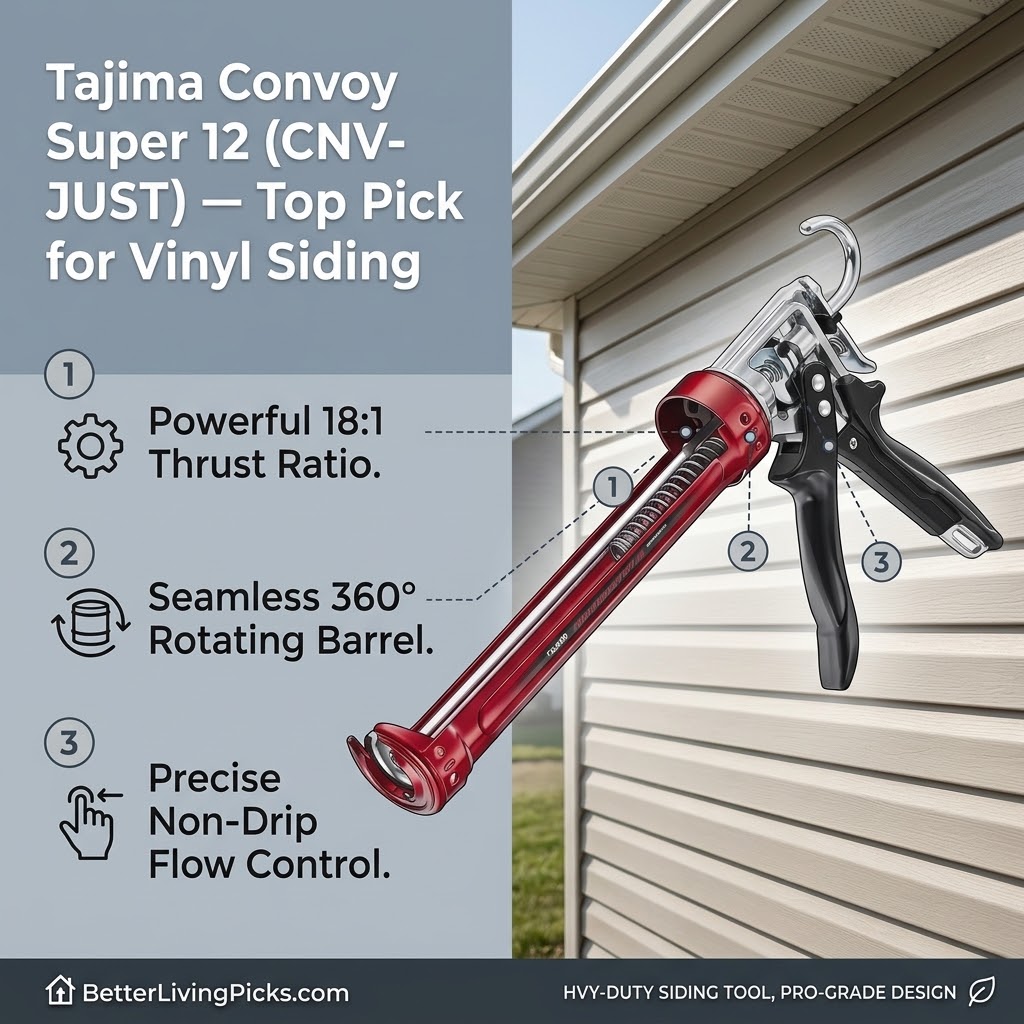
Designed for demanding trade work, the Tajima Convoy Super combines a rigid steel frame with an advanced 18:1 thrust drive. When maneuvering around vertical vinyl siding corner posts or eaves, the 360-degree revolving barrel allows you to rotate the nozzle orientation without breaking your continuous seam.
- Performance: Smooth twin-thrust friction plates deliver uniform bead thickness.
- Dripless Function: Retracts the drive rod fractions of a millimeter on trigger release to prevent runaway caulk.
- Build Quality: Welded steel ladder frame holds up to accidental drops on concrete drives.
2. Dripless Inc. Ergo Composite ETS2000 — Best Lightweight Ergonomic Choice
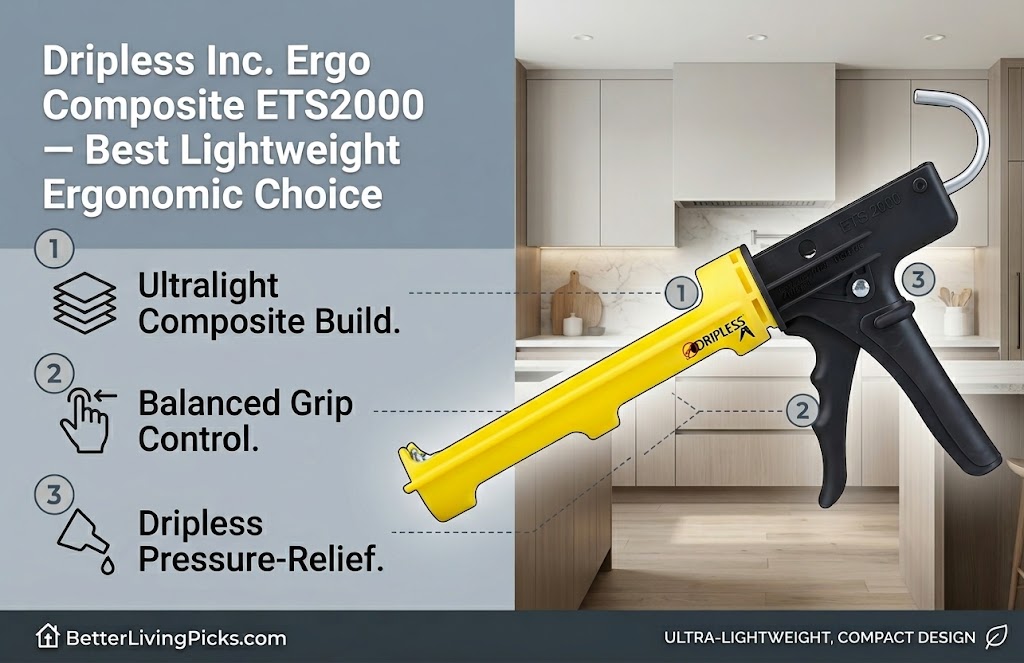
If holding a heavy steel tool overhead causes wrist strain, the ETS2000 offers an ultra-light composite frame that does not sacrifice structural integrity. Its 12:1 thrust ratio handles standard silicone and exterior acrylics with ease, while an integrated spout cutter and seal puncture needle keep tool changes fast.
- Ergonomics: Padded trigger reduces fatigue during multi-hour trim sealing sessions.
- Precision: Well-balanced center of gravity makes it the best caulk gun for silicone in tight bath or window corners.
- Durability: High-impact polycarbonate housing resists bending under heavy grip pressure.
3. Milwaukee M12 Cordless Caulk Gun (2441-20) — Best for Large Projects
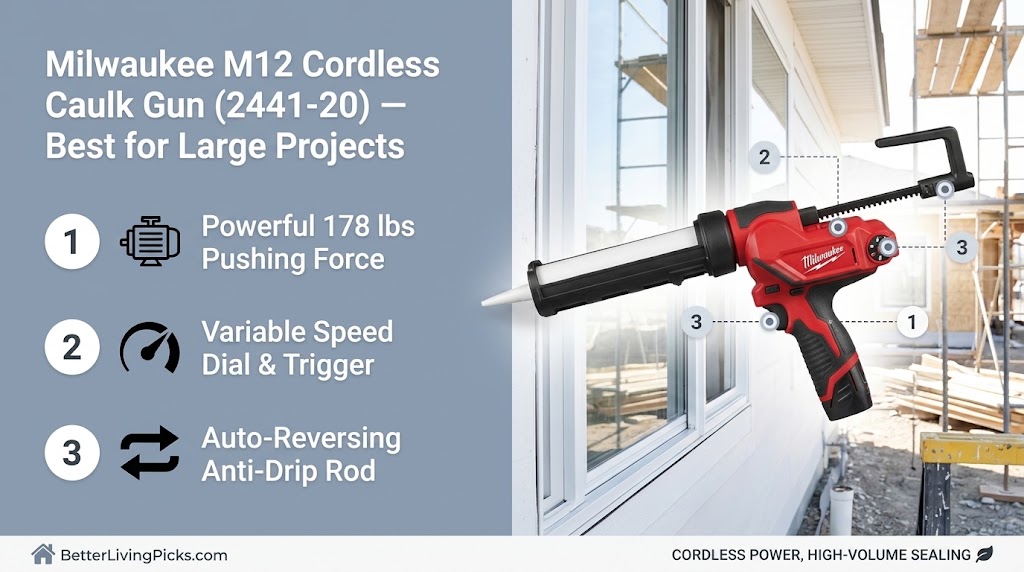
For extensive re-siding jobs or commercial installations, a cordless electric caulk gun completely eliminates hand strain. The Milwaukee M12 motor generates up to 178 lbs of pushing force, using a variable-speed dial and constant-flow trigger to lay down perfectly straight beads over long siding runs.
- Speed Control: 6-step speed dial lets you dial in the exact output rate for thin or thick beads.
- Auto-Reversing Rod: Automatically backs off the plunger when the trigger is released to eliminate drips.
- Capacity: Interchangeable carriage options accept standard 10oz cartridges or larger sausage foils.
4. Albion Engineering B12S20 — Best Sausage Caulk Gun Heavy Duty Edition
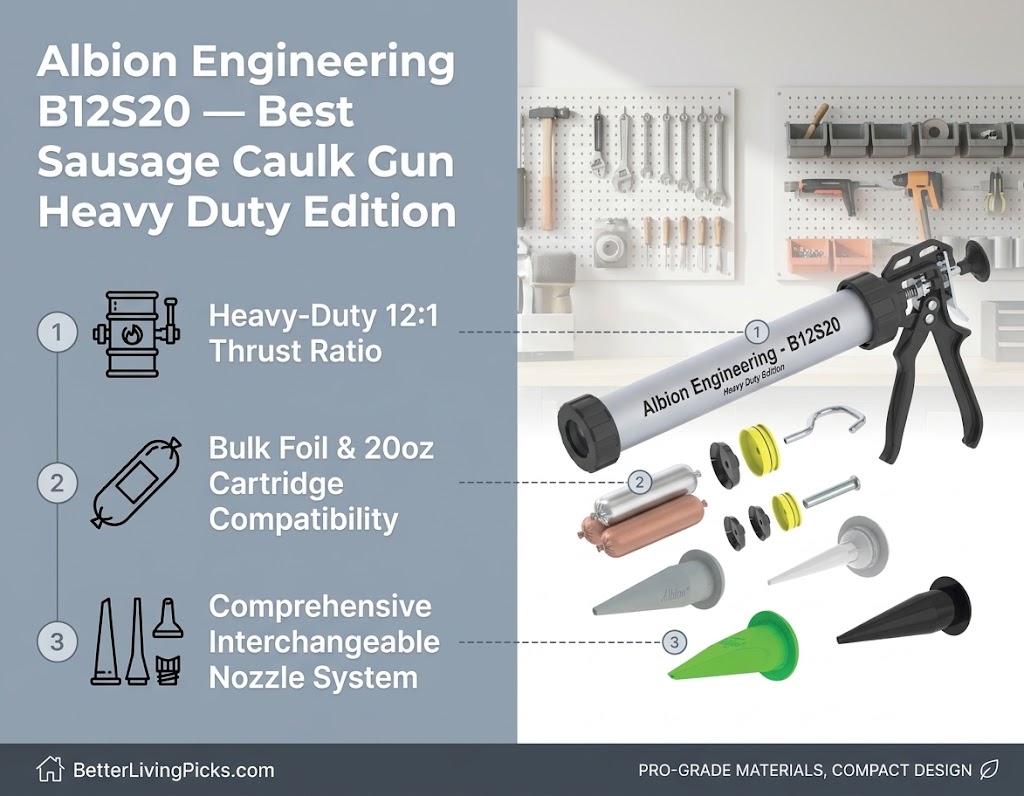
Contractors who purchase bulk exterior sealants prefer sausage packs over rigid plastic cartridges due to cost savings and reduced trash volume. The Albion B12S20 features a full aluminum barrel design engineered to squeeze every drop of material out of 20oz foil sausages smoothly.
- Efficiency: High-capacity barrel means fewer reload stops across massive vinyl siding walls.
- Versatility: Converts easily to accept standard 10oz cartridges using internal adapter rings.
- Seal Integrity: Heavy-duty leather plunger cups prevent sausage foil tears or internal leakage.
Mastering the Seal: Tips for Perfect Vinyl Siding Lines
1. Nozzle Trimming Technique
Cut the tip of your cartridge nozzle at a clean 45-degree angle using a sharp utility knife. Ensure the orifice diameter matches the gap size you intend to fill—typically 3/16 inch for standard siding J-channels.
2. Maintaining the Pull Angle
Always pull the tool along the seam rather than pushing it ahead. Pulling creates uniform backpressure inside the joint, forcing sealant into gaps while leaving a smooth, rounded surface finish.
- Select High Mechanical Advantage: A 12:1 to 18:1 thrust ratio is essential for pushing thick exterior vinyl siding sealants without hand fatigue.
- Ensure True Dripless Mechanisms: Friction-plate smooth rod designs release internal tube pressure instantly, keeping siding panels clean.
- Utilize Rotating Barrels: 360-degree revolving frames let you maintain a continuous, smooth bead around tight window sills and corner posts.
- Match Tool to Project Scale: Use compact composite models for simple touch-ups and sausage/cordless electric units for full house re-siding.
Final Recommendation
Choosing the best caulking gun for vinyl siding depends on your project scale and material choice. For overall homeowner maintenance and professional-grade versatility, the Tajima Convoy Super 12 delivers unbeatable value, smooth flow control, and durable performance. If you are tackling a full-home siding installation, stepping up to a cordless electric caulk gun or a sausage caulk gun heavy duty setup will speed up workflow while keeping hand fatigue at zero.
Frequently Asked Questions
1. What is the best caulking gun for vinyl siding applications?
The Tajima Convoy Super 12 is widely considered the best choice due to its high 18:1 thrust ratio, 360-degree rotating frame, and pressure-relieving dripless design that handles thick exterior sealants easily.
2. Why do I need a high thrust ratio caulk gun for siding?
Exterior vinyl siding sealants (such as polyurethane and advanced polymers) are significantly denser than interior latex. A high thrust ratio (12:1 to 18:1) provides the mechanical force needed to pump thick caulk smoothly without causing wrist strain.
3. How does a dripless caulk gun work?
A dripless caulk gun uses a smooth friction-clutch drive mechanism that automatically retracts the drive rod slightly when you release the trigger, relieving internal cartridge pressure instantly to prevent messy oozing.
4. What is the advantage of using a sausage caulk gun heavy duty model?
Sausage guns hold flexible 20oz foil packs, which cost less per ounce than rigid 10oz cartridges, generate 95% less landfill waste, and allow uninterrupted sealing across long exterior wall runs.
5. Is a cordless electric caulk gun worth the extra cost?
If you have hundreds of linear feet of exterior trim or vinyl siding to seal, a cordless electric caulk gun saves significant time and completely eliminates hand fatigue by delivering automated, consistent bead flow.
6. Which model serves as the best caulk gun for silicone bath and window joints?
A lightweight smooth rod applicator like the Dripless Inc. ETS2000 offers the fine trigger stroke sensitivity and low weight necessary to lay crisp, clean silicone lines in narrow gaps.
7. How do I clean caulk out of my gun barrel if a tube ruptures?
For water-based acrylics, wipe down immediately with warm soapy water. For silicone or polyurethane ruptures, scrape away excess gel with a putty knife and clean metal components using mineral spirits or acetone.
8. Can I use a low-cost 10:1 ratchet caulk gun for exterior siding sealants?
While possible, a basic 10:1 ratchet gun will require intense hand pressure to squeeze out cold or thick exterior caulk, often resulting in uneven beads, hand cramps, and runaway drips.
9. Should I push or pull the caulk gun along a siding seam?
Always pull the nozzle along the seam at a consistent 45-degree angle. Pulling allows smooth distribution into the joint while keeping the nozzle tip from digging into vinyl edges.
10. Do vinyl siding caulking guns require maintenance?
Yes. Periodically apply a drop of machine oil or silicone spray to the drive rod friction plates and trigger pivot points to keep the dispensing action smooth and dripless.
Final Thought
Equipping your home workshop with a reliable, high-thrust caulk gun turns tricky exterior sealing jobs into quick, satisfying maintenance projects that keep your vinyl siding protected for decades.